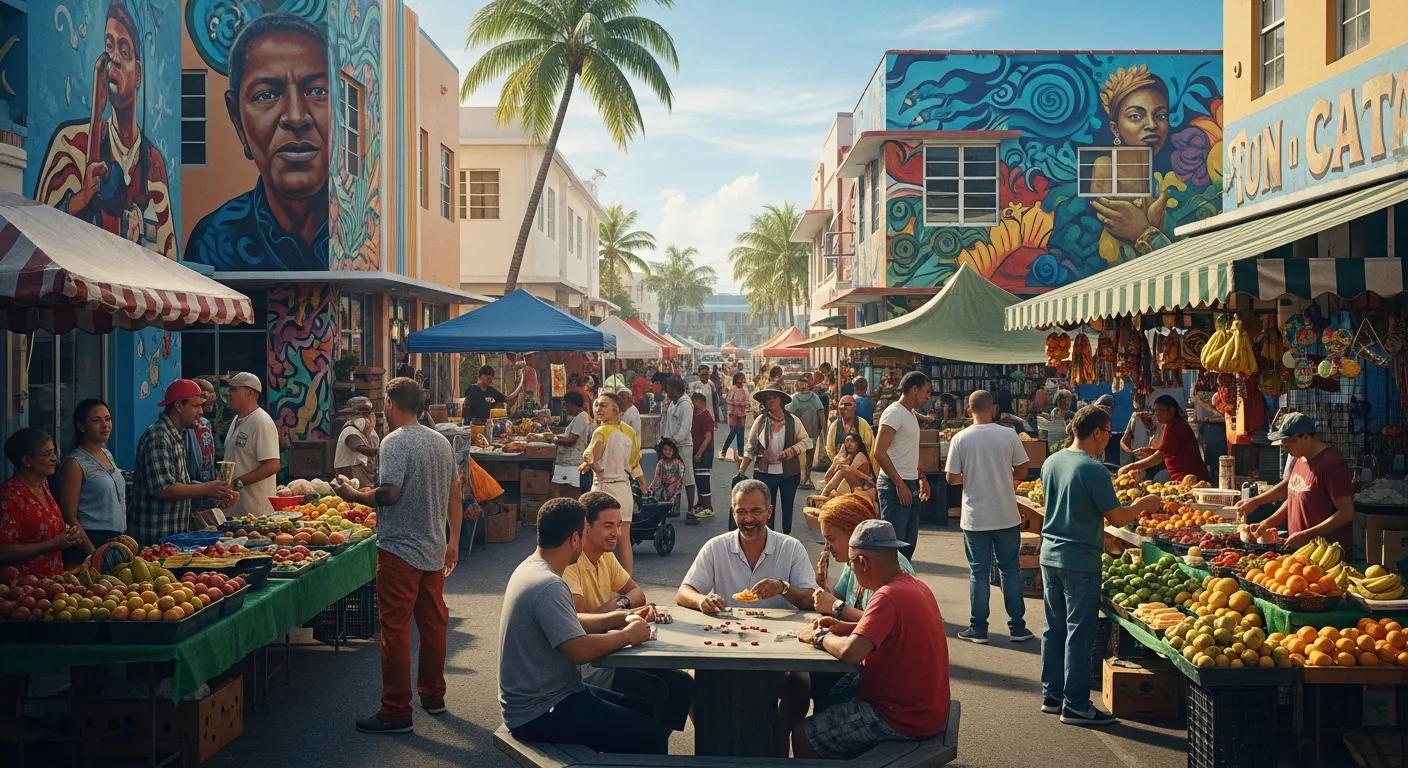
Central American Consumer Research Miami
Research with Nicaraguan, Honduran, Guatemalan, and Salvadoran consumers in Sweetwater, Hialeah, and across Miami-Dade and Broward. Community-embedded recruitment, strict confidentiality protocols, bilingual Spanish moderation.
Central American Communities in Miami-Dade and Broward
Central Americans are the fastest-growing segment of Miami's Hispanic population. Nicaraguans, the largest group, have a 40-year history in Miami-Dade, with Sweetwater functioning as their primary commercial and cultural hub since the 1980s. The Honduran community is concentrated in Hialeah and North Miami. Guatemalans are spread across Miami-Dade with significant agricultural worker communities in Homestead. Salvadorans are present throughout the region.
Collectively, Central American consumers represent a commercially distinct and often underserved research segment. General Hispanic panels in South Florida over-represent Cuban and Venezuelan respondents and under-represent Central American nationalities, meaning standard panel-based research produces biased results when Central American consumers are the intended audience. HRG addresses this through community-embedded recruitment that reaches Central American households directly rather than through broad panel sampling.
Community Profiles: Central American Nationalities in Miami
| Nationality | Primary Miami Area | Income Profile | Key Research Categories |
|---|---|---|---|
| Nicaraguan | Sweetwater, Fountainebleau, Kendall | Mixed working to middle class | Remittances, food staples, financial inclusion |
| Honduran | Hialeah, North Miami, Broward | Working class | Value food, household products, financial services |
| Guatemalan | Miami-Dade, Homestead | Working class, agricultural | Food staples, healthcare access, financial services |
| Salvadoran | Miami-Dade, Broward | Working to middle class | Food, remittances, home improvement |
Source: HRG community recruitment data, Miami-Dade County census data, Pew Research Center Hispanic demographic reports.
Research Design Considerations for Central American Communities
Central American community research in Miami requires specific methodological adjustments that standard qualitative research protocols do not address. Participant confidentiality is paramount -- HRG applies strict anonymisation protocols and never discloses participant information to government agencies or law enforcement under any circumstances. This commitment is communicated clearly at recruitment to maintain community trust.
Community-embedded recruitment through churches, Catholic organisations, cultural associations, and trusted community leaders is more effective than panel recruitment for reaching Central American households. HRG has established these partnerships in Sweetwater, Hialeah, and North Miami over multiple research cycles.
Focus group dynamics in Central American communities often require more relationship-building than equivalent sessions with Cuban or Venezuelan respondents. Longer warm-up periods, emphasis on anonymity, and culturally familiar moderators produce significantly higher-quality data. For sensitive topics -- financial behaviour, healthcare access, family circumstances -- one-on-one in-depth interviews are the recommended format.
Research Central American Consumers in Miami
Discover which research methodology best fits your Caribbean market entry strategy.
Related Community Research
- Venezuelan Consumer Research Miami - Doral Venezuelan community
- Cuban Consumer Research Miami - Hialeah and Little Havana
- Colombian Consumer Research Miami - Weston and Doral Colombian community
- Caribbean Community Research Miami - Jamaican, Haitian, Trinidadian diaspora
- Focus Groups Miami - bilingual focus group services
- In-Depth Interviews Miami - one-on-one IDIs for sensitive topics
- Hispanic Focus Groups Florida - bilingual qualitative research methodology
- Qualitative Research Caribbean - for Caribbean-linked diaspora studies
Frequently Asked Questions
Where are Central American communities concentrated in Miami?
Nicaraguans are the largest Central American group in Miami-Dade, concentrated in Sweetwater (nicknamed "Little Managua"), Fountainebleau, Kendall, and Westchester. Hondurans are concentrated in Hialeah, North Miami, and parts of Broward. Guatemalans are spread across Miami-Dade and Palm Beach counties, with significant agricultural worker communities in Homestead and South Miami-Dade. Salvadorans are less concentrated but present throughout Miami-Dade and Broward. HRG maintains recruitment networks in all of these communities.
How do Central American consumers differ from Cuban or Venezuelan consumers in Miami?
Central American consumers in Miami are on average more recently arrived, more working-class, and more likely to be living in mixed-status households where immigration documentation varies within the family. This creates specific research design requirements: IDIs rather than groups for sensitive topics, stricter participant privacy protocols, and careful screener wording. Consumption priorities centre on value, remittance affordability, and staple food access rather than the premium or aspirational categories that characterise segments of the Venezuelan or Colombian community.
What research methodologies work with Central American communities in Miami?
Focus groups work well for product concept testing, advertising evaluation, and cultural attitudes where privacy is not a concern. IDIs are strongly preferred for financial behaviour, immigration-related topics, healthcare access, and any topic touching on legal status or family circumstances. Community-embedded recruitment (through churches, community centres, and cultural associations) outperforms panel recruitment for Central American communities, particularly for more recently arrived participants. HRG has established these community partnerships in Sweetwater and Hialeah.
Can you conduct research in Guatemalan indigenous languages?
For Guatemalan indigenous language speakers (Q'eqchi', Mam, Kaqchikel, K'iche'), HRG works with interpreter-assisted interview formats and community liaison partners. Pure indigenous-language moderation requires specialist interpreters that we source on a project basis. For most commercial research applications involving Guatemalan consumers in Miami, bilingual Spanish/English research with a culturally aware moderator is sufficient, as the Miami Guatemalan community is predominantly Spanish-speaking.
What industries research Central American consumers in Miami?
Remittance and money transfer services studying the Nicaraguan and Honduran remittance corridor to Central America, food brands testing products for working-class Hispanic households, healthcare providers and nonprofit organisations studying access barriers among uninsured immigrant communities, financial inclusion services targeting unbanked households, and government agencies studying community service uptake are the primary clients. HRG has experience across all of these sectors with Central American communities in South Florida.
How do you ensure participant confidentiality for Central American community research?
HRG applies strict confidentiality protocols for all research involving communities where immigration status may be a concern. This includes: no collection of identifying information beyond first name and screener responses, clear participant rights statements in Spanish before any session, secure data storage and anonymised analysis, no government or law enforcement client disclosure, and IRB-aligned consent processes. We discuss confidentiality requirements with clients at the proposal stage and can accommodate specific protocols required by your institutional review or ethics process.
Download: Central American Community Research Guide Miami 2025
Community profiles, recruitment protocols, confidentiality standards, and research design considerations for Nicaraguan, Honduran, Guatemalan, and Salvadoran consumers in South Florida.