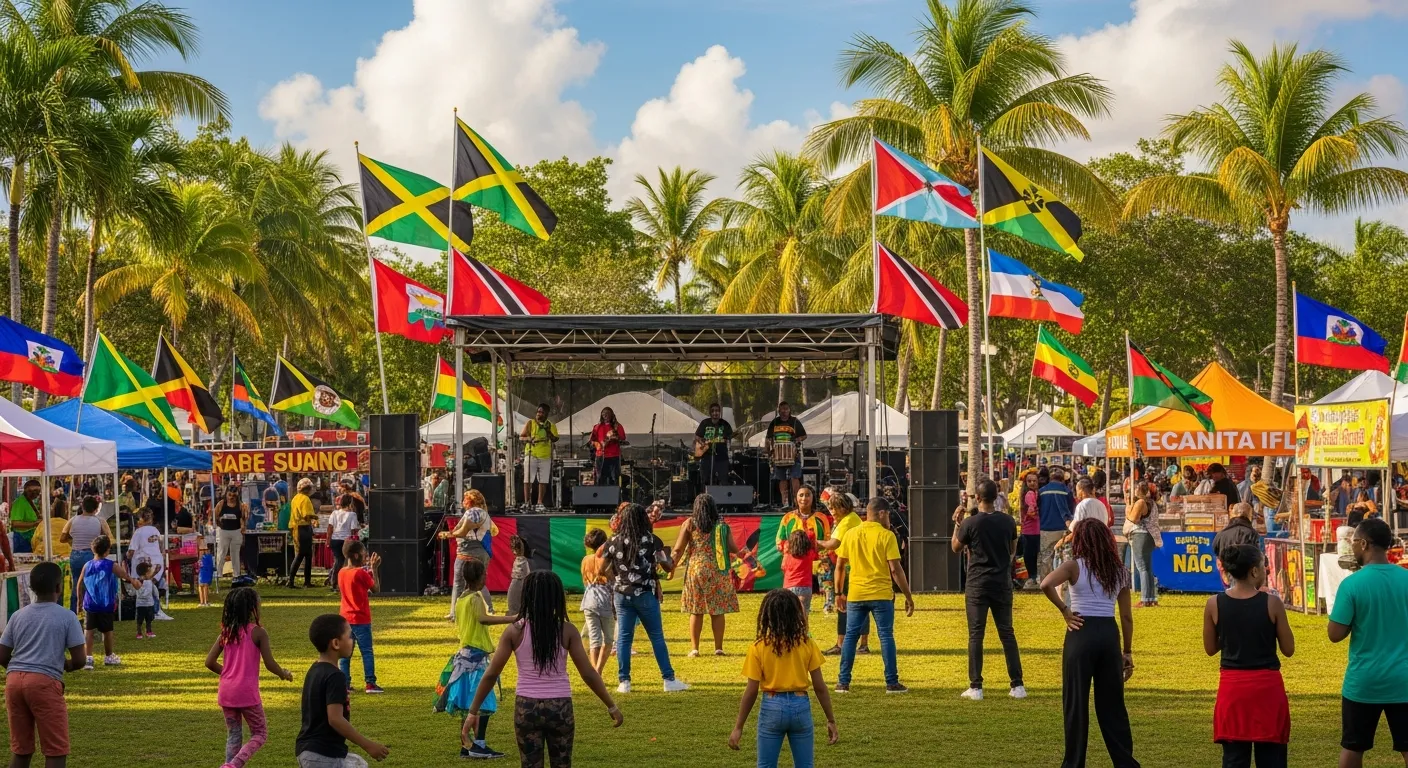
Caribbean Community Research Miami
Focus groups, IDIs, and in-home research with Jamaican, Haitian, Trinidadian, Barbadian, and wider Caribbean diaspora consumers in Lauderhill, Miramar, North Miami, and Broward County. English, Spanish, and Haitian Creole moderation.
The Caribbean Diaspora in South Florida
South Florida's Caribbean diaspora is the largest English-speaking Caribbean community in the United States. Broward County alone contains more than 300,000 people of Caribbean origin. Lauderhill is home to the largest concentration of Jamaican-Americans in the continental US. Miramar and Pembroke Pines are home to substantial Trinidadian, Barbadian, and Eastern Caribbean communities. North Miami and Miramar contain large Haitian communities.
HRG occupies a unique position in researching this population. Our Caribbean market research roots -- operating across Jamaica, Trinidad, Barbados, and the wider Eastern Caribbean since 1985 -- give us the institutional credibility and community trust that US-based research firms without Caribbean operations cannot replicate. When a Jamaican household in Lauderhill speaks with an HRG field researcher who understands Jamaican consumer culture, the quality of data is categorically different from what a general-market research firm produces.
Caribbean Community Profiles in South Florida
| Community | Primary Location | Language | Key Research Categories |
|---|---|---|---|
| Jamaican | Lauderhill, Miramar, Plantation, Lauderdale Lakes | English / Jamaican Patois | Food, personal care, remittances, financial services, beer and rum |
| Haitian | North Miami (Little Haiti), Miramar, North Lauderdale | Haitian Creole / French / English | Food staples, financial inclusion, healthcare, remittances |
| Trinidadian | Miramar, Pembroke Pines, Broward | English / Trinidad Creole | Food, beverages, financial services, personal care |
| Barbadian | Pembroke Pines, Miramar, Broward | English | Financial services, food, professional services |
| Guyanese | Miami-Dade, Broward | English / Hindi (Indo-Guyanese) | Food, financial services, small business |
| Eastern Caribbean | Broward County | English | Cross-island products, remittances, financial services |
Source: HRG Caribbean diaspora recruitment data, Broward County census data, American Community Survey 2022.
Why Caribbean Diaspora Research Requires Specialist Expertise
Caribbean consumers in Broward are not a subset of the general US Hispanic market. They are English-speaking, Commonwealth-influenced, and culturally shaped by island-specific history, music, food traditions, and institutional frameworks. A Jamaican consumer in Lauderhill makes purchasing decisions around Grace Foods, Walkerswood, Wray and Nephew, Reggae Sumfest-associated brand memories, and community church endorsement in ways that have no parallel in the Colombian or Venezuelan consumer segments.
HRG's advantage is operational: we conduct focus groups in Jamaica, focus groups in Trinidad, and qualitative research across the Eastern Caribbean on a regular basis. Our South Florida Caribbean diaspora work draws on this in-market expertise to understand what consumers carried with them from home and how it has evolved in a US context.
For Haitian community research, HRG's Haitian Creole-speaking field staff and community liaison network in North Miami and Miramar are essential for recruitment and moderation. Haitian research requires cultural attunement to the role of Haitian evangelical and Catholic churches as trust-building institutions, the importance of Haitian radio (WLQY, WZAB) in community information flow, and sensitivity around immigration and documentation topics.
Research Caribbean Communities in South Florida
Discover which research methodology best fits your Caribbean market entry strategy.
Related Resources
- Venezuelan Consumer Research Miami - Hispanic community research
- Cuban Consumer Research Miami - Hialeah and Little Havana
- Colombian Consumer Research Miami - Weston and Doral Colombian community
- Central American Consumer Research Miami - Nicaraguan, Honduran communities
- Focus Groups Jamaica - in-country Jamaican research
- Focus Groups Trinidad - in-country Trinidadian research
- Caribbean Diaspora Consumer Research - global Caribbean diaspora overview
- In-Depth Interviews Miami - one-on-one IDIs including Creole-language sessions
- In-Home Tests Miami - pantry audits and IHUT with Caribbean households
Frequently Asked Questions
Where are Caribbean communities located in South Florida?
Broward County is the primary hub for English-speaking Caribbean diaspora in South Florida. Lauderhill has the largest concentration of Jamaican-origin residents in the continental United States. Miramar and Pembroke Pines are home to large Trinidadian and Barbadian communities. Plantation and Lauderdale Lakes have significant Jamaican, Bajan, and Eastern Caribbean populations. Haitian communities are concentrated in North Miami (Little Haiti), Miramar, and North Lauderdale. HRG has deep community recruitment networks across all of these areas.
How do Caribbean diaspora consumers differ from Hispanic consumers in Miami?
Caribbean diaspora consumers in South Florida are predominantly English-speaking and arrive from British Commonwealth or French-speaking island nations. They are culturally distinct from Spanish-speaking Latin American communities and should not be grouped with Hispanic consumers for research purposes. Consumption patterns, media habits, brand loyalties, and community networks are entirely different. Caribbean consumers in Broward tend toward established middle-class status with high rates of homeownership, professional employment, and community institutional engagement (churches, cricket clubs, carnival associations).
Do you conduct research in Haitian Creole?
Yes. HRG works with Haitian Creole-speaking moderators and field staff for research with Haitian communities in North Miami, Miramar, and North Lauderdale. We offer bilingual English/Haitian Creole focus groups and IDIs, as well as Creole-only sessions for participants whose English proficiency is limited. Haitian Creole research requires specific cultural expertise around Haitian political identity, religious institutions, and the role of community radio and church networks in information dissemination.
What research methodologies work best with Jamaican consumers in Broward?
Focus groups work very well with Jamaican-American consumers, who are typically high-engagement and comfortable with group discussion formats. Community venues (church halls, community centres) often produce better participation than formal research facilities. In-home visits are effective for food, personal care, and household product categories where Caribbean pantry habits (Grace Foods, Walkerswood, Caribbean-brand seasoning and canned goods) differ from US market norms. IDIs are preferred for financial behaviour, remittance decisions, and immigration-related topics.
Can you segment Caribbean research by island of origin?
Yes. HRG screeners for Caribbean diaspora research capture island of origin (Jamaica, Trinidad, Barbados, Guyana, St Lucia, Grenada, Bahamas, Haiti, and other territories), arrival decade, US citizenship status, and household composition. Jamaican, Trinidadian, and Barbadian consumers have distinct consumption patterns, brand loyalties (particularly in food, rum, and personal care), and cultural references. Cross-island Caribbean panels can be constructed where your research objective requires a pan-Caribbean sample.
What industries research Caribbean diaspora consumers in South Florida?
Food and beverage brands with Caribbean-origin product lines (Grace Foods, Caribbean Foods, Walkerswood, Wray and Nephew) tracking US diaspora penetration, financial services studying remittance behaviour and cross-border banking, telecom providers studying Caribbean calling and data plan usage, healthcare systems serving Haitian and Jamaican communities, and government and nonprofit organisations studying Caribbean immigrant community needs are the primary clients. HRG has conducted Caribbean diaspora studies for all of these sectors.
Download: Caribbean Diaspora Research Guide South Florida 2025
Community profiles, cultural research considerations, Haitian Creole protocol, and recruitment best practices for Jamaican, Haitian, Trinidadian, and Eastern Caribbean consumers in Broward and Miami-Dade.