Jamaican Consumer Research Miami
Focus groups, in-depth interviews, and in-home studies with Jamaican-American consumers in Lauderhill, Miramar, and across Broward County. HRG operates in Jamaica and the diaspora -- the only research firm with direct expertise in both markets.
The Jamaican-American Market in South Florida
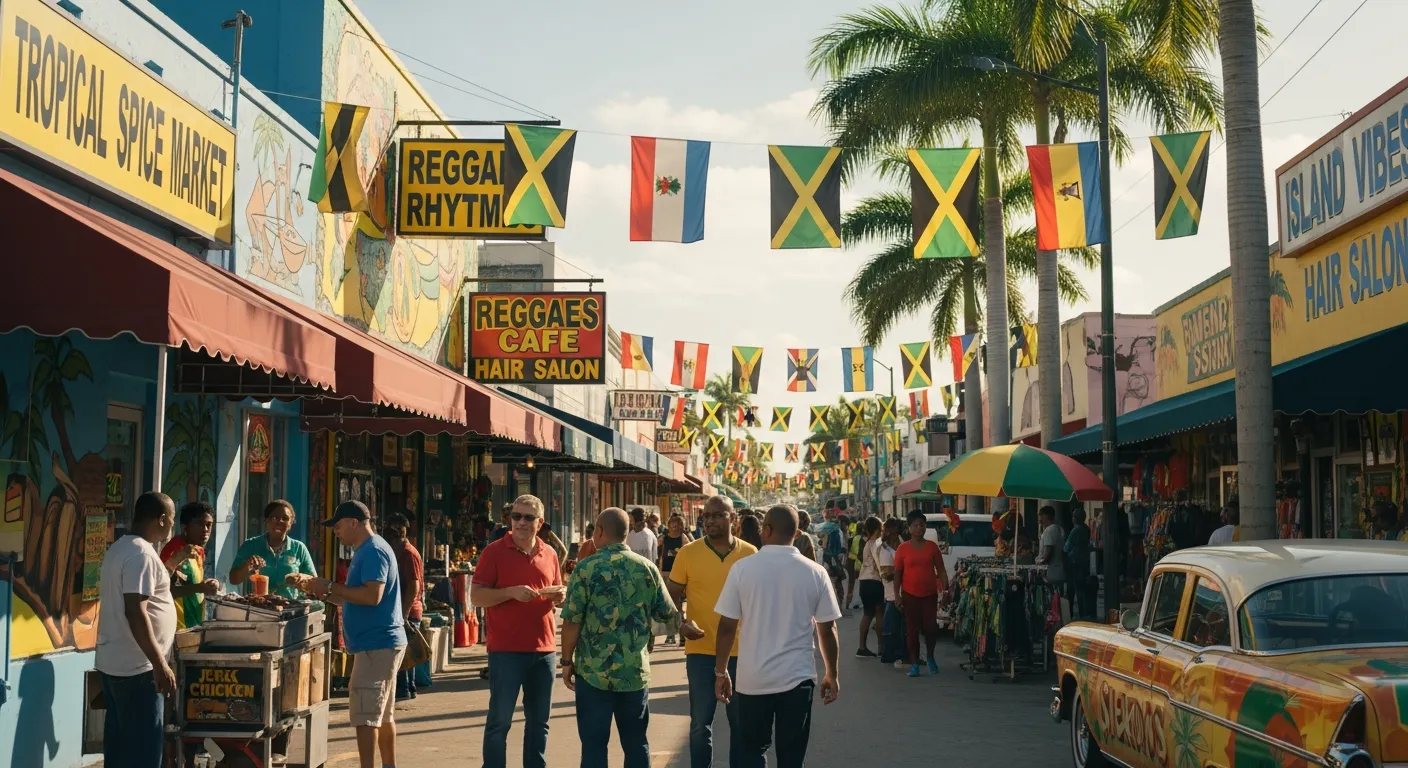
Lauderhill, Florida, is home to the largest concentration of Jamaican-origin residents in the continental United States. The city's identity is shaped by Caribbean culture: Jamaican restaurants, Caribbean-owned businesses, Caribbean bakeries, West Indian carnival associations, and a church ecosystem that functions as the community's primary social institution. Jamaican-Americans in Broward County have built an established middle class over two to three generations -- homeownership rates are high, professional employment is common, and the community maintains strong ties to Jamaica through remittances, regular travel, and media consumption.
For consumer brands, this community represents a commercially significant and culturally distinct segment that is separate from both the general US Black consumer market and from the Spanish-speaking Hispanic market. Jamaican-American consumption patterns are shaped by specific brand loyalties, Jamaican culinary traditions maintained in US households, and community trust networks that influence purchase decisions differently than general US market dynamics.
Research Methodologies for Jamaican Diaspora in South Florida
| Methodology | Best Application | Notes for Jamaican Community |
|---|---|---|
| Focus groups | Brand perception, concept testing, advertising evaluation | Community venue settings in Lauderhill produce stronger engagement than formal facilities; warm-up time is important |
| In-depth interviews (IDIs) | Financial behaviour, remittances, healthcare, immigration topics | Preferred for sensitive topics; phone or video IDIs well accepted by working professionals |
| In-home use tests (IHUT) | Food, personal care, household products, hair care | Jamaican pantry and cooking habits differ significantly from US market norms; IHUTs reveal real usage |
| Paired Jamaica / diaspora study | Brand tracking, product launch, market entry | HRG unique capability: paired in-country Jamaica + Lauderhill diaspora groups in same study |
| Online survey | Quantitative segmentation, brand tracker | Caribbean panel with Jamaican-specific screening available; generation and arrival decade as standard variables |
Jamaican Consumer Behaviour: Key Insights for Research Design
Grace Foods is the anchor brand of the Jamaican-American pantry. Grace canned goods, Grace coconut water, Grace jerk seasoning, and Grace scotch bonnet products are purchased at Caribbean supermarkets (Western Beef, Caribbean Cuts, international aisles at Publix) as a form of cultural connection, not just utility. Walkerswood jerk and sofrito products occupy the same emotional territory. Wray and Nephew overproof rum is a category onto itself -- used for cooking, for home remedies, and for social rituals that no US domestic spirit replicates.
Hair care is a commercially significant and under-researched category. Jamaican-American women, particularly first- and second-generation consumers, have distinct hair care routines that have driven the natural hair movement and the global market for castor oil-based products. Jamaican Black Castor Oil (JBCO) brands including Tropic Isle Living originated in this community. Research in this category requires moderators with cultural familiarity and the ability to navigate the nuances of hair texture, product preference, and identity that are central to this market.
Remittance behaviour is commercially relevant for financial services. Jamaican-Americans in Broward send substantial volumes to family in Jamaica through services including Western Union, MoneyGram, Sigue, and island-specific transfer apps. Research on remittance service choice, trust, fees, and switching behaviour requires IDIs rather than groups for candid responses.
Paired Jamaica and US Diaspora Studies
HRG is uniquely positioned to run paired studies -- the same research conducted simultaneously with Jamaican consumers in Jamaica and with the Jamaican diaspora in Lauderhill. This design answers questions that single-market research cannot: How has brand perception changed through migration? Which Jamaican-origin products are being adopted into US routines and which are being left behind? Which US products are being sent to Jamaica through barrel shipments and family networks?
For brands active in both markets -- Caribbean food and beverage companies, UK-origin brands with Caribbean heritage (Guinness Foreign Extra, Unilever Caribbean), and US brands seeking Caribbean distribution -- this paired capability is commercially valuable and unavailable from any competitor without genuine Jamaica in-country operations. See our focus groups Jamaica page for in-country capabilities.
Key Categories for Jamaican Consumer Research in South Florida
| Category | Key Research Questions | Recommended Method |
|---|---|---|
| Food and grocery | Heritage brand loyalty, Caribbean vs US mainstream substitution, meal occasion mapping | IHUT, pantry audit, focus groups |
| Hair and personal care | Natural hair regimen, product trust, JBCO market, cultural identity in product choice | IDIs, in-home observation |
| Financial services | Remittance service choice, banking trust, Jamaica-US cross-border products | IDIs |
| Telecom | Jamaica-US calling plans, data roaming, app-based communication | Focus groups, online survey |
| Healthcare | Provider trust, insurance uptake, traditional Jamaican remedies alongside US healthcare | IDIs, focus groups |
| Beer and spirits | Red Stripe and Wray and Nephew loyalty, occasion mapping, US premium spirit consideration | Focus groups, IHUT |
Research Jamaican-American Consumers in South Florida
Discover which research methodology best fits your Caribbean market entry strategy.
Related Resources
- Haitian Consumer Research Miami - Haitian-American community across Miami-Dade and Broward
- Trinidadian Consumer Research Miami - Trinidadian-American community in Miramar and Broward
- Barbadian Consumer Research Florida - Bajan diaspora in Miramar, Lauderhill, and Broward County
- Bahamian Consumer Research Florida - Bahamian-American community in Fort Lauderdale and Broward
- Guyanese Consumer Research Florida - Guyanese-American community across South Florida
- Brazilian Consumer Research Miami - Brazilian community in Boca Raton, Deerfield Beach, and Aventura
- South Florida Hispanic Market Size - 2.7M consumers, USD 85-95B purchasing power breakdown
- Puerto Rican Consumer Market Orlando - 500K+ Puerto Ricans in Orlando, Kissimmee, and Central Florida
- Caribbean Community Research Miami - full Caribbean diaspora overview for South Florida
- Focus Groups Jamaica - in-country Jamaica research, Kingston and Montego Bay
- In-Depth Interviews Miami - one-on-one bilingual IDI services across South Florida
- Market Research Jamaica - Jamaica in-country market overview and research context
Frequently Asked Questions
Where is the Jamaican-American community concentrated in South Florida?
Lauderhill, in central Broward County, has the largest concentration of Jamaican-origin residents in the continental United States. The city is approximately 60% Black, with Jamaican-Americans representing the dominant ethnic group. Miramar, Plantation, Lauderdale Lakes, and North Lauderdale also have substantial Jamaican communities. In Miami-Dade, Jamaican households are concentrated in Opa-locka, North Miami, and Golden Glades. HRG maintains recruitment networks across all of these communities built through years of Caribbean diaspora research in South Florida.
How do Jamaican-American consumers differ from other Caribbean or Hispanic consumers in South Florida?
Jamaican-American consumers are English-speaking, Commonwealth-influenced, and shaped by a distinct Jamaican cultural identity that is separate from both the Spanish-speaking Hispanic market and from other Caribbean nationalities. Brand loyalties are strong toward Jamaican heritage products -- Grace Foods, Walkerswood, Wray and Nephew, Red Stripe, Reggae Sumfest-associated brands. Consumer decision-making is highly community-networked: church endorsement, community radio (Spirit FM, WSRF), and word-of-mouth within the Jamaican community carry more weight than general market advertising. Jamaican-Americans in Broward are predominantly working to middle class with high rates of homeownership and professional employment.
What research methodologies work best with Jamaican consumers in Broward?
Focus groups work very well. Jamaican-American consumers are typically expressive, opinionated, and comfortable with group discussion formats when trust is established. Community venue settings -- church halls, community centres in Lauderhill -- often produce higher participation and engagement than formal research facilities. In-depth interviews (IDIs) are preferred for financial behaviour, remittance decisions, healthcare access, and immigration-related topics. In-home use tests (IHUTs) and pantry audits are effective for food, personal care, and household product categories where Jamaican pantry habits differ from US market norms.
Why does HRG have a unique advantage for Jamaican diaspora research?
HRG has conducted market research in Jamaica since 1985. We operate focus groups in Kingston, Montego Bay, and across Jamaica on a regular basis. Our South Florida Jamaican diaspora work draws on this in-market expertise -- understanding what consumers carried from Jamaica and how those preferences have evolved in a US context. When a Jamaican household in Lauderhill speaks with an HRG researcher who genuinely understands Jamaican consumer culture, cooking traditions, brand history, and community institutions, the quality of data is categorically different from what a US-only research firm produces.
What industries research Jamaican-American consumers in South Florida?
Food and beverage brands tracking Grace Foods, Walkerswood, and Red Stripe diaspora penetration in US retail, financial services firms studying remittance behaviour and Jamaica-US cross-border banking, telecom providers studying Jamaica-US calling and data plan usage, healthcare providers serving Broward County Caribbean communities, insurance companies, beauty and personal care brands (Jamaican hair care is a significant category), and UK-origin brands entering the US Caribbean diaspora market are the primary clients.
Can you link Jamaican diaspora research to in-country Jamaica research?
Yes, and this is one of HRG's most distinctive capabilities. A brand seeking to understand Jamaican consumers both in Jamaica and in the US diaspora can commission a paired study: in-country focus groups or IDIs in Kingston or Montego Bay alongside diaspora focus groups in Lauderhill. The cross-market analysis reveals how preferences, brand perceptions, and consumption patterns have shifted through migration -- essential insight for brands managing both the Caribbean and US Hispanic/diaspora trade channels. See our focus groups Jamaica page for in-country capabilities.
How do you recruit Jamaican participants for South Florida research?
HRG recruits Jamaican participants through our South Florida Caribbean panel database, Jamaican church networks in Lauderhill and Miramar, community radio partnerships (Spirit FM, WSRF), Caribbean cultural associations, and direct community outreach. Screeners capture island of origin, parish of origin in Jamaica, arrival decade, household composition, and product category usage. Show rates for Jamaican recruits in Broward are consistently high due to community trust developed over multiple research cycles.
Download: Jamaican-American Consumer Profile South Florida 2025
Community geography, brand loyalty patterns, pantry and hair care category data, remittance behaviour, and research design guide for the Jamaican diaspora in Lauderhill and Broward County. Includes paired Jamaica and diaspora study design template.