Caribbean Hospitality Industry Outlook 2025: Hotel & Tourism Report
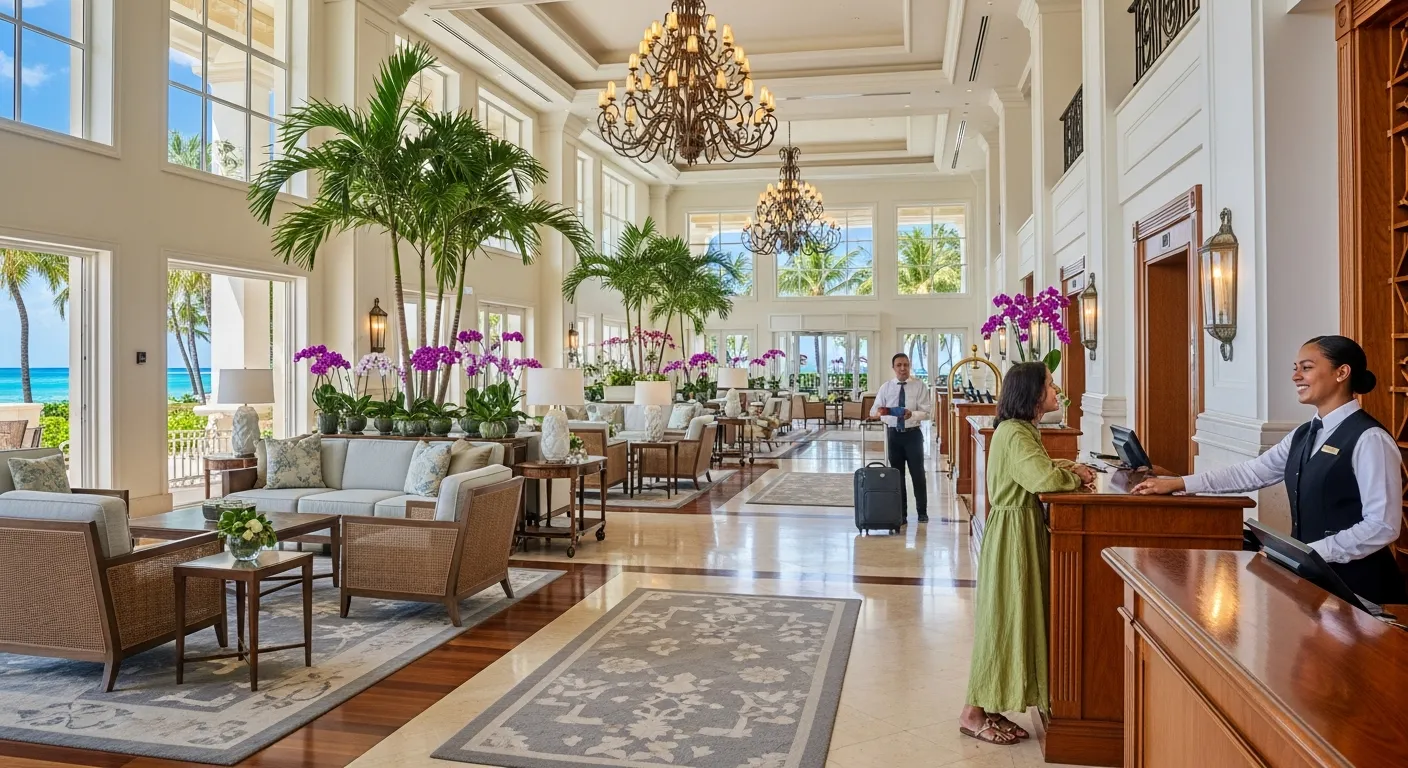
The Caribbean hospitality industry has emerged stronger from pandemic disruptions, with hotel performance metrics exceeding 2019 levels across most markets. This comprehensive outlook examines occupancy rates, ADR and RevPAR trends, development pipeline, major brand strategies, and operational challenges shaping the region's $35+ billion tourism accommodation sector.
Caribbean Hospitality Market Overview
The Caribbean hospitality sector encompasses 350,000+ hotel rooms across 30+ destinations, supported by 32 million annual visitor arrivals. The region's accommodation market generates over $35 billion in annual revenue, representing the economic backbone of many island economies. Performance has rebounded strongly, with 2024 marking the first year of full recovery to pre-pandemic levels.
Caribbean Hospitality Key Metrics 2024
67.2%
Average occupancy rate
$285
Average daily rate (ADR)
$191
RevPAR (revenue per room)
$8.5B
Development pipeline investment
Occupancy Rate Analysis
Caribbean hotel occupancy averaged 67.2% in 2024, surpassing the 2019 benchmark of 65.8%. Recovery has been uneven across markets, with smaller luxury destinations outperforming larger mass-market destinations. Seasonality remains pronounced, with winter high season (December-April) averaging 78% occupancy versus summer low season (May-October) at 55%.
| Destination | 2024 Occupancy | vs 2019 | 2025 Forecast |
|---|---|---|---|
| Aruba | 82.4% | +4.2% | 83% |
| Turks and Caicos | 79.1% | +6.8% | 80% |
| Dominican Republic | 74.3% | +2.1% | 75% |
| Jamaica | 68.9% | +1.5% | 70% |
| Bahamas | 65.2% | -2.3% | 67% |
| Puerto Rico | 71.8% | +3.2% | 73% |
| Barbados | 62.4% | -4.1% | 65% |
ADR and RevPAR Trends
Average daily rates have increased substantially, with Caribbean hotels achieving $285 average ADR in 2024-an 18% increase from 2019. Rate growth reflects both post-pandemic demand strength and inflationary pressures on operating costs. RevPAR (Revenue Per Available Room) reached $191, a new record for the region.
ADR by Market Segment
- Ultra-Luxury (St. Barths, Anguilla): $850-1,500 ADR, 45% increase vs 2019
- Luxury (Turks and Caicos, Barbados): $450-650 ADR, 28% increase
- Upper Upscale (Jamaica, Bahamas): $280-380 ADR, 22% increase
- Upscale All-Inclusive (Dominican Republic, Jamaica): $200-280 ADR, 15% increase
- Midscale (Puerto Rico, Trinidad): $140-200 ADR, 12% increase
Free Caribbean Market Assessment
Discover which research methodology best fits your Caribbean market entry strategy.
Major Hotel Brands and Market Presence
International hotel brands dominate Caribbean hospitality, with the top 10 chains controlling 45% of room inventory. Brand presence varies significantly by market, with some destinations maintaining strong independent hotel traditions.
Leading Hotel Brands in the Caribbean
| Brand/Chain | Properties | Rooms | Key Markets |
|---|---|---|---|
| Marriott International | 85+ | 22,000+ | Puerto Rico, DR, Aruba |
| Hyatt Hotels | 45+ | 18,500+ | Jamaica, DR, Puerto Rico |
| Hilton Hotels | 55+ | 15,000+ | Barbados, Jamaica, Curacao |
| Sandals/Beaches | 24 | 9,500+ | Jamaica, Bahamas, St. Lucia |
| AMResorts (Secrets, Dreams) | 35+ | 14,000+ | DR, Jamaica, Curacao |
Development Pipeline
The Caribbean hotel development pipeline represents $8.5 billion in investment with 28,000+ rooms under construction or in advanced planning stages. Development activity concentrates in high-performing markets with strong airlift and proven demand, though some secondary destinations are attracting first-time branded development.
Major Projects in Development
- Grand Hyatt Jamaica (Montego Bay): 550 rooms, $250M investment, opening 2026
- Ritz-Carlton Grand Cayman Expansion: 200 additional rooms, $180M, 2026
- Secrets Playa Mujeres Phase II: 700 rooms, $220M, 2025
- Six Senses Grenada: 100 rooms, $150M, boutique luxury debut, 2026
- Aman Turks and Caicos: 45 ultra-luxury residences and hotel, $350M, 2027
- Conrad Nassau: 412 rooms, $175M, opening 2025
Development Trends
- All-inclusive expansion: Brands like Hyatt, Marriott, and Hilton expanding all-inclusive portfolios
- Lifestyle branding: Growth of lifestyle brands (W, Edition, Thompson) targeting younger travelers
- Residential integration: Branded residences increasingly attached to hotel projects for financing support
- Sustainability requirements: New developments increasingly incorporating green building standards
Caribbean Hospitality Research Reports
Access our comprehensive hospitality market reports with detailed performance analytics, competitive benchmarking, and consumer travel behavior insights.
Browse Research ReportsStaffing Challenges and Labor Market
Labor shortages represent the Caribbean hospitality industry's most pressing operational challenge. Vacancy rates average 15-20% across the region, with housekeeping, food & beverage, and management positions most difficult to fill. Contributing factors include:
- Emigration: Caribbean workers continue migrating to the US, UK, and Canada for higher wages
- Competition: Tourism recovery across all markets creates regional competition for trained staff
- Wage pressure: Minimum wage increases and cost of living drive compensation expectations higher
- Pandemic career changes: Workers who left hospitality during COVID have not returned
- Training gaps: Insufficient hospitality training infrastructure limits talent pipeline
Staffing Solutions Being Implemented
- H-2B visa programs: US territories and cruise lines leveraging temporary worker visas
- Regional labor mobility: CARICOM free movement enabling cross-island recruitment
- Wage increases: Hotels raising entry-level wages 15-25% to attract workers
- Benefits enhancement: Health insurance, housing assistance, and career development programs
- Automation: Technology investment in housekeeping, check-in, and F&B operations
Vacation Rental Competition
Airbnb and vacation rentals have grown substantially across Caribbean markets, representing an estimated 120,000+ listings competing with traditional hotels. Impact varies by market segment:
Vacation Rental Impact by Segment
- Luxury Resorts:Limited impact; guests value service, amenities, and brand experience not available in rentals
- All-Inclusive:Protected by value proposition; families and groups prefer package convenience
- Midscale Hotels:Significant competition; price-sensitive travelers shift to apartments for extended stays
- Boutique/Independent:Mixed impact; some compete on character and service, others lose share to unique listings
Sustainability and Climate Resilience
Climate change poses existential risks to Caribbean hospitality, with rising sea levels, intensifying hurricanes, and coral reef degradation threatening the region's tourism appeal. Industry response includes:
- Building resilience: Hurricane-resistant construction and backup power systems standard in new developments
- Sustainability certification: Growing adoption of Green Globe, EarthCheck, and local certifications
- Renewable energy: Solar installations and energy efficiency programs reducing carbon footprint
- Water management: Desalination, rainwater harvesting, and wastewater treatment investments
- Beach restoration: Sand replenishment and coastal protection projects to preserve assets
Frequently Asked Questions
What is the current occupancy rate for Caribbean hotels?
Average Caribbean hotel occupancy reached 67.2% in 2024, surpassing pre-pandemic 2019 levels of 65.8%. Top-performing markets include Aruba (82%), Turks and Caicos (79%), and the Dominican Republic (74%).
What is the average daily rate (ADR) for Caribbean hotels?
The average ADR for Caribbean hotels reached $285 in 2024, up 18% from 2019. Luxury markets like St. Barths average $850+ ADR, while value destinations like the Dominican Republic average $145 ADR.
How much is being invested in Caribbean hotel development?
The Caribbean hotel development pipeline represents $8.5 billion in investment with 28,000+ rooms under construction or planned. Major projects include Grand Hyatt Jamaica, Ritz-Carlton expansions, and new Aman properties.
What are the main challenges facing Caribbean hospitality?
Key challenges include staffing shortages (15-20% vacancy rates), rising operating costs, climate change vulnerability, airlift capacity constraints, and increasing competition from vacation rentals like Airbnb.
2025 Outlook and Forecasts
The Caribbean hospitality sector enters 2025 with strong fundamentals and positive momentum. Key forecasts include:
- Occupancy: Projected 68-69% regional average, with continued seasonal variation
- ADR: Expected 3-5% growth to $295-300 average across markets
- RevPAR: Forecast $200-205, a new regional record
- Investment: Development pipeline to remain robust with $2B+ annual investment
- Arrivals: Tourist arrivals projected to grow 4-6% to 33-34 million
Conclusion
The Caribbean hospitality industry has demonstrated remarkable resilience, emerging from pandemic disruptions with stronger performance metrics and a robust development pipeline. While challenges remain-particularly around staffing, sustainability, and vacation rental competition-the sector's fundamentals remain sound. Hotels and resorts that invest in guest experience, staff development, and climate resilience will be best positioned to capture continued growth in this essential Caribbean industry.
Need Caribbean Hospitality Market Intelligence?
Our research team provides custom hospitality studies including guest satisfaction surveys, competitive benchmarking, and operational analysis for hotels and resorts.
Request a ConsultationRelated Articles
Caribbean hospitality industry outlook Research Report
Get our comprehensive caribbean hospitality industry outlook data pack with market analysis, competitive insights, and growth forecasts for strategic planning.