The State of FMCG Distribution in the Caribbean: 2026 Industry Report
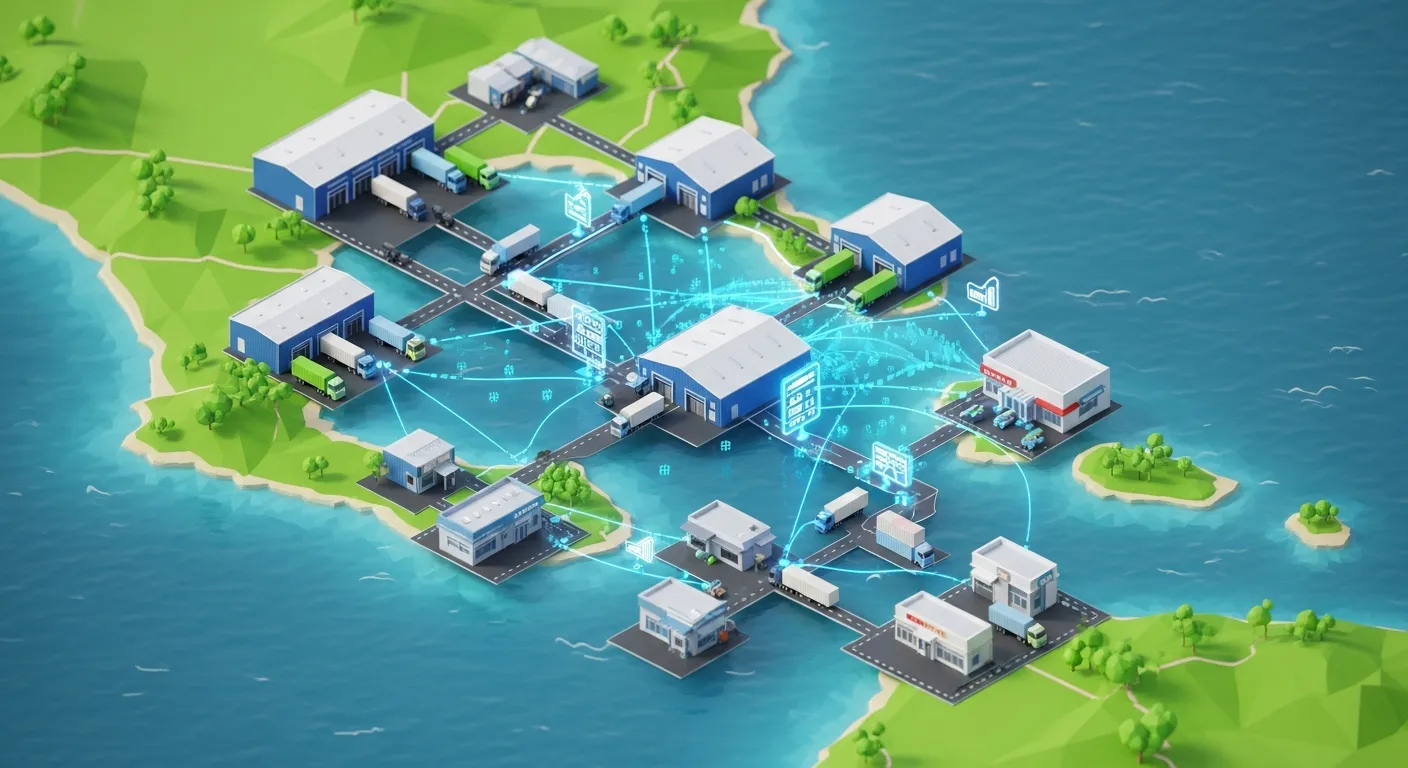
The Caribbean FMCG sector represents a complex distribution landscape where traditional trade continues to dominate while modern retail formats expand in urban centers. Understanding these dynamics is essential for brands seeking to optimize their go-to-market strategies across the region's diverse island economies.
Market Overview
While precise Caribbean-only FMCG market sizing is not publicly available, the region operates within the broader Latin America and Caribbean context. The global FMCG market reached approximately $12.93 trillion in 2024, with Caribbean markets representing a specialized segment characterized by:
- Import-dependent economies requiring sophisticated distribution logistics
- Tourism-driven seasonal demand fluctuations
- Traditional trade dominance in most markets
- Emerging e-commerce presence with significant growth potential
Caribbean FMCG Landscape
44M+
Regional consumer population
30+
Distinct national markets
$4B+
Duty-free retail market (2028 projection)
16.5M
Annual tourist arrivals (2022)
Distribution Channel Landscape
Traditional Trade Dominance
Traditional trade remains the backbone of FMCG distribution across most Caribbean markets. These channels include:
- Parlours and mini-marts: Small neighborhood stores serving daily household needs
- Rum shops and bars: Critical beverage distribution points, especially for alcoholic products
- Street vendors: Mobile and fixed-location sellers, particularly in urban markets
- Open-air markets: Fresh produce and local goods distribution hubs
- Wholesalers: Key intermediaries connecting manufacturers to fragmented retail
Research from similar emerging markets indicates traditional trade can represent 50-60% of FMCG sales, with Caribbean markets likely at the higher end of this range due to geographic dispersion and limited modern retail penetration outside urban centers.
Modern Trade Expansion
Supermarkets and hypermarkets are expanding in major Caribbean urban areas:
- Regional chains: Massy Stores (Trinidad), PriceSmart (regional), Hi-Lo Food Stores
- International presence: Walmart, Costco in select markets
- Concentration: Modern retail primarily in capital cities and tourist zones
- Share: Estimated 30-40% of formal retail in developed Caribbean markets
Tourism Channel
The Caribbean's tourism economy creates a unique distribution channel:
- Duty-free retail: Airport terminals dominate (49.5% market share in 2020)
- Hotel and resort retail: Gift shops, convenience stores, restaurants
- Cruise ship provisioning: Bulk supply to vessels
- Popular categories: Cigars, rum, perfumes, whiskey, local crafts
E-Commerce Emergence
Digital commerce is growing but faces infrastructure challenges. In Jamaica:
- E-commerce market growing from a small base, driven by mobile-first access and urban youth
- Online share of retail remains single-digit but is expanding as logistics infrastructure improves
- Key segments: Electronics (22.9%), Hobby & Leisure (21.9%), Fashion (20.5%)
Free Caribbean Market Assessment
Discover which research methodology best fits your Caribbean market entry strategy.
Country-Specific Distribution Insights
Trinidad and Tobago
As the strongest English-speaking Caribbean economy ($28.7B GDP), T&T offers a sophisticated distribution landscape:
- High internet penetration (84.7%) enabling digital ordering platforms
- Strong middle class driving modern retail preference
- Multicultural population requiring diverse product assortments
- Energy subsidies keeping transportation costs manageable
Jamaica
With 2.84 million residents and a $23.1 billion GDP:
- Substantial informal economy (31% of activity) affecting distribution tracking
- Tourism concentration in Montego Bay and Ocho Rios creating dual markets
- Kingston as commercial hub with highest modern trade concentration
- Rural areas heavily dependent on traditional trade networks
Dominican Republic
The largest Caribbean market (11.1 million population, $119.7B GDP) presents:
- Fastest-growing regional economy (4.5-5.5% annual growth)
- Growing middle class expanding modern trade share
- Tourism zones (Punta Cana) with premium distribution requirements
- Spanish-language operations essential
Key FMCG Categories in Caribbean Distribution
Category Distribution Patterns
- Beverages: Rum, beer, soft drinks dominate; $6 billion regional market growing at 6.29% CAGR
- Personal Care: High brand loyalty, premium positioning opportunities
- Packaged Foods: Import-dependent, price-sensitive consumers
- Household Products: Growing modern trade share for larger pack sizes
- Tobacco: Significant category in duty-free; regulated distribution in domestic markets
Distribution Challenges and Solutions
Geographic Fragmentation
Challenge: Multi-island nations like the Bahamas require inter-island logistics. Small population bases may not justify dedicated distribution infrastructure.
Solution: Regional distribution hubs, partner with established wholesalers, leverage tourism-driven freight routes.
Import Dependencies
Challenge: Most Caribbean nations import 60-80% of FMCG products, creating exposure to shipping costs and delays.
Solution: Strategic inventory management, regional manufacturing partnerships, local production where viable.
Traditional Trade Servicing
Challenge: Thousands of small outlets require frequent visits, credit management, and relationship selling.
Solution: Invest in sales force automation, route optimization, distributor partnerships with local expertise.
Distribution Research Methodologies
Retail Audits
Systematic measurement of distribution, pricing, and shelf presence across trade channels. Effective Caribbean retail audits require:
- Representative outlet sampling across traditional and modern trade
- Trained field teams with local market knowledge
- GPS-enabled tracking for geographic coverage verification
- Photography for planogram and display compliance
Distribution Census
Comprehensive mapping of retail universes. Our 2013 Trinidad and Tobago Distribution Census audited 14,627 retail outlets, of which 8,547 were surveyed across multiple channel types, providing a historical baseline for:
- Channel segmentation and outlet typing
- Geographic concentration analysis
- Route optimization intelligence
- Market sizing by channel and region
Strategic Recommendations
Distribution Strategy Priorities
- 1. Map your universe: Invest in distribution census to understand true market structure
- 2. Right-size for channel: Pack sizes and formats appropriate for traditional vs. modern trade
- 3. Build wholesaler partnerships: Critical for reaching fragmented traditional trade
- 4. Monitor continuously: Regular retail audits to track distribution, pricing, and competition
- 5. Plan for seasonality: Tourism peaks require inventory and distribution capacity adjustments
Frequently Asked Questions
What are the main FMCG distribution channels in the Caribbean?
Caribbean FMCG distribution operates through traditional trade (parlours, mini-marts, rum shops representing 50-60% of sales), modern trade (supermarkets like Massy Stores, PriceSmart, and Hi-Lo accounting for 30-40%), tourism channels (duty-free, hotels, cruise ships), and emerging e-commerce platforms.
How large is the Caribbean FMCG market?
The Caribbean FMCG market serves a regional consumer population of over 44 million across 30+ distinct national markets, with 16.5 million annual tourist arrivals creating additional demand. The duty-free retail segment alone is projected to exceed $4 billion by 2028.
What are the biggest challenges in Caribbean FMCG distribution?
Key challenges include geographic fragmentation across multiple islands, heavy import dependency (60-80% of FMCG products are imported), servicing thousands of small traditional trade outlets, seasonal tourism demand fluctuations, and limited modern retail penetration outside urban centers.
Which Caribbean countries have the most developed retail markets?
Trinidad and Tobago leads with the strongest English-speaking Caribbean economy ($28.7B GDP) and high internet penetration (84.7%). The Dominican Republic is the largest market (11.1 million population, $119.7B GDP) with the fastest growth. Jamaica has a substantial market with Kingston as its modern trade hub.
Conclusion
Caribbean FMCG distribution requires balancing traditional trade servicing with modern retail expansion while navigating geographic and import logistics challenges. Success demands deep understanding of local market structures, strong distributor relationships, and continuous monitoring through systematic research programs.
Optimize Your Caribbean Distribution
Our distribution analysis and retail audit programs provide the intelligence you need to maximize Caribbean market coverage.
Request Distribution AnalysisRelated Articles
fmcg distribution Caribbean Research Report
Get our comprehensive fmcg distribution caribbean data pack with market analysis, competitive insights, and growth forecasts for strategic planning.