Bahamas Consumer Trends 2025: Luxury Market & Tourism-Driven Consumer Behavior Data
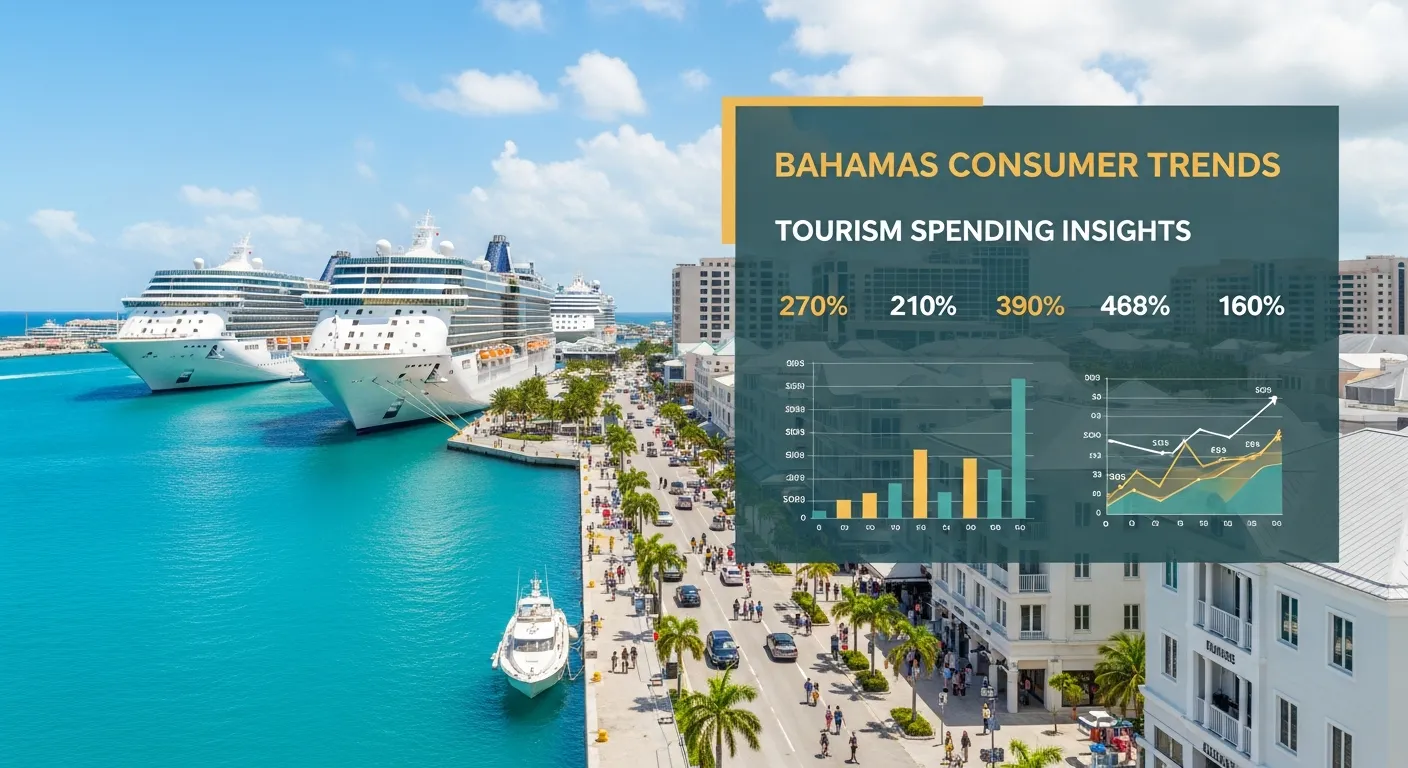
The Bahamas' 403,000 residents live in the Caribbean's wealthiest per-capita economy at $39,455 GDP per capita (World Bank NY.GDP.PCAP.CD, 2024). With $15.8 billion in GDP (World Bank, 2024), 8 million annual tourists, and no income tax, Bahamian consumers operate in a luxury-skewed market where tourism-driven retail and extreme import dependence create unique consumer dynamics found nowhere else in the region.
Bahamas Consumer Market Key Statistics 2025
403K
Population (World Bank, 2025)
$15.8B
GDP (World Bank, 2024)
$39,455
GDP per capita (World Bank NY.GDP.PCAP.CD, 2024)
8M+
Annual tourists
0%
Income tax rate
700+
Islands in archipelago
Luxury Market Dynamics
The Bahamas' unique combination of high per-capita income, zero income tax, and massive tourism volume creates a luxury retail ecosystem unlike any other Caribbean market. The absence of income tax means consumers retain more disposable income, while proximity to the US (just 50 miles from Florida) provides easy access to American luxury brands and shopping trips.
High-net-worth individuals-both resident and visiting-drive demand for premium goods across categories from fashion and jewelry to automotive and real estate. The Bahamas attracts yacht tourism, private island rentals, and ultra-luxury resort stays that create spillover spending in local retail markets.
Tourism-Driven Retail
Bay Street & Downtown Nassau
Bay Street remains the Bahamas' premier shopping destination, serving millions of cruise ship passengers annually. Duty-free shopping for jewelry, watches, perfume, leather goods, and liquor drives a retail economy that serves tourists first and locals second. Key retail dynamics include:
- Cruise passenger spending: Average $150-$300 per port call, concentrated on Bay Street
- Duty-free pricing: 25-40% savings on luxury goods compared to US retail
- Seasonal patterns: October-April peak cruise season drives 65% of annual retail revenue
- Brand presence: Cartier, Gucci, Tiffany, John Bull, Colombian Emeralds International
Atlantis & Resort Shopping
The Atlantis Resort on Paradise Island operates one of the Caribbean's largest resort retail complexes, with luxury boutiques, specialty shops, and entertainment spending that rivals downtown Nassau. The Baha Mar resort has further expanded premium retail options.
Free Caribbean Market Assessment
Discover which research methodology best fits your Caribbean market entry strategy.
Inter-Island Consumer Inequality
The Bahamas' greatest consumer market challenge is the dramatic inequality between Nassau/Paradise Island and the Family Islands (Out Islands). This divide shapes every aspect of consumer behavior:
| Factor | Nassau/Paradise Island | Family Islands |
|---|---|---|
| Population Share | 70% | 30% |
| Modern Retail Access | Full (malls, chains, specialty) | Very limited (small shops only) |
| Food Costs | 30% above US mainland | 50-80% above US mainland |
| Brand Availability | International & premium brands | Basic essentials only |
| Internet Access | 85% broadband penetration | 40-60% with slower speeds |
Bahamas GDP & Employment by Sector 2025 (%)
Sources: Department of Statistics Bahamas | Central Bank of The Bahamas | IDB
Food Import Costs: Highest in the Caribbean
The Bahamas faces the Caribbean's highest food costs, driven by near-total import dependence, archipelagic geography requiring inter-island shipping, and customs duties. Approximately 90% of food is imported, with the US as the primary source.
Food Cost Comparison (vs. US Mainland)
+35%
Nassau grocery prices vs. US average
+65%
Family Island grocery prices vs. US average
90%
Food products imported
$8-12
Average gallon of milk
Bahamas Consumer Spending by Region & Category (%)
Sources: Dept. of Statistics Bahamas | HRG Consumer Survey 2025
Brand Preferences: Premium & Luxury Skew
Bahamian consumers show a distinct preference for premium and international brands, influenced by high disposable income, US media exposure, and tourism industry standards. Key brand dynamics include:
- Grocery: Super Value and AML Foods (Solomon's) dominate local grocery, with US brands preferred over regional alternatives
- Fashion: Strong preference for American and European luxury brands, accessible via Bay Street and Miami shopping trips
- Automotive: High-end vehicle ownership rates; SUVs and luxury sedans are status symbols
- Dining: Growing restaurant culture with premium dining expectations influenced by resort standards
Key Consumer Trends for 2025
1. Luxury Resale & Pre-Owned Market
A growing luxury resale market is emerging through social media platforms and consignment shops. High-income consumers are selling pre-owned luxury goods to middle-income buyers, creating a secondary market that extends brand reach and reflects global sustainability trends.
2. Yacht Tourism Spending
The Bahamas is the Caribbean's premier yachting destination, with marina spending creating a distinct luxury consumer channel. Yacht provisioning, marina services, and onshore spending by yacht guests contribute an estimated $500 million annually to the economy.
3. Digital Banking Transformation
The Central Bank of The Bahamas launched the Sand Dollar, one of the world's first central bank digital currencies. Digital banking adoption is accelerating, with mobile banking users growing 40% annually and digital payment infrastructure expanding to Family Islands.
Frequently Asked Questions
Why is the Bahamas considered a luxury consumer market?
With $39,455 GDP per capita-the highest in the Caribbean-and 8 million annual tourists (many high-net-worth), the Bahamas has a disproportionate luxury retail presence. Bay Street in Nassau and Atlantis Paradise Island feature high-end international brands, and the absence of income tax creates additional disposable income for luxury spending.
How does inter-island inequality affect Bahamas consumer behavior?
Nassau and Paradise Island concentrate 70% of the population and virtually all modern retail. Family Islands have limited retail options, higher food costs due to inter-island shipping, and lower average incomes. This creates a two-tier consumer market with dramatically different shopping behaviors, brand access, and price sensitivity.
Why are food costs so high in the Bahamas?
The Bahamas has the highest food import costs in the Caribbean, importing approximately 90% of food products. The archipelagic geography adds inter-island shipping costs, customs duties increase prices further, and limited local agricultural production means almost total dependence on imported food.
What are the key shopping destinations in the Bahamas?
Bay Street in downtown Nassau is the primary shopping district, featuring duty-free luxury brands. Atlantis Resort has extensive retail offerings. For locals, Super Value and AML Foods (Solomon's) are the dominant grocery chains. The Mall at Marathon and Town Centre Mall serve local consumer needs.
Need Bahamas Consumer Insights?
Our Nassau-based research team provides deep Bahamas market understanding backed by Caribbean research expertise since 1985. Get custom consumer data, luxury market analytics, and tourism impact studies.
Contact Our Bahamas TeamRelated Research
Market Research in The Bahamas
Comprehensive overview of Bahamas market research capabilities
Nassau Market Research
Consumer research and retail analytics in Nassau
Caribbean Consumer Behavior Trends
Multi-market consumer tracking insights across Caribbean islands and diaspora communities
Caribbean Cruise Industry Analysis
Cruise tourism impact on Caribbean retail and consumer spending
Caribbean Tourism Statistics 2025
Comprehensive tourism data and visitor spending trends
Caribbean Fintech Trends
Sand Dollar and digital banking transformation data
Bahamas Constituency Polling Research
Constituency-level survey methodology, sample design, and political polling standards in The Bahamas
bahamas consumer trends Research Report
Get our comprehensive bahamas consumer trends data pack with market analysis, competitive insights, and growth forecasts for strategic planning.