St. Lucia Consumer Trends 2026: $2.66B Economy & Spending Data
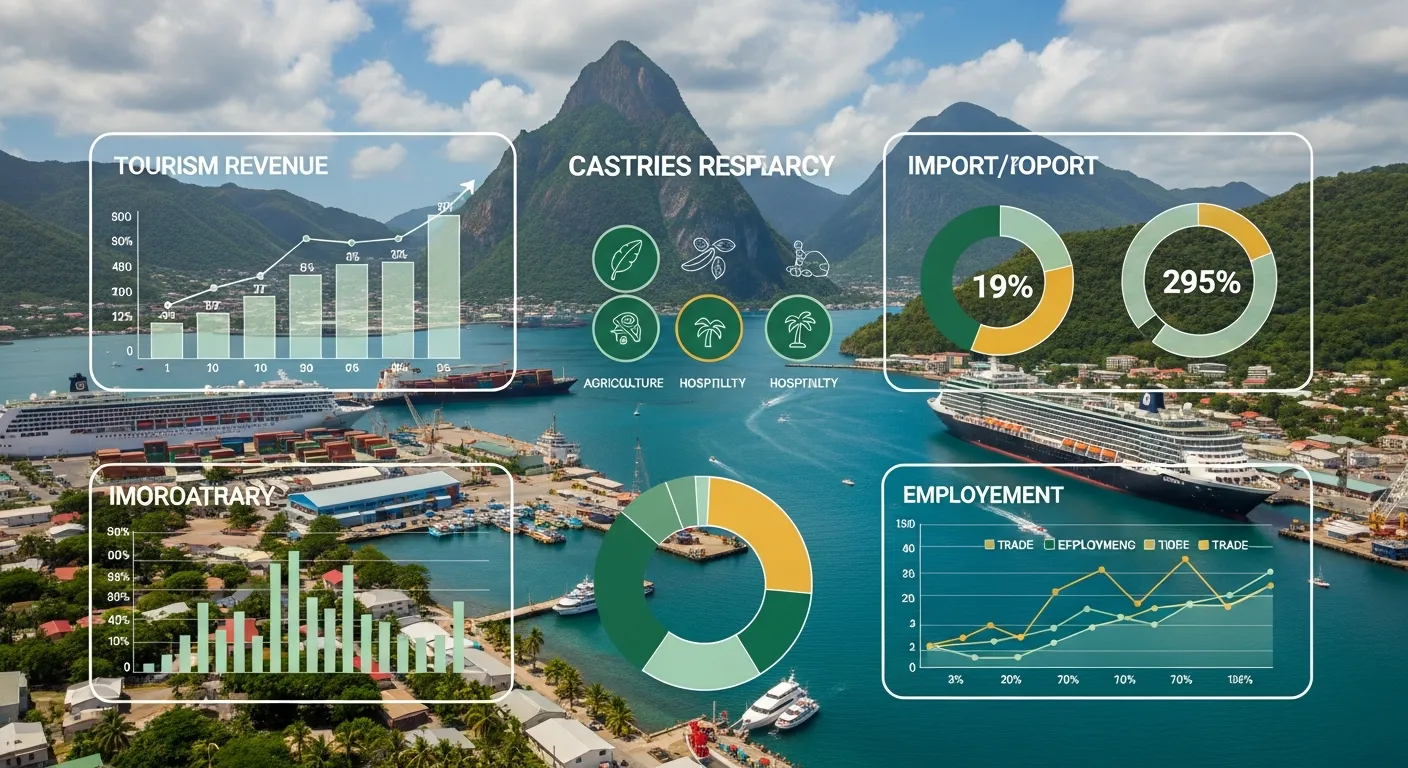
St. Lucia's 183,000 consumers form a compact but strategically important OECS market with a GDP of approximately USD 2.66 billion (World Bank, 2025) in 2026 and a GDP per capita of USD 14,746 (World Bank NY.GDP.PCAP.CD, 2025). Driven by a world-class luxury tourism sector, post-pandemic growth, and an increasingly digitally connected consumer base, the island offers concentrated market opportunities for brands, distributors, and research clients targeting the Eastern Caribbean.
St. Lucia Key Statistics 2026
Population
183,000
2026 estimate
GDP
USD 2.66B
World Bank NY.GDP.MKTP.CD, 2025
GDP per Capita
USD 14,746
World Bank NY.GDP.PCAP.CD, 2025
GDP Growth
4.1%
IMF Q1 2026
Tourism Share of GDP
~65%
WTTC 2025
Smartphone Penetration
74%
GSMA 2025
Sources: World Bank 2026, IMF Caribbean Economic Outlook Q1 2026, WTTC 2025, ECCB 2025, GSMA 2025, OECS Commission 2024
Economic Overview and Consumer Context
St. Lucia is a member of the Organisation of Eastern Caribbean States (OECS) and uses the East Caribbean Dollar (XCD), pegged to the US Dollar at EC$2.70 = US$1.00 (ECCB). This currency peg provides monetary stability, enabling consistent pricing planning for importers and distributors. As a small island developing state, over 60% of consumer goods are imported (OECS Commission, 2024), making supply chain reliability and import duties central determinants of retail pricing.
GDP growth accelerated to an estimated 4.1% in the first quarter of 2026, building on the strong 3.9% growth recorded in 2024. Public debt remains elevated at approximately 72% of GDP, and unemployment stands at 13.5%, both of which constrain aggregate consumer spending power. However, employment in tourism-related sectors has continued to grow, and remittance inflows from the St. Lucian diaspora in the United Kingdom, Canada, and the United States supplement household incomes in lower-income communities.
Tourism: The Primary Consumer Economy Driver
Tourism contributes an estimated 65% of GDP when direct and indirect effects are included (WTTC, 2025). The island's positioning in the luxury tourism segment sets it apart from many OECS neighbours. Properties such as Jade Mountain, the Ladera Resort, Sugar Beach, and the recently expanded Royalton Lucia attract high-net-worth visitors from North America and Europe, generating premium spending in hotel, food, beverage, and retail categories.
Tourism arrival numbers exceeded pre-pandemic levels by approximately 8% in 2025, with particularly strong growth in cruise arrivals through Castries and Soufriere and stay-over visitors through the Hewanorra International Airport. The economic multiplier from tourism employment and supplier linkages creates a meaningful income base for the resident consumer economy, particularly in the Rodney Bay, Castries, and Marigot Bay corridors.
St. Lucia Tourism Arrivals 2019 to 2025 (Thousands)
Stayover and cruise arrivals showing post-pandemic recovery. 2025 is an estimate. Sources: St. Lucia Tourism Authority 2024, WTTC 2025.
Retail Channels and Shopping Behaviour
St. Lucia's retail landscape reflects its small island economy, balancing regional chain stores, independent retailers, and traditional market formats. Castries is the primary commercial hub, and the Rodney Bay strip in the north has become the centre of modern retail concentrated around the Bay Walk Mall, JQ Mall, and the marina retail complex.
St. Lucia Retail Channel Share (% of consumer spending, 2025)
Estimated share of resident consumer spending by retail channel. Social commerce is the fastest growing channel. Sources: OECS Commission Retail Survey 2024, HRG field observations.
| Channel | Key Players | Consumer Segment | Trend |
|---|---|---|---|
| Supermarkets | Massy Stores, Julian's Supermarket | Middle to upper income, urban | Growing |
| Hardware and Home | M&C Home Depot, Courts | Construction, homeowners | Growing |
| Shopping Malls | Bay Walk Mall, JQ Mall | Urban consumers, youth | Growing |
| Traditional Markets | Castries Central Market | Local residents, tourists | Stable |
| Small Shops and Vendors | Independent operators | Rural, lower income | Stable |
| Duty-Free Retail | Pointe Seraphine, La Place Carenage | Cruise passengers, tourists | Growing |
| Social Commerce | Facebook, Instagram local vendors | Youth, urban consumers | Rapidly Growing |
Sources: OECS Commission Retail Survey 2024, HRG field observations, St. Lucia Chamber of Commerce 2025
Consumer Brand Preferences: FMCG and Beverages
Food and Grocery
As an OECS market, St. Lucia relies heavily on regional food distributors supplying both locally manufactured and imported goods. Massy Stores (Trinidad-based) is the dominant supermarket operator, offering a mix of regional brands, US imports, and private label products. Local agricultural production supplies fresh markets with bananas, cocoa, mangoes, and tropical vegetables. The banana industry's structural decline following the end of EU preferential trade arrangements has redirected agricultural employment toward tourism services, though there is a growing movement toward agroprocessing and farm-to-hotel supply chains.
Beverages
Piton Beer, brewed locally and named after St. Lucia's iconic volcanic peaks, is the national beer brand and commands strong resident loyalty. St. Lucia Distillers produces Chairman's Reserve and Bounty rums, which are gaining international export recognition and attracting premium consumer interest domestically. The broader beverage market reflects OECS patterns, with Carib and Banks distributed alongside regional soft drink brands and imported juice lines from Trinidad. Premium spirits consumption is growing among higher-income urban consumers, aligned with Caribbean-wide premiumisation trends. See the Caribbean premium spirits market overview for broader context.
Telecommunications
Digicel and Flow (Liberty Latin America) compete for the St. Lucia telecommunications market. Mobile penetration exceeds 100% SIM-to-population, with multi-SIM usage common. 4G LTE coverage has expanded substantially since 2022 and now reaches the majority of urban and suburban areas. Rural highland areas continue to experience connectivity gaps. The expanding 4G footprint is accelerating digital payment adoption and social media usage among younger consumers.
Digital Adoption and Consumer Technology Trends in 2026
Smartphone penetration reached an estimated 74% of the St. Lucian adult population in 2025 (GSMA), up from 62% in 2022. Social media penetration is high among the 18 to 45 cohort, with Facebook remaining the dominant platform for community commerce and event-driven consumption. Instagram and TikTok are growing rapidly among under-35 consumers. The ECCB DCash digital currency programme, which covers OECS member states, has raised consumer awareness of digital payment options, though adoption in St. Lucia among everyday retail transactions remains modest.
E-commerce faces structural barriers in St. Lucia: import duties, customs handling delays, and limited last-mile delivery infrastructure make international online purchases costly and slow compared to the mainland consumer experience. Local e-commerce is primarily social commerce, with Facebook Marketplace and Instagram business pages serving as storefronts for small retailers and artisans. This is an area of rapid growth that traditional large-format retailers have not yet effectively entered.
Consumer Trends to Watch in 2026
Premium tourism revenue spillover. As St. Lucia's luxury resort capacity expands, the economic benefits increasingly reach resident suppliers, food producers, and artisans through hotel procurement and supplier linkage programmes. This creates a modest but growing premium consumer segment among workers in the upper tiers of the tourism sector.
Climate resilience spending. Hurricane preparedness drives seasonal spending on building materials, water storage, and emergency supplies. The 2024 Atlantic hurricane season's above-average activity reinforced this behaviour, with consumers and businesses prioritising structural resilience investments.
Youth and diaspora influence. The St. Lucian diaspora in the United Kingdom, Canada, and the United States maintains strong cultural connections to the island and influences consumer trends through remittances and return visits. Diaspora-influenced preferences for premium food, international fashion brands, and technology products create aspirational consumption patterns that are reshaping retail demand in Castries and Rodney Bay.
For a full framework on conducting consumer research across the Eastern Caribbean, see HRG's Caribbean B2B market research guide, or review the Grenada consumer trends overview and St. Kitts and Nevis consumer data for comparable OECS market context.
Free Caribbean Market Assessment
Discover which research methodology best fits your Caribbean market entry strategy.
What is St. Lucia's GDP in 2026?
St. Lucia's GDP is approximately $2.5 billion in 2026, with GDP per capita of $14,746. Tourism contributes 40% of GDP, with banking and agriculture (bananas, cocoa) as secondary drivers.
What is the population of St. Lucia?
St. Lucia has approximately 184,000 residents in 2026, with 33% living in greater Castries. The island welcomes over 1.3 million visitors annually, dramatically expanding the consumer base for retail and hospitality.
What are the top consumer trends in St. Lucia?
Top St. Lucia consumer trends in 2026 include rapid digital banking adoption (62% of adults), e-commerce growth led by Amazon and regional players, premiumization in food and beverage, and rising demand for wellness and eco-tourism services.
St. Lucia Research
Need a St. Lucia market research proposal?
HRG conducts consumer studies, hospitality research, and brand tracking across St. Lucia and the wider OECS. Local field teams, French and English capability. Proposals within 24 to 48 hours, depending on complexity.
Caribbean Market Entry Guide 2026
28-page research guide covering consumer data, retail channel maps, and market entry frameworks across 14 Caribbean territories including St. Lucia and the OECS.