Caribbean FMCG Market Analysis 2025: $6B+ Industry Report
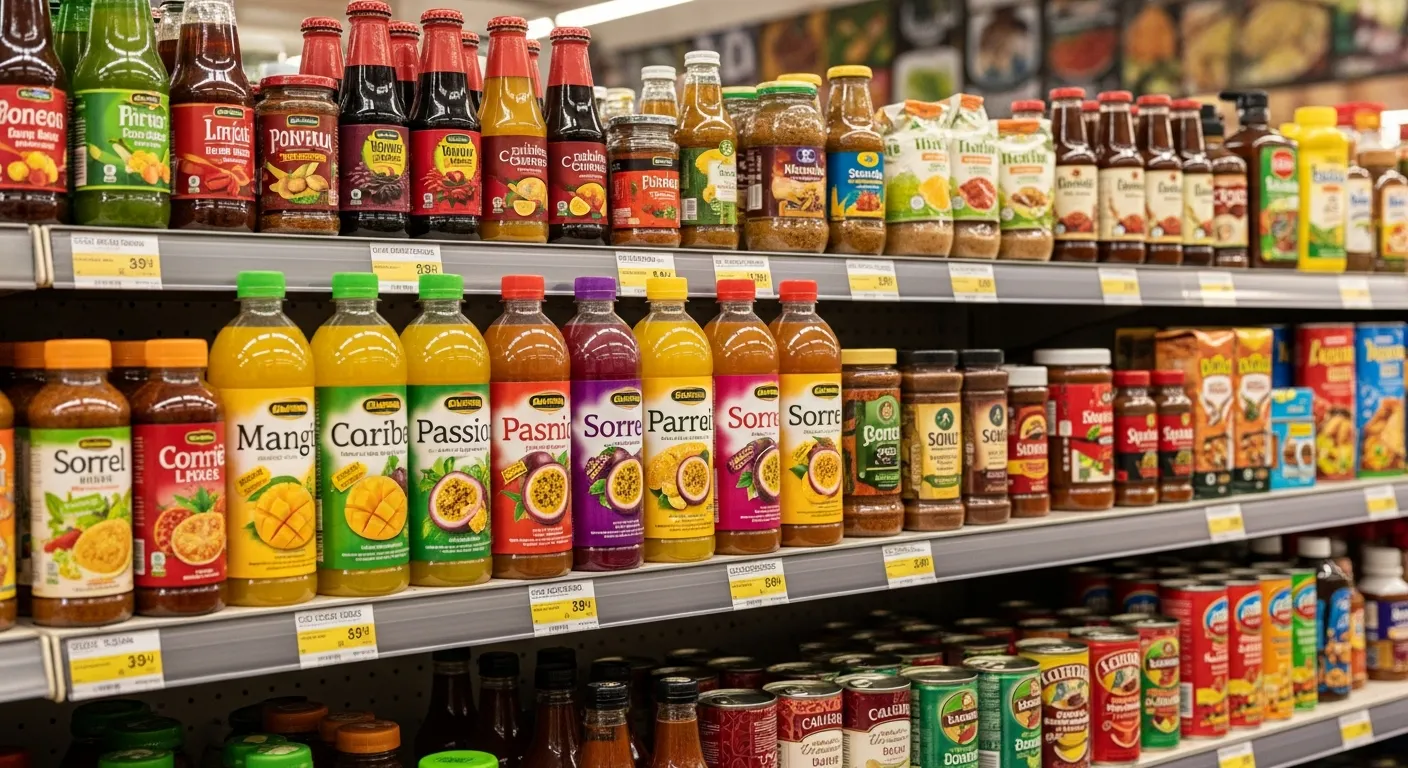
The Caribbean fast-moving consumer goods (FMCG) market represents a dynamic $6+ billion opportunity spanning 21 markets with diverse consumer preferences, unique distribution challenges, and significant growth potential. This comprehensive analysis examines market size, key segments, distribution dynamics, and competitive landscape across the region.
Caribbean FMCG Market Overview 2025
The Caribbean FMCG sector has demonstrated remarkable resilience, recovering from pandemic disruptions to reach pre-2020 growth trajectories. Market value now exceeds $6.2 billion, with projected compound annual growth rate (CAGR) of 4.8% through 2030. Growth is driven by population dynamics, tourism recovery, diaspora remittances, and evolving consumer preferences toward premium and health-conscious products.
Caribbean FMCG Market Statistics 2025
$6.2B
Total FMCG market value
4.8%
Projected CAGR 2025-2030
$2.4B
Beverage segment value
55-65%
Traditional trade share
Evaluating Caribbean FMCG distribution or planning a product launch? We run retail audits, shopper intercepts, and trade interviews across 20+ Caribbean markets. Book a call with our team.
Market Segmentation by Product Category
Beverages ($2.4 Billion)
The beverage segment leads Caribbean FMCG with $2.4 billion in annual sales, representing 39% of total market value. Carbonated soft drinks remain dominant, though non-alcoholic alternatives and premium water categories show the strongest growth at 8-10% annually.
- Carbonated Soft Drinks: $890 million market dominated by Coca-Cola and PepsiCo, with regional players like SM Jaleel's Chubby maintaining strong positions in specific markets
- Alcoholic Beverages: $680 million segment led by rum (Angostura, Appleton, Mount Gay) with craft beer emerging as fastest-growing category
- Bottled Water: $340 million and growing at 9% CAGR as health consciousness rises
- Juices & Nectars: $290 million with local brands like Grace competing against global players
- Energy Drinks: $200 million, with Red Bull leading but facing competition from Monster and regional alternatives
Packaged Food ($2.1 Billion)
Packaged food represents 34% of the Caribbean FMCG market with $2.1 billion in annual sales. Import dependency remains high (60-80% of packaged food is imported in most markets), creating opportunities for local manufacturing and regional trade.
- Dairy Products: $520 million market with Nestlé and local players competing; fresh dairy challenged by cold chain limitations
- Snacks & Confectionery: $410 million with strong growth in premium and health-focused options
- Canned & Preserved Foods: $380 million; essential category due to hurricane preparedness and shelf-life requirements
- Breakfast Cereals: $180 million dominated by Kellogg's and General Mills
- Baby Food & Nutrition: $160 million with Nestlé and Danone leading
Need Caribbean FMCG Market Intelligence?
Planning a distribution strategy, product launch, or competitive audit? We run retail channel audits, shopper intercepts, and trade interviews across 20+ Caribbean markets.
Personal Care & Home Care ($1.5 Billion)
Personal care and household products represent 24% of Caribbean FMCG at $1.5 billion. This segment shows the strongest premiumization trend, with consumers increasingly willing to pay more for quality brands and natural/organic formulations.
| Category | Market Size | Growth Rate | Key Players |
|---|---|---|---|
| Hair Care | $380M | 6.2% | Unilever, P&G, Shea Moisture |
| Skin Care | $320M | 7.8% | Unilever, Beiersdorf, L'Oréal |
| Oral Care | $210M | 3.5% | Colgate-Palmolive, P&G |
| Home Care | $340M | 4.1% | Reckitt, P&G, SC Johnson |
| Laundry Care | $250M | 3.2% | Unilever, P&G, Henkel |
Distribution Channels Analysis
Traditional Trade (55-65% of Sales)
Traditional trade remains the backbone of Caribbean FMCG distribution. Small independent retailers, corner shops, rum bars, and street vendors collectively account for the majority of consumer purchases. Key characteristics include:
- Fragmented landscape: Jamaica alone has 25,000+ small retail outlets requiring extensive distribution networks
- Cash-based transactions: Limited credit card penetration means cash management is critical
- Relationship-driven: Store owners value personal relationships with sales representatives
- Limited cold chain: Refrigeration challenges affect dairy, beverages, and frozen product distribution
Modern Trade (25-35% of Sales)
Supermarkets and hypermarkets show the strongest growth trajectory, expanding rapidly in urban centers. Key players include regional chains like Massy Stores (Trinidad, Barbados), PriceSmart (warehouse club format), and local champions like Hi-Lo (Jamaica) and Super Select (Bahamas).
Distribution Channel Share by Market
| Country | Traditional | Modern | E-commerce |
|---|---|---|---|
| Jamaica | 62% | 35% | 3% |
| Trinidad & Tobago | 55% | 41% | 4% |
| Dominican Republic | 58% | 38% | 4% |
| Barbados | 48% | 48% | 4% |
| Puerto Rico | 35% | 58% | 7% |
Market estimates based on HRG analysis of regional trade data, industry reports, and proprietary field research across Caribbean markets. Distribution channel splits reflect 2024-2025 observations from major retail centers.
Competitive Landscape
Global Multinationals
International FMCG giants maintain dominant positions across Caribbean markets through established distribution networks, brand equity, and marketing investment. However, they face increasing competition from agile regional players who better understand local preferences.
- Nestlé: Market leader in dairy, coffee, and infant nutrition with manufacturing presence in Jamaica and Dominican Republic
- Unilever: Dominant in personal care and home care with strong local production in Trinidad
- P&G: Leading in laundry, hair care, and personal care through distribution partnerships
- PepsiCo: Beverages and snacks leader with Frito-Lay and Gatorade portfolios
- Coca-Cola: Beverage market leader through WISYNCO (Jamaica) and other regional bottlers
Regional Champions
Local and regional companies have built strong positions by understanding Caribbean consumers and developing products tailored to local tastes:
- GraceKennedy (Jamaica): Diversified food and beverage conglomerate with $1B+ revenue across the Caribbean
- Seprod (Jamaica): Leading manufacturer of cooking oils, margarine, and dairy products
- SM Jaleel (Trinidad): Beverage powerhouse with Chubby, Fruta, and Turbo brands
- Massy Group (Trinidad): Integrated distribution and retail across multiple markets
- Grupo Ramos (Dominican Republic): Leading retail and distribution in largest Caribbean market
Consumer Trends Shaping Caribbean FMCG
Health and Wellness
Caribbean consumers increasingly prioritize health, driving demand for low-sugar beverages, whole grain products, and natural personal care. Diabetes and obesity rates among the world's highest have raised awareness of dietary choices. Products with "no added sugar," "natural," and "organic" claims command 15-25% price premiums.
Premiumization
Despite economic challenges, middle-class growth and diaspora remittances ($18.4B annually) support premiumization across categories. Consumers trade up for special occasions and increasingly view premium brands as status symbols. Craft spirits, artisanal products, and imported specialty items show double-digit growth.
Convenience and On-the-Go
Urbanization and changing lifestyles drive demand for convenient formats. Single-serve packaging, ready-to-eat meals, and on-the-go snacks grow faster than traditional family-size formats, particularly among younger consumers in major urban centers.
Premium Caribbean FMCG Research Reports
Access our comprehensive market intelligence reports with detailed category analysis, distribution mapping, and consumer insights for Caribbean FMCG markets.
Browse Research ReportsKey Market Challenges
- Logistics complexity: Multi-island markets require sophisticated distribution networks with high per-unit costs
- Import dependency: Currency fluctuations and shipping costs create pricing volatility
- Small market sizes: Limited economies of scale challenge local manufacturing viability
- Informal competition: Unregistered traders and cross-border smuggling affect formal market share
- Climate vulnerability: Hurricane seasons disrupt supply chains and damage retail infrastructure
Market Entry Recommendations
For brands considering Caribbean market entry, success requires:
- Local distribution partnerships with established wholesalers who understand traditional trade dynamics
- Price-point optimization accounting for duties, VAT, and competitive positioning
- Pack size adaptation for local consumption patterns and purchasing power
- Cultural marketing that resonates with Caribbean identity and values
- Regulatory compliance across multiple jurisdictions with varying requirements
Frequently Asked Questions
How large is the Caribbean FMCG market in 2025?
The Caribbean FMCG market is valued at over $6 billion in 2025, with beverages representing the largest segment at $2.4 billion, followed by packaged food at $2.1 billion, and personal care at $1.5 billion.
What are the main distribution channels for FMCG in the Caribbean?
Traditional trade (mom-and-pop shops, street vendors) accounts for 55-65% of FMCG sales in most Caribbean markets. Modern trade (supermarkets, hypermarkets) represents 25-35%, with e-commerce growing but still under 5%.
Which FMCG categories are growing fastest in the Caribbean?
Premium beverages, health and wellness products, and organic/natural personal care are the fastest-growing categories, with growth rates of 8-12% annually compared to 3-4% for traditional FMCG categories.
Who are the major FMCG players in the Caribbean market?
Major players include global giants like Nestlé, Unilever, P&G, PepsiCo, and Coca-Cola, alongside strong regional players such as Seprod (Jamaica), SM Jaleel (Trinidad), and GraceKennedy across multiple markets.
Conclusion
The Caribbean FMCG market offers significant opportunities for brands willing to invest in understanding its unique dynamics. Success requires balancing global brand standards with local adaptation, building robust distribution networks, and responding to evolving consumer preferences. With proper market intelligence and local partnerships, the $6+ billion Caribbean FMCG sector represents a compelling growth opportunity for 2025 and beyond.
Need Caribbean FMCG Market Intelligence?
Our team provides custom research solutions for FMCG brands entering or expanding in Caribbean markets, including distribution audits, consumer studies, and competitive analysis.
Request a ConsultationRelated Articles
Prefer a PDF copy of this report? Enter your work email and we will send one across.
Download the Caribbean FMCG Market Analysis Report
Full breakdown of market size, category segmentation, distribution channels, competitive landscape, and growth forecasts across the Caribbean FMCG sector.