Jamaica Senior Living & Retirement Market 2025
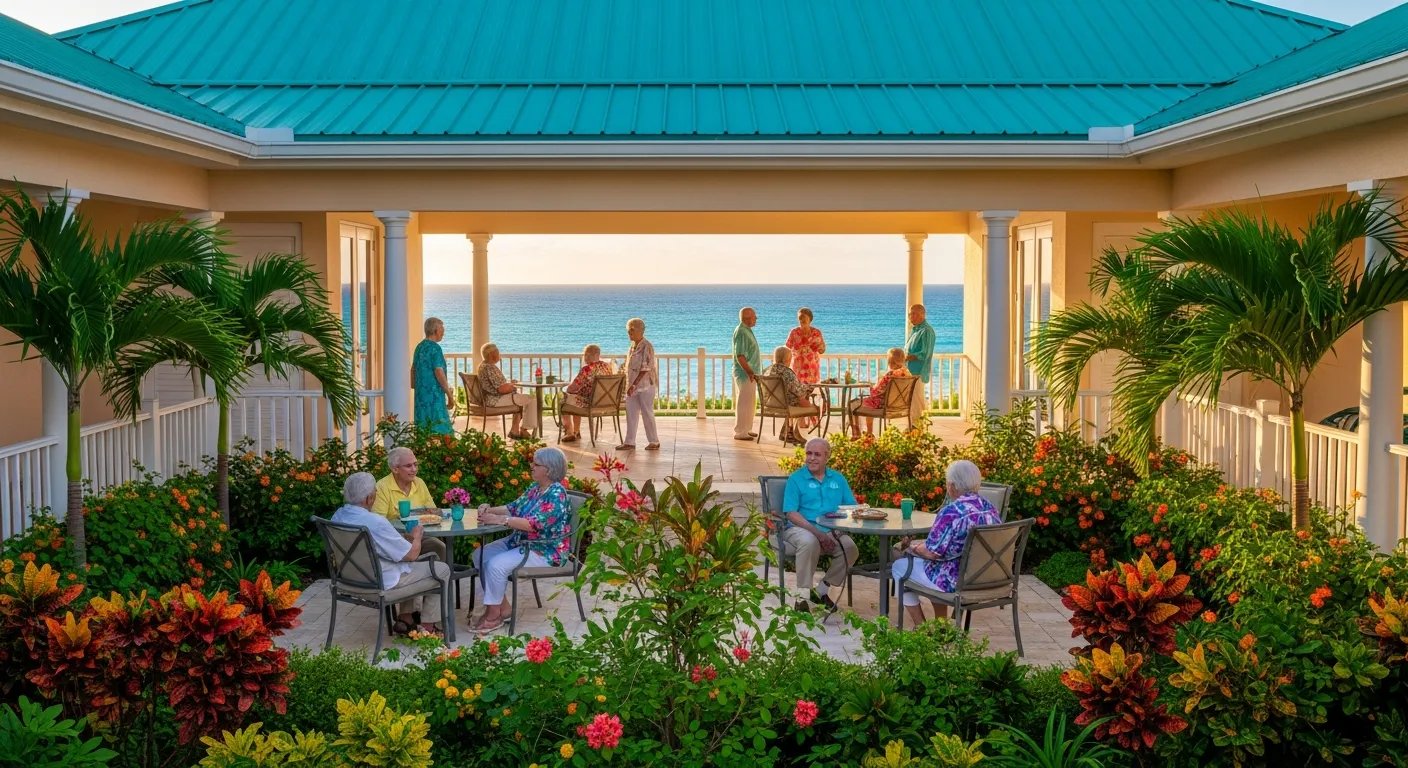
Jamaica has 244,000 residents aged 65 and older. It has 1.3 million diaspora members abroad, many approaching retirement age. It has a real estate market projected to reach $205 billion by 2034. And it has exactly zero Continuing Care Retirement Communities. For investors, developers, and healthcare operators looking at the Caribbean, that gap between demand and supply tells a compelling story.
Executive Summary: Why Jamaica, Why Now
The global senior living industry is a $325 billion market growing at 5-6% annually. In the United States alone, senior housing occupancy has climbed for 17 consecutive quarters, reaching 88.7%, with new construction at a record-low 0.7% of existing inventory. Capital is flowing, demand is surging, and developers are running out of greenfield opportunities in mature markets.
Meanwhile, Jamaica sits at the intersection of several powerful demographic and economic trends: a rapidly aging domestic population, a large and affluent diaspora with deep cultural ties to the island, a government actively courting foreign investment in healthcare and real estate, and a complete absence of modern senior living infrastructure. The result is a market that is simultaneously underserved and primed for development.
This report examines the demographic foundations, demand drivers, competitive landscape, pricing considerations, and research requirements for entering Jamaica's senior living market. Whether you are a US-based CCRC operator exploring international expansion, a real estate developer evaluating resort-to-retirement conversions, or an investor assessing Caribbean healthcare opportunities, this analysis provides the market intelligence framework for informed decision-making.
Jamaica Senior Living Market at a Glance
244K+
Residents aged 65+
1.3M
Jamaican diaspora abroad
0
CCRCs in Jamaica
8.6%
Population aged 65+
$325B
Global senior living market
73.5yr
Life expectancy
Jamaica's Aging Demographics: The Foundation of Demand
Jamaica is officially classified as having an "old" population by the Planning Institute of Jamaica (PIOJ). The country has transitioned through Stage 4 of the demographic transition, characterized by low birth rates and low death rates, resulting in a steadily aging population that will accelerate over the coming decades.
Population Structure 2025
Jamaica's total population stands at approximately 2.84 million, with a median age of 33.8 years. The 65+ cohort of 244,000 represents 8.6% of the total population, up from 7.6% in 2011. More significantly, the elderly dependency ratio has reached 13.9 elderly dependents per 100 working-age people, a figure that will rise sharply as Jamaica's below-replacement fertility rate of 1.6 children per woman continues to compress the working-age population.
| Metric | 2011 | 2018 | 2025 | Trend |
|---|---|---|---|---|
| Population 65+ | 7.6% | ~8.0% | 8.6% | ↑ Growing |
| Population 55+ | ~11% | 13.85% | ~15% | ↑ Growing |
| Fertility Rate | 2.0 | 1.7 | 1.6 | ↓ Below replacement |
| Life Expectancy | 72.1 yr | 72.8 yr | 73.5 yr | ↑ Rising |
| Elderly Dependency Ratio | 11.2 | 12.5 | 13.9 | ↑ Growing |
Sources: Statistical Institute of Jamaica, UN World Population Prospects 2024, PIOJ Survey of Living Conditions
These numbers tell a clear story: Jamaica will have more seniors, living longer, with fewer working-age family members to provide informal care. This is the same demographic pattern that drove the $907 billion US senior living industry, but Jamaica is at least two decades behind in building the infrastructure to serve this population.
The Diaspora Factor: Jamaica's Hidden Demand Driver
What makes Jamaica's senior living opportunity unique in the Caribbean is not just its domestic aging population, it is the sheer scale of its diaspora. An estimated 1.2 to 1.3 million Jamaicans live abroad, concentrated in three wealthy nations:
| Country | Jamaican Diaspora | Key Concentrations | Retirement Relevance |
|---|---|---|---|
| United States | ~800,000 | South Florida, New York, Connecticut | US pension portability, Medicare gaps abroad |
| United Kingdom | ~300,000 | London, Birmingham, Manchester | UK state pension portable, Windrush generation aging |
| Canada | ~300,000 | Toronto, Montreal, Ottawa | Canadian pension portable, winter escape demand |
The diaspora retirement dynamic is well-documented. Jamaica's 2011 Census found that return migrants represent over 5% of the population, and critically, 50% of return migrants are aged 50 or older. These are not economic migrants, they are retirees with accumulated wealth, pension income in hard currencies (USD, GBP, CAD), and a deep emotional desire to "go back home."
For a senior living developer, this diaspora represents a uniquely attractive customer segment. They are accustomed to Western healthcare standards, familiar with the CCRC model from their adopted countries, hold pensions that convert favorably against the Jamaican dollar, and have both the financial means and cultural motivation to invest in a Caribbean retirement lifestyle.
The UK's Windrush generation, Jamaicans who migrated to Britain between 1948 and 1971, represents a particularly time-sensitive opportunity. This cohort is now aged 70-90+, and their children (second-generation British Jamaicans) are themselves approaching retirement age. The cultural pull toward Jamaica for retirement remains strong across both generations.
Current Senior Care Landscape: The Gap in Infrastructure
To understand the opportunity, it is essential to understand what currently exists, and what does not, in Jamaica's senior care market.
What Exists Today
- Small assisted living facilities, Providers like Village Eldercare Golden Age offer assisted living for diabetic, hypertension, stroke recovery, and early Alzheimer's patients with 24/7 nursing staff. These serve a necessary healthcare function but lack lifestyle amenities.
- Nursing homes, Doctor-owned facilities like Comfort Care in Kingston 10 provide 24/7 medical support and long-term care. These are clinical environments, not lifestyle communities.
- Informal family care, The dominant model in Jamaica, where elderly parents live with adult children or extended family. This is increasingly strained by emigration of working-age Jamaicans and smaller family sizes.
- Government infirmaries, Public facilities that serve indigent elderly populations. These are under-resourced and not relevant to the affluent market segment.
What Does Not Exist
- Continuing Care Retirement Communities (CCRCs), No facility in Jamaica offers the independent living → assisted living → skilled nursing continuum on a single campus
- Luxury life plan communities, No resort-style senior living with fitness centers, pools, dining venues, social programming, and concierge services
- Active adult communities (55+), No age-restricted residential developments designed for active retirees
- Memory care facilities, No specialized dementia or Alzheimer's care communities
The Only Caribbean Precedent
Assisted Villas in the Dominican Republic operates the Caribbean's only notable senior living concept, low-density villa communities (5-6 residents per villa) with resort-style living, 24/7 nursing, and beach access. They offer trial stays of 2-4 weeks before long-term commitment. While not a CCRC, their model demonstrates that Caribbean senior living can work. Jamaica's stronger diaspora ties, English-speaking population, and deeper tourism infrastructure suggest it could support a more ambitious model.
The Resort-to-Retirement Conversion Model
One of the most capital-efficient paths into Jamaica's senior living market is the conversion of existing resort properties into retirement communities. Jamaica has numerous resort properties, some underperforming, some distressed, that offer the physical infrastructure, coastal locations, and amenity packages that align naturally with luxury senior living.
Why Resort Conversion Works
- Infrastructure exists, Pools, dining facilities, landscaped grounds, and ocean views are already built. Conversion costs are significantly lower than ground-up development.
- Location premium, Resort properties sit on Jamaica's most desirable coastline, exactly where affluent retirees want to live.
- Amenity alignment, Resort amenities (spa, fitness, dining, activities programming) map directly to luxury senior living expectations.
- Operational transition, Hospitality operations (housekeeping, food service, guest services) translate to senior living operations with healthcare overlay.
- Brand familiarity, Many diaspora retirees have visited Jamaica as tourists and are already emotionally connected to the resort experience.
Conversion Considerations
Resort-to-retirement conversion requires careful analysis of several factors: healthcare infrastructure proximity (distance to hospitals, specialist physicians, emergency services), building code compliance for accessibility (ADA-equivalent standards, wheelchair accessibility, medical equipment support), staffing availability (registered nurses, certified nursing assistants, geriatric specialists), and regulatory approvals for healthcare operations within a residential setting.
Evaluating a Senior Living Investment in Jamaica?
Our feasibility research covers pricing validation, consumer segmentation, competitive analysis, and regulatory assessment | backed by Caribbean market intelligence since 1985.
Pricing and Financial Considerations
Pricing a luxury senior living community in Jamaica requires understanding both the local economic context and the purchasing power of the target customer segments. The arbitrage between US/UK senior living costs and Jamaica's cost base creates an attractive value proposition for diaspora retirees while remaining premium in the local market.
US CCRC Pricing Benchmarks
Average Entrance Fee
$329,900
Range: $40,000 - $2,000,000+
Average Monthly Fee
$3,555/mo
Range: $2,000 - $7,000+
A Jamaica-based luxury community could potentially offer comparable amenity levels at 40-60% of US pricing while maintaining strong margins, due to lower land costs, labor costs, and construction costs. However, this pricing hypothesis requires rigorous validation through pricing research and elasticity studies that account for willingness-to-pay across different customer segments.
Key Pricing Questions to Research
- What entrance fee range are affluent Jamaican households (local) willing to pay for a life plan community?
- How does pricing sensitivity differ between diaspora retirees (holding USD/GBP pensions) and local affluent seniors?
- What is the optimal fee structure, entrance fee + monthly, rental-only, or equity ownership?
- How does the absence of competitors affect pricing power vs. the need to establish the category?
- What healthcare service levels justify premium pricing tiers?
Target Customer Segmentation
A Jamaica senior living development would serve three distinct customer segments, each with different motivations, purchasing power, and expectations. Understanding these segments through segmentation research is critical for positioning, pricing, and marketing strategy.
Segment 1: Affluent Local Jamaicans
Profile
Successful professionals, business owners, and high-net-worth individuals in Kingston, Montego Bay, and Mandeville aged 65+
Motivation
Desire for safety, healthcare access, lifestyle amenities, and reduced burden on adult children, many of whom have emigrated
Purchasing Power
JMD-denominated income and assets. Price-sensitive relative to diaspora segment.
Key Concern
Quality of healthcare, cultural stigma around "putting parents in a home"
Segment 2: Diaspora Retirees (US, UK, Canada)
Profile
First and second-generation Jamaican emigrants aged 60-80+ with pensions in USD, GBP, or CAD. Includes Windrush generation (UK) and post-1965 US migrants.
Motivation
Cultural return, climate, lower living costs, reconnection with family and community, escape from winters
Purchasing Power
Strong, foreign currency pensions provide premium purchasing power in Jamaica. US Social Security, UK State Pension, and Canadian CPP are all portable.
Key Concern
Healthcare quality comparable to what they left, safety, proximity to international airport for family visits
Segment 3: International Retirees
Profile
Non-Jamaican retirees attracted by Caribbean lifestyle, Americans, Canadians, British, and Europeans seeking warm-climate retirement
Motivation
Climate, cost arbitrage vs. US/UK senior living, adventure of retirement abroad, Jamaica's established tourism brand
Purchasing Power
Highest, seeking luxury product, less price-sensitive, but most demanding on service quality and amenities
Key Concern
Safety perceptions, healthcare infrastructure, cultural integration, ease of visa/residency process
Competitive Landscape: Caribbean-Wide
A thorough competitive analysis reveals that the Caribbean senior living market is essentially greenfield. No country in the region has a developed CCRC sector, though several have adjacent offerings:
| Country | Senior Living Status | Relevance to Jamaica |
|---|---|---|
| Dominican Republic | Assisted Villas operates villa-based assisted living with resort amenities | Proof of concept for Caribbean senior living; serves primarily US expats |
| Barbados | No CCRCs; small nursing homes; strong expat retirement market | Similar demographics and diaspora dynamics; potential second market |
| Trinidad & Tobago | No CCRCs; limited assisted living; wealthier domestic market | Higher GDP per capita; potential for premium pricing; oil wealth segment |
| Bahamas | No CCRCs; small elderly care facilities; high cost of living | Proximity to Florida; could serve US retirees wanting island lifestyle |
| Cayman Islands | No CCRCs; high-net-worth retiree population; limited healthcare | Ultra-premium segment; financial services retirees |
The competitive vacuum is striking. Across the entire Caribbean, 44 million people, dozens of island nations, millions of aging diaspora, there is effectively no modern senior living industry. The developer or operator who establishes a successful model in Jamaica would have a template for regional expansion across multiple islands.
Regulatory and Operational Considerations
Entering Jamaica's senior living market requires navigating several regulatory and operational dimensions that differ significantly from US or UK markets:
- Healthcare licensing, Jamaica's Ministry of Health and Wellness regulates healthcare facilities. A CCRC offering skilled nursing would require appropriate licensing, inspections, and compliance with national healthcare standards.
- Foreign investment framework, Jamaica actively encourages foreign direct investment through JAMPRO (Jamaica Promotions Corporation). Special incentive regimes may apply to healthcare and tourism-adjacent developments.
- Real estate regulations, Foreign ownership of Jamaican property is permitted, though developments over certain thresholds require National Environment and Planning Agency (NEPA) approvals.
- Staffing and training, Jamaica has a well-regarded nursing and healthcare training infrastructure, but competition from overseas recruitment (nurses emigrating to US, UK, Canada) creates staffing challenges that require proactive workforce strategies.
- Insurance and liability, Professional liability, property insurance, and healthcare malpractice coverage must be structured for the Jamaican regulatory environment.
- Currency management, Revenue in mixed currencies (JMD from local residents, USD/GBP/CAD from diaspora/international residents) requires careful foreign exchange management.
Research Requirements for Market Entry
Before committing capital to a Jamaica senior living development, investors and developers need rigorous market entry research covering several dimensions:
Essential Research Components
Pricing Validation & Elasticity
Conjoint analysis and willingness-to-pay research across all three customer segments. Determines optimal entrance fees, monthly fees, and service tier pricing.
Consumer Segmentation
Quantitative survey of local affluent seniors, diaspora retirees (US, UK, Canada), and international retirees. Maps motivations, barriers, and purchase intent.
Feasibility Assessment
Financial modeling including construction/conversion costs, operating costs, staffing models, and revenue projections under multiple occupancy scenarios.
Location Analysis
Geospatial analysis of potential sites and resort conversion candidates, evaluating proximity to hospitals, airports, amenities, and target population clusters.
Regulatory & Compliance
Healthcare licensing requirements, foreign investment approvals, building code compliance, and insurance/liability structuring for Jamaica.
Competitive Intelligence
Assessment of existing care facilities, emerging competitors, and adjacent offerings across Jamaica and the wider Caribbean.
The Expansion Opportunity: Beyond Jamaica
Jamaica is the logical beachhead for Caribbean senior living, but the regional opportunity extends far beyond a single island. Every major Caribbean nation shares similar demographic trends, aging populations, large diasporas, and zero modern senior living infrastructure. A proven model in Jamaica creates a template for expansion into:
- Barbados, Strong British retiree market, high healthcare standards, established expat community
- Trinidad & Tobago, Highest GDP per capita in the Caribbean, oil wealth, growing elderly population
- The Bahamas, Proximity to Florida, luxury positioning, tourism infrastructure
- Cayman Islands, Ultra-high-net-worth retirees from financial services sector
- Dominican Republic, Assisted Villas has demonstrated proof of concept; larger market by population
Hope Research Group operates across all of these markets with established field teams and research facilities, enabling multi-market feasibility studies from a single research partner.
Conclusion: A Market Waiting for Its First Mover
Jamaica's senior living market is not a speculative bet on a trend that might materialize someday. The demographics are already here: 244,000 seniors and growing. The diaspora demand is already here: 1.3 million Jamaicans abroad, half of returning migrants are 50+. The competitive vacuum is already here: zero CCRCs across the entire Caribbean.
What the market lacks is the rigorous, independent research that gives investors and developers the confidence to commit capital. Pricing validation, demand quantification, regulatory mapping, and location analysis are not optional for a development of this scale and novelty, they are the foundation upon which viable business plans are built.
The question is not whether Caribbean senior living will develop as an industry. The global demographic mega-trend of population aging, combined with Caribbean diaspora dynamics and growing retiree mobility, makes it inevitable. The question is who will move first, and whether they will do so with the market intelligence required to get it right.
Research Partnership for Senior Living Market Entry
Hope Research Group has conducted market research across the Caribbean since 1985. We specialize in pricing validation, feasibility studies, consumer segmentation, and market entry research for organizations entering new markets. Contact us to discuss your senior living or retirement community project.
Request a ConsultationRelated Articles
Jamaica Travel Industry Report 2025
Complete tourism analysis with 4.5M+ visitor data and revenue insights
Caribbean Economic Forecast 2025
GDP growth, investment climate, and economic outlook across the region
Diaspora Consumer Research: Caribbean Expats
Understanding Caribbean diaspora consumer behavior and motivations
Caribbean Market Size & Economic Data
Regional market sizing data and economic analysis
jamaica senior living retirement market Research Report
Get our comprehensive jamaica senior living retirement market data pack with market analysis, competitive insights, and growth forecasts for strategic planning.