Caribbean Trade Census and Retail Audit: The Complete Field Intelligence Guide
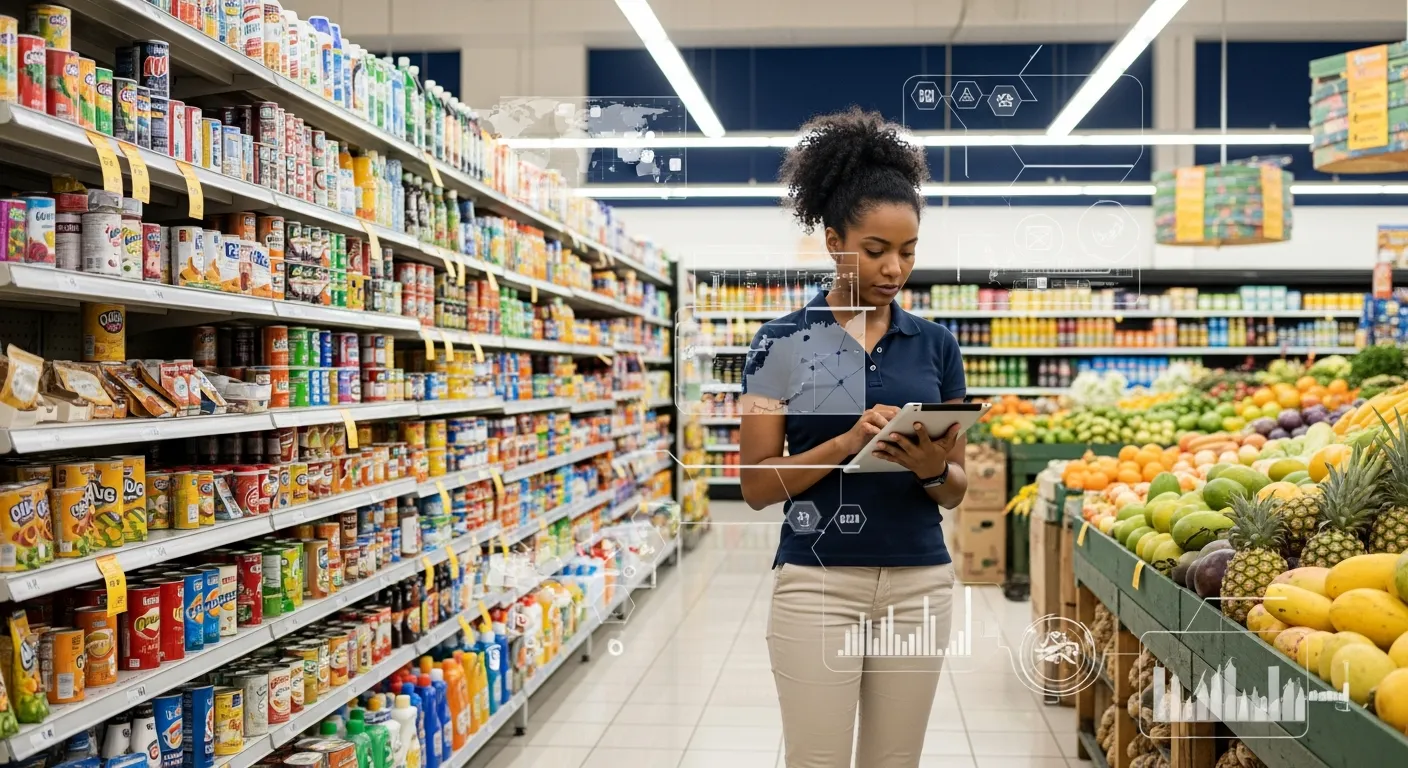
Caribbean retail audit and trade census programmes are the foundation of distribution intelligence for FMCG, pharmaceutical, electronics, and spirits brands operating across 13 island territories. HRG has conducted continuous retail measurement programmes in Jamaica, Trinidad and Tobago, Barbados, the Dominican Republic, and the Eastern Caribbean since 1985.
Caribbean Retail Audit: Key Benchmarks
What Caribbean Trade Census and Retail Audit Actually Delivers
The Caribbean retail landscape is fragmented across island markets, each with distinct trade channel structures, distribution infrastructure, and informal economy contributions. A retail audit programme that works in Trinidad, with its large supermarket chains and organised distribution networks, requires significant design adjustments for the Eastern Caribbean, where corner shops and wholesalers dominate, or for Haiti, where informal trade accounts for a majority of FMCG transactions.
A trade census establishes the outlet universe: how many stores of each type exist, where they are located geographically, and what categories they carry. This baseline is essential before any audit wave can begin. Brands entering Caribbean markets frequently discover their distributor's account list covers only 30 to 50 percent of actual outlets stocking their category. The remaining outlets represent either unconverted opportunities or competitor strongholds that were invisible until a census was conducted.
A retail audit measures what is happening at the point of sale across a representative sample of those outlets on a recurring basis. The core metrics are numeric distribution (the percentage of outlets stocking the brand), weighted distribution (the percentage of category volume in outlets that carry the brand), out-of-stock rate, selling price, share of shelf facing versus competitors, and promotional compliance. These metrics, tracked monthly or quarterly, tell brand managers whether their distributor is performing and where competitor brands are gaining ground.
Caribbean Retail Outlet Classification: The Four Trade Channels
HRG classifies Caribbean retail outlets across four primary trade channels, each requiring a distinct fieldwork approach and analytical treatment.
| Channel | Examples | Coverage Markets | FMCG Volume Share |
|---|---|---|---|
| Modern Trade | Supermarket chains, hypermarkets, pharmacy chains | Jamaica, T&T, Barbados, DR, Bahamas | 40-65% |
| General Trade | Independent grocery, mini-marts, wholesalers | All territories | 25-45% |
| On-Trade | Bars, restaurants, hotels, entertainment venues | Tourism-heavy: Barbados, Jamaica, USVI, Cayman | 10-25% |
| Informal Trade | Roadside vendors, market stalls, unregistered shops | Haiti, Guyana, parts of Jamaica and DR | 25-60% |
Source: HRG Caribbean Retail Network Analysis, 2025. Volume share estimates vary significantly by product category.
Territory-by-Territory Retail Landscape Overview
Understanding the retail structure of each Caribbean market is the starting point for any trade census or audit programme design. The markets below represent the highest-volume territories for branded FMCG distribution intelligence.
Jamaica
Jamaica has an estimated 18,000 registered retail outlets, with Kingston accounting for approximately 45 percent of modern trade volume. The formal retail sector is anchored by Shoppers Fair, Hi-Lo Food Stores, and Progressive Grocers. Independent general trade accounts for over 60 percent of all outlets by count but serves a broad cross-section of the population, particularly outside the Kingston metropolitan area. See the full Jamaica retail audit and trade census guide for territory-specific methodology and outlet classifications.
Trinidad and Tobago
Trinidad has the most sophisticated modern trade infrastructure in the English-speaking Caribbean. Massy Stores, Hi-Lo, PriceSmart, and Xtra Foods anchor the modern channel. General trade remains important, particularly in rural East Trinidad and across Tobago. The spirits and premium beverage category drives significant on-trade audit demand. See the Trinidad and Tobago retail audit overview for full channel mapping.
Dominican Republic
As the largest Caribbean economy by population (11.4 million) and GDP, the Dominican Republic has the most complex retail landscape in the region. Modern trade chains including La Sirena, Jumbo, Nacional, Bravo, and Pola compete with a dense informal retail network, particularly outside Santo Domingo. Full territory trade census work requires coordinated regional fieldwork teams across the Cibao, the East, and the South. See the Dominican Republic retail audit programme overview.
Barbados and the Eastern Caribbean
Barbados operates a compact but high-value retail market dominated by Massy Stores and Cost-U-Less. The Eastern Caribbean island states (Antigua, St. Lucia, Grenada, St. Vincent, Dominica, St. Kitts) each have smaller outlet universes, making full-census coverage feasible in shorter timeframes. OECS-wide trade census programmes covering all six OECS member states are typically designed as a single coordinated exercise with island-based field teams.
Free Caribbean Market Assessment
Discover which research methodology best fits your Caribbean market entry strategy.
Retail Audit Methodology: How HRG Designs and Executes Field Programmes
HRG retail audit programmes follow a five-stage process from census to continuous tracking.
Stage 1: Universe Definition and Trade Census
The programme begins with establishing or validating the outlet universe. Where a client's distributor account list exists, HRG maps it against the census baseline to identify uncovered outlets. Where no existing list is available, HRG conducts a full trade census using GPS-guided route coverage, cross-referenced against government business registries and GIS mapping tools. Every outlet receives a unique HRG outlet ID, geolocation, channel classification, and category profile.
Stage 2: Sample Design
The audit sample is drawn from the census universe using stratified random sampling, with strata defined by channel type, geographic region, and outlet size tier. Sample sizes are set to achieve a plus or minus three to five percent margin of error at the channel level. For categories with significant informal trade contribution, a separate informal trade sample is designed and weighted accordingly.
Stage 3: Questionnaire and Data Collection Design
Field questionnaires are built on HRG's mobile CAPI platform, enabling real-time data upload, GPS verification, and photographic capture at each outlet visit. Standard audit questionnaires cover distribution check (SKU by SKU), pricing check (shelf price and promo price), share of shelf facing, out-of-stock recording, and promotional material compliance. Custom modules for electronics retail add serial number verification, display unit compliance, and sales associate knowledge assessment.
Stage 4: Field Execution and Quality Control
HRG field teams operate across all 13 Caribbean territories through a combination of salaried field supervisors and trained auditors. GPS-timestamped visit records, back-check audits (re-visiting 10 to 15 percent of completed interviews), and real-time data validation flags ensure data quality. Field supervisors review all completed forms before submission, with automated alerts for implausible values.
Stage 5: Reporting and Distribution Intelligence Delivery
Retail audit data is delivered through HRG's online dashboard, with export capability to Excel, PowerPoint, and JSON formats. Standard reports include distribution gap analysis (outlets not stocking the brand), price mapping by channel and region, share-of-shelf benchmarks versus key competitors, and trend charts across audit waves. Custom outputs for management presentations and distributor review meetings are included in the programme scope.
Sector-Specific Trade Audit Applications
FMCG and Consumer Packaged Goods
FMCG brands use retail audit primarily to track distribution expansion, identify out-of-stock patterns, and monitor promotional compliance by distributor. HRG's FMCG research capability covers brand tracking, pack testing, and category management alongside retail audit, providing an integrated view of brand health from the shelf to the consumer.
Spirits and Premium Beverages
The Caribbean is one of the world's most important spirits markets per capita. Diageo, Bacardi, and Brown-Forman brands require on-trade audit data alongside off-trade retail audit to understand share of visibility across bars, restaurants, and duty-free channels. Caribbean spirits market intelligence is a high-value audit category given the premium pricing and competitive intensity of the rum, whisky, and cognac segments.
Pharmaceuticals
Pharmaceutical trade audits focus on pharmacy-channel coverage: which SKUs are available, at what price, and whether promotional educational materials are correctly placed. In markets like Haiti, where pharmacy access is limited and the informal trade plays a larger role in medicine distribution, field census work is essential before any audit programme begins. HRG has conducted pharmacy distribution checks across Port-au-Prince, Kingston, Bridgetown, and Santo Domingo.
Electronics and Telecommunications
Electronics retail audit in the Caribbean covers smartphone distribution across carrier-affiliated outlets, independent electronics retailers, and the informal trade in mobile accessories. Samsung, Apple, and Huawei distributors use trade audit to measure display unit compliance, selling price versus MSRP, and sales associate product knowledge. See the full electronics retail audit guide for the Caribbean for methodology specific to the technology category.
Cost of Caribbean Retail Audit Programmes
Programme cost varies significantly based on territory coverage, sample size, audit frequency, and the number of SKUs tracked. The table below provides indicative cost ranges for standard configurations. All figures are in USD.
| Programme Type | Territory | Sample Size | Frequency | Indicative Annual Cost |
|---|---|---|---|---|
| Trade Census Only | Jamaica or T&T | Full universe | Once | USD 12,000-25,000 |
| Exploratory Audit | Single territory | 100-200 outlets | Once | USD 8,000-18,000 |
| Continuous Retail Audit | Jamaica | 400-600 outlets | Quarterly | USD 45,000-75,000 |
| Multi-Territory Audit | 3-4 territories | 300+ per territory | Bi-annual | USD 80,000-150,000 |
| OECS Regional Census | 6 OECS states | Full universe | Once | USD 35,000-60,000 |
Source: HRG Programme Cost Guidelines, 2025. Indicative ranges only. Final cost depends on SKU count, channel coverage, and reporting requirements.
Choosing Between a Trade Census and a Retail Audit
The decision between a census-first approach and a direct audit launch depends on what the client already knows about their outlet universe. Brands with established distributor relationships and existing account lists can typically move directly to audit design, using the distributor list as the sampling frame. Brands entering a new territory, launching a new category, or auditing distributor compliance for the first time should begin with a census to ensure the audit sample represents the true universe rather than just the accounts the distributor has chosen to share.
For a full overview of Jamaica retail audit programmes, Trinidad and Tobago distribution intelligence, or Dominican Republic trade census services, see the territory-specific guides linked throughout this article.
HRG also conducts sector-specific programmes for electronics and telecommunications retail audit across the Caribbean, covering smartphone, device, and accessories distribution for brands including Samsung, Apple, and regional telecom operators. Clients seeking to understand the FMCG and CPG research landscape across Caribbean markets can review the full industry capability overview.
Related Research
Jamaica Retail Audit and Trade Census
18,000 outlets, Kingston-to-country distribution intelligence, FMCG and electronics
Trinidad and Tobago Retail Audit
English Caribbean's most sophisticated retail market, spirits and FMCG distribution
Dominican Republic Retail Audit
Largest Caribbean market, 25,000+ outlets, formal and informal trade census
Electronics Retail Audit Caribbean
Samsung, Apple, telecom distribution tracking across Caribbean electronics retail
What is a trade census in the Caribbean context?
A trade census is a structured field exercise that maps the complete retail outlet universe within a defined territory. In the Caribbean, this means physically locating and classifying every store type, from modern supermarkets and pharmacies to independent grocery shops, kiosks, and informal market vendors. The result is a georeferenced database of all outlets carrying or potentially carrying a given product category, forming the baseline for any distribution audit or brand tracking programme.
How does a retail audit differ from a trade census?
A trade census identifies and classifies outlets. A retail audit then measures what is happening inside those outlets: which SKUs are present, at what price points, in what shelf positions, with what promotional materials, and against which competitors. Most HRG programmes begin with a trade census to establish the universe, then conduct retail audits at a representative sample of those outlets on a periodic basis, typically monthly or quarterly.
How many retail outlets exist across the Caribbean?
The Caribbean retail landscape varies significantly by territory, from organised supermarket chains in Jamaica and Trinidad to independent shops and informal vendors across smaller island markets. In territories with significant informal trade such as Haiti, Guyana, and Jamaica, informal market points account for 25 to 40 percent of FMCG volume and require separate field methodologies to measure. HRG conducts continuous retail measurement programmes across 13 Caribbean territories, covering formal and informal trade channels.
Which sectors use retail audit and trade census most in the Caribbean?
The heaviest users are fast-moving consumer goods companies, including beverages, snacks, personal care, and household products. Spirits and premium alcohol brands (Diageo, Bacardi, Brown-Forman) require continuous shelf-share and pricing data across on-trade and off-trade. Pharmaceutical companies conduct pharma-specific trade audits at pharmacy and clinic level. Electronics and telecommunications brands, particularly Samsung, Apple, and Digicel, use trade audits to track distributor coverage and promotional compliance at point of sale.
How long does a Caribbean retail audit programme take to set up?
A standard retail audit programme covering one territory, such as Jamaica or Trinidad, can be mobilised in four to six weeks from brief to first data delivery. This includes outlet classification, sample design, questionnaire development, field team training, GPS route planning, and pilot fieldwork. Multi-territory programmes covering the OECS or the full Caribbean basin typically require eight to twelve weeks for initial setup, with ongoing monthly waves thereafter.
Can HRG conduct retail audits in both formal and informal trade channels?
Yes. HRG field teams are trained to work across all trade channel types, including supermarket chains, pharmacy chains, independent grocery shops, informal market points, and on-trade venues such as bars, restaurants, and hotels. In markets with significant informal trade such as Haiti, Guyana, and parts of the Dominican Republic, HRG applies a stratified sampling approach that weights informal trade proportionally to its estimated volume contribution.
What data does a Caribbean retail audit typically collect?
Standard metrics include numeric distribution (percentage of outlets stocking the SKU), weighted distribution (percentage of category volume in outlets stocking the SKU), out-of-stock rate, selling price at point of sale, share of shelf facing versus competitors, promotional material compliance, and display quality score. HRG GPS-tags every outlet visit and captures photographic evidence for quality assurance and client reporting.
Caribbean Trade Census and Retail Audit Programme Guide
Get HRG's complete retail audit methodology guide including outlet classification standards, sample design templates, and cost benchmarks for 13 Caribbean territories.