Dutch Caribbean Market Research: Aruba, Curacao, Sint Maarten and the BES Islands
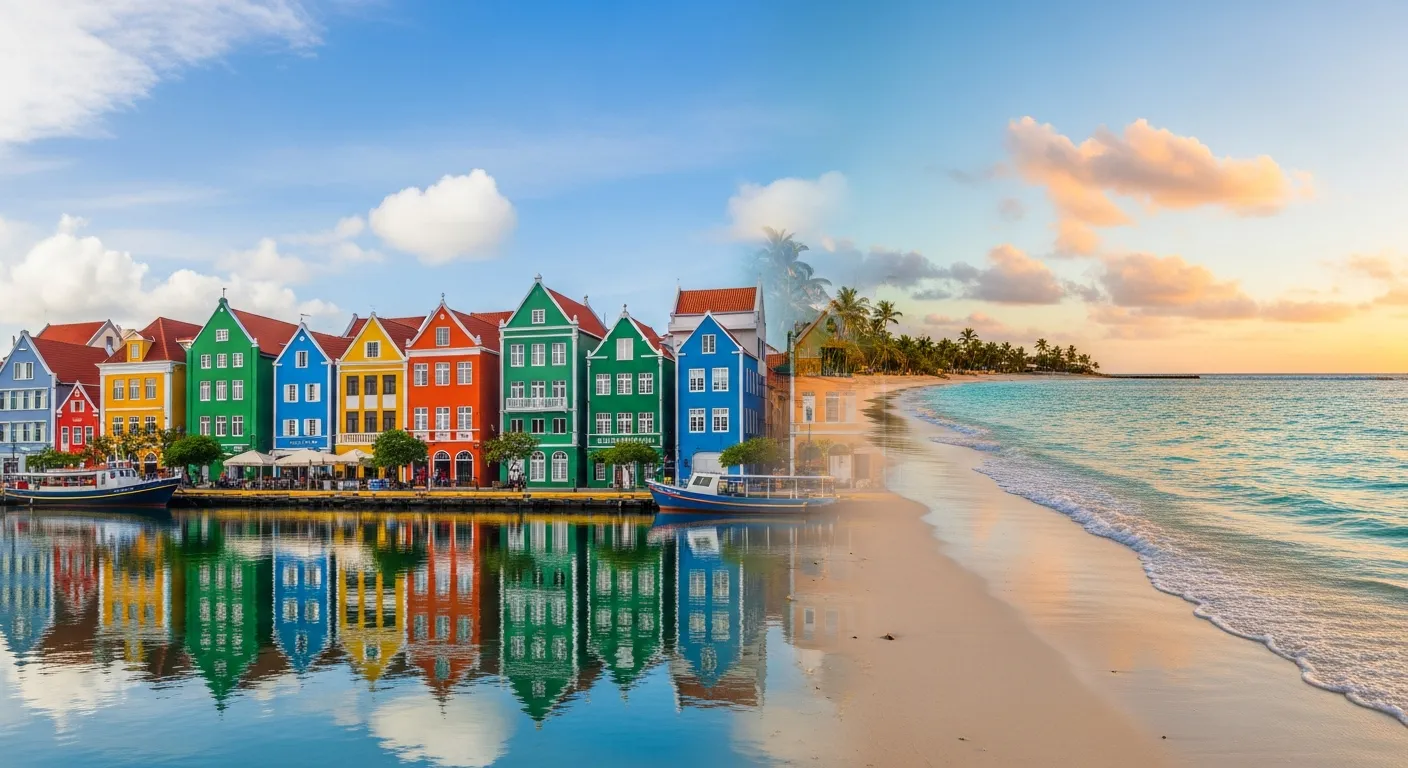
The Dutch Caribbean spans six islands with distinct constitutional statuses, economies, and languages, all tied to the Kingdom of the Netherlands. From Curacao's high-income financial centre and petroleum hub to Bonaire's US-dollar diving economy, these markets reward research that understands both the shared Dutch institutional framework and the significant inter-island differences in consumer culture, language, and purchasing power.
Dutch Caribbean Region: Key Statistics
~350K
Combined population across all 6 Dutch Caribbean islands (Kingdom of the Netherlands Census data, 2024)
46th
Curacao's global GDP (PPP) per capita ranking, among the highest in the Caribbean (World Bank / Curacao.com, 2024)
108K
Aruba population, approximately one-third of the total Dutch Caribbean, with USD-pegged florin currency (Aruba Census, 2024)
3
Languages required for representative research: Papiamento, Dutch, and English across the 6 islands
July 2025
Date Caribbean guilder launched in Curacao and Sint Maarten, replacing the Netherlands Antillean guilder (Central Bank of Curacao and Sint Maarten, 2025)
100+
Nationalities resident in Sint Maarten, the most ethnically diverse market in the Dutch Caribbean (Sint Maarten Tourism Bureau, 2024)
Regional Economic Overview
The Dutch Caribbean is among the most economically developed sub-regions of the Caribbean. Curacao holds one of the highest standards of living in the Caribbean, ranking 46th globally in GDP (PPP) per capita and 27th globally in nominal GDP per capita. Its economy rests on the Port of Willemstad's free trade zone, petroleum transshipment and refining, offshore financial services through the Dutch Caribbean Securities Exchange and a legal system well adapted to corporate structures, and a growing tourism sector that draws primarily from the Netherlands, Germany, and the Eastern United States. Aruba's economy is more straightforwardly tourism-dependent, with US visitors dominating arrivals and oil tourism historically supplementing resort income; the Valero-operated refinery, long dormant, has seen periodic reactivation discussions.
Sint Maarten's economy was severely disrupted by Hurricane Irma in 2017 and has undergone extended reconstruction. Princess Juliana International Airport, the island's most iconic asset and regional aviation hub, suffered catastrophic damage and has since been partially restored. The island's approximately 45,000 residents coexist with more than one million annual visitors, and the 85% of the workforce engaged in tourism makes Sint Maarten's economy one of the most tourism-concentrated in the world. Sint Maarten uses the Caribbean guilder alongside its French side's euro, reflecting the unique governance of this shared island.
The BES islands represent niche but growing markets. Bonaire is well established as the world's foremost shore-diving destination, with a US dollar economy and an environmentally informed consumer base. Its designation as a special municipality of the Netherlands means Dutch consumer protection and food safety regulations apply directly, creating a regulatory environment more aligned with European standards than the rest of the Caribbean. Saba and Sint Eustatius are micro-markets with populations below 2,000 each, primarily relevant as components of comprehensive Dutch Caribbean coverage rather than standalone research targets.
Island Comparison
| Island | Status | Population | Currency | Primary Language | Key Economy |
|---|---|---|---|---|---|
| Aruba | Constituent country | ~109,000 | Aruban florin (USD peg) | Papiamento | Tourism (US-dominated) |
| Curacao | Constituent country | ~158,000 | Caribbean guilder (USD peg) | Papiamentu | Finance, port, tourism |
| Sint Maarten | Constituent country | ~45,000 | Caribbean guilder (USD peg) | English | Tourism, aviation hub |
| Bonaire | Special municipality | ~22,000 | US Dollar | Papiamentu, Dutch | Diving tourism, salt |
| Saba | Special municipality | ~1,900 | US Dollar | English | Eco-tourism, medical school |
| Sint Eustatius | Special municipality | ~3,100 | US Dollar | English | Petroleum storage, tourism |
Research Methodology Considerations
Conducting representative research in the Dutch Caribbean requires a deliberate approach to language. Papiamento (the Aruba and Bonaire variant) and Papiamentu (the Curacao variant) are structurally similar but orthographically different Creole languages that serve as the primary spoken languages of daily life for the majority of residents in the ABC islands. Surveys and focus groups targeting general consumer populations in Aruba, Bonaire, or Curacao must use Papiamento/Papiamentu instruments to achieve full coverage beyond the educated Dutch-speaking professional segment. English is the primary research language in Sint Maarten, Saba, and Sint Eustatius.
The high proportion of expatriate and multicultural residents in Sint Maarten (over 100 nationalities) creates sampling challenges that do not exist in more homogeneous Caribbean markets. Demographic profiling and quota controls must account for the large Haitian, Dominican, and other Caribbean diaspora communities who form a distinct consumer segment with different income levels and brand relationships than long-term Dutch Caribbean residents. HRG's Sint Maarten fieldwork protocols include nationality-stratified sampling for consumer studies where the research question is population-representative rather than targeting a specific community.
Key Industries and Research Demand Drivers
Tourism drives primary research demand in Aruba, Sint Maarten, and Bonaire. Aruba's tourism economy is among the most stable in the Caribbean, benefiting from its location outside the hurricane belt and its well-established US visitor base. Resort operators, food service suppliers, duty-free retailers, and hospitality chains all require consumer research to understand evolving visitor preferences, track competitive positioning, and assess the growing demand for experiential travel over traditional sun-and-sand packages. Sint Maarten's tourism research needs are shaped by its post-Hurricane Irma reconstruction and the return of cruise and stayover tourism to pre-2017 volumes.
Curacao's financial services sector generates distinct research requirements. The Dutch Caribbean Securities Exchange, offshore corporate structures, and the island's IGA with the US IRS for FATCA compliance make Curacao a sophisticated financial jurisdiction. Research for financial services providers, law firms, and corporate service companies in Curacao often targets HNWI investor segments, corporate decision-makers, and international business operators rather than general consumer populations. Trade audit and distribution channel research for FMCG companies is also significant given Curacao's role as a transshipment hub for the southern Caribbean and South American markets.
The BES islands present niche but growing research opportunities. Bonaire's designation as a special municipality of the Netherlands has brought EU standards for product safety and consumer protection, creating a market environment more aligned with European regulatory requirements than the rest of the Caribbean. Bonaire's scuba diving and eco-tourism economy attracts a high-income, environmentally oriented visitor profile. Research on sustainable tourism, ecological products, and premium outdoor recreation services finds a receptive test population in Bonaire. Saba's medical school, the Saba University School of Medicine, creates a distinct transient professional consumer segment that is atypical for a Caribbean island of its size.
Research Methodology in the Dutch Caribbean
The Dutch Caribbean presents methodological challenges that distinguish it from both the Anglophone and Francophone Caribbean. The Papiamento and Papiamentu languages require investment in instrument translation and field researcher training that cannot be shortcut without compromising data quality. Survey instruments developed in English or Dutch must be professionally translated into Papiamento for Aruba and Bonaire, or Papiamentu for Curacao, with back-translation validation to confirm equivalence of meaning. Focus group moderation in Papiamento demands specifically trained moderators, as Dutch-language moderation will exclude significant portions of the lower-income and older consumer populations who are most comfortable in their spoken Creole.
Online survey research has higher penetration in the Dutch Caribbean than in most other Caribbean markets, reflecting higher internet access rates and the influence of European digital infrastructure standards in the BES islands and constituent countries. However, online-only research will systematically undersample older and lower-income consumer segments, particularly in Curacao and Aruba where Papiamento-dominant households are less likely to complete Dutch or English language online surveys. Hybrid methodologies combining online and face-to-face interviewing, with the face-to-face component conducted in Papiamento, are HRG's recommended approach for population-representative studies in Aruba, Bonaire, and Curacao.
Retail audit methodology in Curacao and Aruba must account for the significant proportion of tourist-facing retail, particularly duty-free stores, that operate differently from resident-focused supermarkets and convenience channels. Separating tourist consumption from resident consumption in channel and category share analysis requires specific store classification and shopper exit interview approaches that HRG has developed through multi-year retail audit projects in the Dutch Caribbean market.
Key Research Sectors in the Dutch Caribbean
Tourism and hospitality dominates the research agenda in Aruba, Sint Maarten, and Bonaire. HRG conducts visitor satisfaction research, HRI operator studies, on-property consumer surveys, and destination perception tracking for tourism authorities and hospitality operators across these markets. Aruba's US-dominated visitor base creates a research environment where English-language instruments perform well for tourist-facing studies, while Papiamento capability is required for resident consumer surveys.
Financial services and offshore corporate structures are the defining research sector for Curacao. Studies of corporate banking client satisfaction, wealth management product preferences, digital banking adoption among high-income consumers, and insurance penetration are regularly commissioned. The Dutch regulatory framework and EU code of conduct compliance create a relatively transparent operating environment for financial services research compared to some other Caribbean financial centres.
FMCG retail audit and consumer goods research is a consistent category across Aruba and Curacao. Both islands have modernised retail sectors with international supermarket chains and growing organised trade penetration. Brands from the Netherlands, Venezuela, Colombia, and the United States compete for shelf space, and regular trade audit studies are used by importers, distributors, and brand owners to track distribution performance and competitive positioning. Curacao's Port of Willemstad free trade zone also generates research requirements from traders using the island as a regional distribution hub.
HRG Field Capabilities in the Dutch Caribbean
Hope Research Group conducts primary research in Aruba, Curacao, and Sint Maarten with locally based field coordinators who are fluent in Papiamento, Papiamentu, Dutch, and English. Our Dutch Caribbean research portfolio includes retail and trade audit studies tracking imported FMCG brands, consumer satisfaction research for financial services providers, HRI operator research for food and beverage companies assessing the tourism-facing hospitality sector, and feasibility studies for businesses assessing market entry into the Dutch Caribbean's high-income consumer base.
For BES island research, HRG deploys project-based coordinators to Bonaire, Saba, and Sint Eustatius, drawing on our network of locally embedded research facilitators who understand the unique characteristics of these small, highly educated, internationally connected micro-markets. Our Dutch Caribbean omnibus service, running biannually in Curacao and Aruba, offers cost-effective access to representative consumer samples for brands and organisations seeking to track awareness, preference, and behaviour across these two largest Dutch Caribbean consumer markets at manageable investment levels.
Dutch Caribbean: Commercial Intelligence Opportunities
The following research areas represent current intelligence gaps across the six Dutch Caribbean islands where commercial demand and research feasibility are well aligned:
Venezuelan Diaspora Consumer Research: Curacao has absorbed a significant Venezuelan migrant population following the country's economic and political crisis from 2016 onward. This community's consumer behaviour, remittance patterns, financial product needs, and brand preferences are commercially relevant but poorly understood by Curacao's business sector.
Caribbean Guilder Transition Consumer Impact: The July 2025 launch of the Caribbean guilder in Curacao and Sint Maarten creates a time-sensitive research opportunity to track consumer perception of the new currency, inflation expectations, and spending behaviour changes in the transition period.
Sint Maarten Post-Irma Retail Audit: As Sint Maarten's retail sector continues reconstructing following Hurricane Irma, a comprehensive retail audit measuring brand distribution, category share, and pricing across rebuilt and new retail formats would provide the first systematic picture of the post-recovery consumer market.
Bonaire Eco-Tourism Consumer Profiling: Bonaire's internationally recognised diving destination status attracts a distinct, environmentally conscious visitor profile whose spending preferences, accommodation decisions, and loyalty to sustainable operators are not systematically tracked by existing research.
ABC Islands FMCG Syndicated Tracker: A shared quarterly brand tracking study across Aruba, Bonaire, and Curacao, covering awareness, trial, repeat purchase, and brand association for key FMCG categories, would serve multiple client brands at a fraction of the cost of standalone island studies.
Aruba's tourism economy has maintained exceptional stability compared to most Caribbean markets, anchored by its location outside the hurricane belt. While Sint Maarten, Dominica, and Grenada have experienced catastrophic hurricane damage in the past decade, Aruba's geographic position south of the main Caribbean hurricane track means that research infrastructure, hotel capacity, and visitor arrivals are rarely disrupted by weather events. This climate stability is commercially valuable and increasingly recognised by investors and developers making tourism infrastructure decisions. For market research purposes, it means that fieldwork can be scheduled at any time of year without hurricane season risk adjustments, a practical planning advantage over most of the Eastern Caribbean.
The Dutch Caribbean's Venezuelan connection has been a defining external factor for Curacao and Aruba in particular. Both islands traditionally served as trading and finance intermediaries for Venezuelan commerce, and the Venezuelan economic crisis from 2016 onwards reduced export volumes through Curacao significantly and reduced Venezuelan tourist arrivals across both islands. Monitoring the evolution of Venezuela's economic situation and its implications for Dutch Caribbean consumer spending and trade volumes is an ongoing secondary research priority for HRG clients with Dutch Caribbean exposure.
Sint Maarten's recovery from Hurricane Irma in 2017 has reshaped the island's research landscape. A substantial portion of the pre-Irma hotel and retail inventory was destroyed and has been rebuilt or upgraded, meaning that retail audit and hospitality sector data predating 2018 is largely obsolete. The rebuilt Princess Juliana International Airport now handles reduced flight volumes compared to its pre-Irma peak, and some hotel brands that anchored the destination's positioning have been replaced by new operators. For research purposes, this means that any longitudinal comparison of Sint Maarten data must account for the structural break caused by Irma and treat pre- and post-disaster data as representing materially different market conditions.
Planning Dutch Caribbean Research: Papiamento and Timing
Research in Aruba, Bonaire, and Curacao that requires Papiamento-language fieldwork needs four to six weeks lead time for questionnaire translation and interviewer briefing. The Dutch Caribbean has a different public holiday calendar from English-speaking Caribbean markets, including Dutch national holidays and local island holidays, and fieldwork should be scheduled to avoid these periods. High season in Aruba and Curacao runs January through April when US and European visitor volumes peak, and resident consumer access can be lower during these periods due to employment in the tourism sector; January to March fieldwork should account for this dynamic through extended field periods or adjusted quotas.
Research Across the Dutch Caribbean
From Papiamento-language focus groups in Curacao to retail audit studies in Aruba's resort corridor, HRG delivers rigorous primary research with the language capability and local knowledge the Dutch Caribbean demands. Contact us for a project proposal.
Request a ProposalRelated Research
Curacao Consumer Trends 2025
Consumer behaviour, retail landscape, and financial services preferences in the Dutch Caribbean's largest economy.
Caribbean Fintech and Digital Payments
Digital payments adoption and fintech growth in the Dutch Caribbean's high-income financial services markets.
Caribbean Tourism and Hospitality Trends
Tourism recovery, HRI sector growth, and visitor spending patterns relevant to Aruba, Curacao and Sint Maarten.
Caribbean Real Estate Market Trends
High-income real estate dynamics in Aruba and Curacao, foreign investment patterns, and Dutch Caribbean property market analysis.
Caribbean Insurance Market Analysis
Insurance penetration, hurricane exposure, and product preferences in the Dutch Caribbean's developed insurance market.
Caribbean Food Import Analysis
Food import dependency, retail food trade, and premium consumer food demand across the Dutch Caribbean islands.
Market Research Aruba and Curacao
Comprehensive guide to conducting market research in Aruba and Curacao, including costs, methods, and local fieldwork.