French Caribbean Market Research: Haiti, Martinique, Guadeloupe and Beyond
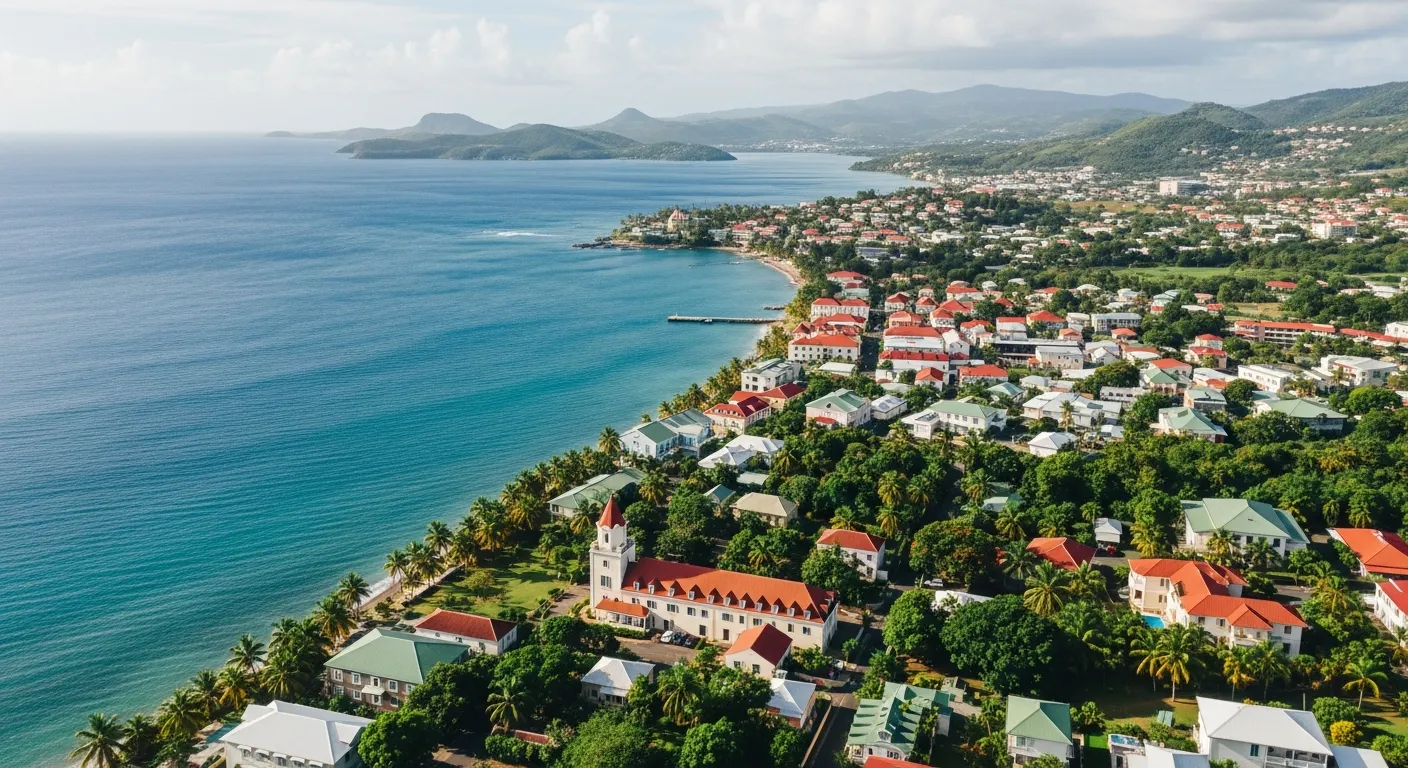
The French Caribbean is the most internally diverse research region in the Caribbean, spanning EU-integrated territories with euro currencies and French labour law, through to Haiti, the hemisphere's most complex research environment. From Saint-Barthelemy's ultra-luxury tourism economy to Haiti's 12 million consumers navigating a humanitarian and political crisis, these markets demand a fundamentally different research approach for each territory. HRG maintains French, Antillean Creole, and Haitian Creole field capability across the region.
French Caribbean Region: Key Statistics
14.5M
Estimated total population including Haiti's 11.7M, Guadeloupe's 400K, and Martinique's 350K (UN/INSEE, 2024)
EU
Martinique, Guadeloupe, and French Guiana are EU territory, using the euro and applying EU consumer regulations
-2.0%
Haiti GDP growth estimate in 2024, the only contraction in the Caribbean subregion (ECLAC, 2024)
3
Languages required: Standard French, Antillean Creole (Martinique/Guadeloupe), and Haitian Creole (Kreyol) for Haiti
Carrefour
French hypermarket chains including Carrefour and Casino operate in Martinique and Guadeloupe, reflecting EU retail integration
SMIC
French national minimum wage (SMIC) applies in Martinique, Guadeloupe, and French Guiana, creating higher consumer purchasing floors than independent Caribbean nations
The DOM Territories: Martinique and Guadeloupe
Martinique and Guadeloupe are France's most significant Caribbean territories in market research terms. As overseas departments and regions of France, they are constitutionally integral parts of the French Republic and EU member territories. This means the French minimum wage (SMIC), French consumer protection law, EU food safety regulations, and French social security apply. The practical consequence for market research is that consumer purchasing power, product standards, and retail channel sophistication are significantly higher than in independent Caribbean nations of comparable population.
Both territories host French and European supermarket chains including Carrefour and Casino alongside local retailers, creating a modern organized retail sector that enables traditional retail audit methodology. Tourism in both markets draws primarily from metropolitan France, creating a significant visitor economy overlaid on a resident consumer base. Martinique is particularly noted for rum production, with historic distilleries including Rhum J.M, Saint James, and Clement maintaining both production and agri-tourism operations. Guadeloupe is larger in area and population, with a more agricultural economy in its outer islands of Marie-Galante, La Desirade, and Les Saintes.
For research purposes, the key challenge in both territories is language layering. Standard French is the official language, used in all formal contexts, and many consumers respond comfortably in French. However, Antillean Creole is the first spoken language for a substantial share of the population and is the language of daily informal life. Focus groups targeting representative consumer samples, or qualitative research in lower-income or older demographics, require Creole-speaking moderators. Survey back-translation from Creole is recommended for any quantitative study where linguistic accessibility is a data quality concern.
Haiti: Scale, Complexity, and Research Operations
Haiti is the Caribbean's second-most populous country and its most operationally demanding research market. An estimated 11.7 million people live in Haiti, generating substantial aggregate consumer demand despite very low per capita income. The formal and informal private sectors co-exist, with a significant portion of consumer activity conducted through informal channels, open-air markets, and micro-enterprise networks that are not captured by formal retail data. Diaspora remittances, primarily from Haitians in the United States, Canada, and the Dominican Republic, are a critical household income supplement that sustains consumer spending in ways not reflected in national GDP statistics.
GDP contracted by an estimated 2.0% in 2024 according to ECLAC projections, reflecting gang-related disruptions to commerce, ongoing political instability following the 2021 assassination of President Moise, and the humanitarian crisis that has displaced hundreds of thousands of Port-au-Prince residents. Research operations require security planning in collaboration with local partners, careful geographic scope-setting to avoid active conflict areas, and adaptable field protocols that can adjust to rapidly changing access conditions. HRG conducts Haitian research exclusively through a trusted local partner network with established security protocols and Haitian Creole (Kreyol) field capability.
Despite these challenges, Haiti remains a commercially significant research market. Consumer goods companies, NGOs, development organisations, financial services providers, and telecommunications companies all require market intelligence on Haitian consumer behaviour, brand awareness, product adoption, and distribution channel effectiveness. The Haitian diaspora creates an additional research requirement for companies seeking to understand remittance behaviour, brand preferences of Haitian consumers in the US and Canada, and communication strategies that bridge diaspora and in-country audiences.
Territory Comparison
| Territory | Status | Population | Currency | Research Language | Key Profile |
|---|---|---|---|---|---|
| Haiti | Sovereign state | ~11.7M | Haitian gourde (HTG) | Haitian Creole (Kreyol) | Large population, complex ops, informal retail |
| Martinique | French DROM / EU | ~350,000 | Euro | French and Creole Martiniquais | EU standards, rum tourism, French brands |
| Guadeloupe | French DROM / EU | ~400,000 | Euro | French and Guadeloupean Creole | EU standards, agriculture, French tourism |
| French Guiana | French DROM / EU | ~300,000 | Euro | French | Space launch (Kourou), mining, biodiversity |
| Saint-Martin | French collectivity | ~36,000 | Euro | French, English | Shared island with Sint Maarten, tourism |
| Saint-Barthelemy | French collectivity | ~10,000 | Euro | French | Ultra-luxury tourism, French haute cuisine |
Key Industries and Research Demand Drivers
FMCG and consumer goods research is the dominant category in Martinique and Guadeloupe, driven by the presence of French and European supermarket chains and the high consumer expectations shaped by European product standards. Major categories of research demand include new product concept testing for French food companies assessing Caribbean adaptation requirements, brand equity tracking for multinational FMCG brands, and retail audit studies measuring category share in organised hypermarket and supermarket channels. Rum is the iconic product category of both territories: Martinique's AOC appellation for Rhum Agricole protects a geographic indication that commands premium pricing globally, and research on consumer perception, tourism-linked brand development, and export market positioning for distilleries including J.M, Clement, and Saint James is commercially active.
Tourism research in Martinique and Guadeloupe serves both the French domestic holiday market, which represents the majority of stayover arrivals, and the growing cruise sector. Research for destination marketing organisations, hotel chains, and food service operators typically uses bilingual French and Creole instruments to capture the full visitor and resident consumer spectrum. Saint-Barthelemy generates distinct research demand from the luxury end of the tourism market: ultra-high-net-worth visitors, luxury brand positioning studies, and premium hospitality sector consumer research are the primary use cases for this small but extremely high-value market.
For Haiti, research demand is highest from international development organisations, NGOs, telecommunications companies, mobile money operators, and consumer goods companies assessing brand penetration and distribution reach in one of the world's most challenging operational markets. Diaspora remittance research is a growing specialisation, as financial services companies and fintech providers seek to understand how Haitian households in the US, Canada, and the Dominican Republic make and receive transfer decisions and how those decisions affect consumption patterns in Haiti. Agricultural sector research, including smallholder farmer surveys, crop pricing studies, and food security assessments, is a significant component of HRG's Haiti research portfolio conducted for development finance institutions and agricultural development organisations.
Research Methodology in the French Caribbean
Martinique and Guadeloupe research follows French research industry standards, including ethical guidelines for informed consent, data protection under GDPR which applies in these EU territories, and professional moderator accreditation standards. Survey instruments must satisfy both substantive research quality requirements and EU data protection obligations, particularly regarding the collection and processing of sensitive personal data. HRG's French Caribbean research protocols are GDPR-compliant as standard for all projects in the DOM territories, covering consent procedures, data handling, and right to erasure provisions.
In Haiti, research methodology requires an additional layer of adaptation for the operational context. Household sampling frames are unreliable or outdated in many urban areas due to displacement and informal settlement expansion. Cluster-based sampling using satellite imagery for enumeration area identification, combined with probability-proportional-to-size selection, is HRG's preferred methodology for nationally representative surveys in Haiti. For qualitative research and community-based studies, snowball sampling from trusted community contacts is often more practical and yields higher quality data than attempting strict probability procedures in areas with limited infrastructure or security access.
French Guiana presents a unique research environment distinct from the island territories. Its mainland South American geography means it borders Brazil and Suriname, creating cross-border trade and population mobility that affects consumer market dynamics. The Kourou Space Centre's workforce and the mining sector generate professional consumer segments not found in the island DOM territories. Research in French Guiana requires adaptation for the territory's geographic spread and the distinct consumer dynamics of coastal Cayenne, the Kourou space economy, and the interior Amazon basin communities.
Key Research Sectors in the French Caribbean
Consumer goods and FMCG research in Martinique and Guadeloupe operates under EU-standard conditions, with a well-developed organised retail sector, comprehensive product registration requirements, and consumer protection rights aligned with French metropolitan law. French and European brands have natural advantages, but US and Caribbean competitors increasingly compete for market share. HRG conducts consumer surveys, brand tracking, retail audit studies, and focus group research for both European companies assessing their DOM territory performance and international brands evaluating market entry into EU-regulated Caribbean markets.
Haiti generates the most diverse range of research requirements of any single French Caribbean market. Consumer goods companies track brand awareness and retail distribution in formal and informal channels. NGOs and development organisations commission community surveys and needs assessments. Telecommunications companies study mobile money adoption and handset preferences. Financial services providers assess microfinance demand and banking infrastructure opportunities. HRG's Haitian research capability, delivered through our local partner network, supports all of these sectors with Haitian Creole language fieldwork and security-compliant operations.
Rum tourism and agri-tourism research is a specialised niche sector unique to Martinique. The island's seven agricultural distilleries (AOC Martinique appellation) include internationally recognised brands and HRG supports market research for rum producers assessing export market positioning, visitor experience evaluation at distillery tourism operations, and consumer awareness studies in key export markets including metropolitan France, the United States, and Japan.
HRG Field Capabilities in the French Caribbean
Hope Research Group maintains French-language and Creole-language field research capabilities across the French Caribbean, with the most active operations in Martinique, Guadeloupe, and Haiti. Our Martinique and Guadeloupe research capability supports FMCG consumer research, brand equity tracking, retail audit studies, and qualitative research for companies operating within EU regulatory standards. Our French Guiana capability is available for project-based fieldwork, particularly relevant for resource sector and infrastructure-related research connected to the Kourou Space Centre's broader economic activity.
For Haiti, all research is conducted through our established local partner network with whom we have maintained working relationships that prioritise field researcher safety, community trust, and Kreyol-language research quality. We do not conduct independent fieldwork operations in Haiti without local partner coordination. Clients requiring Haitian market research are advised to discuss scope and security requirements in the initial project scoping conversation to ensure realistic timeline and budget planning. Our Haiti research team has delivered projects in Port-au-Prince, Cap-Haitien, Gonaives, Les Cayes, and rural departments for development organisations, telecommunications companies, and consumer goods brands.
Research Across the French Caribbean
From EU-standard consumer surveys in Martinique and Guadeloupe to Haitian Creole fieldwork in Port-au-Prince and the provinces, HRG delivers professionally managed primary research across the full French Caribbean. Contact us to discuss your project.
Request a ProposalFrench Guiana is an often-overlooked market within the French Caribbean cluster. Its approximate population of 300,000 is growing rapidly due to immigration from neighbouring Suriname, Brazil, and Haiti, creating a multilingual population that makes French Guiana one of the most linguistically diverse territories in the Americas. The Guiana Space Centre at Kourou is the European Space Agency's primary launch facility and is the anchor of a significant aerospace and technical services economy that co-exists with substantial poverty in the territory's interior communities. Consumer market research in French Guiana requires awareness of the deep urban-rural and immigration-status divides within the population. Cayenne, the capital, is the primary commercial and consumer research hub, while coastal towns and interior communities require adapted fieldwork approaches. HRG conducts project-based research in French Guiana on request, typically for development organisations, public health researchers, and companies with regional footprints that include the territory.
Saint-Martin, the island shared between French Saint-Martin and Dutch Sint Maarten, presents a unique dual-jurisdiction research context. The French collectivity of Saint-Martin covers the northern part of the island with approximately 36,000 residents, while the Dutch constituent country of Sint Maarten covers the southern part with approximately 45,000 residents. Despite sharing the same island, the two sides have different currencies (euro and Caribbean guilder respectively), different regulatory frameworks, and somewhat different consumer market characteristics. Research commissioned for the island as a whole must account for these distinctions in fieldwork design, with separate sampling frames for each side and appropriate language coverage including French on the northern side and English on the southern side. HRG can execute research on either or both sides of Saint-Martin through our French Caribbean and Dutch Caribbean field networks respectively.
INSEE, the French national statistics institute, publishes detailed demographic and economic data for Martinique, Guadeloupe, and French Guiana as full DROM territories, providing a quality of official statistics that is unmatched by most Caribbean jurisdictions. Population censuses, household consumption surveys, retail price indices, and employment data published by INSEE for the DOM territories are available to HRG researchers as secondary data foundations for primary research design and findings contextualisation. This data infrastructure is a genuine research advantage in the French Caribbean versus other regional markets where official statistics are less detailed or less current.
The rum industry connects Martinique and Guadeloupe to a growing global market for artisanal and terroir-driven spirits. Martinique's AOC appellation, the only AOC for rum in the world, specifies production methods, sugarcane varieties, and geographic origin requirements for the Rhum Agricole designation. Market research support for Martinique rum producers includes export market consumer studies, on-island visitor purchase behaviour research at distilleries, and competitive positioning analysis against Barbadian, Jamaican, and Haitian rum brands. HRG has experience designing sensory evaluation and preference research protocols appropriate for premium spirits categories.
Planning French Caribbean Market Research: Key Considerations
Research across the French Caribbean requires separate project scoping for the DOM territories and Haiti. In Martinique and Guadeloupe, standard EU-compliant research ethics and data protection (GDPR) apply, and data collection, storage, and processing must meet these standards. Haiti research operates under entirely different risk and logistics parameters: security planning is a non-negotiable starting point, field timelines are longer to account for access variability, and ethical review requirements from development organisation clients often add additional protocol documentation. Organisations commissioning research in both contexts within a single project need to allocate adequate lead time, a minimum of ten to twelve weeks for combined Haiti and DOM territory fieldwork, and budget for the genuinely different field cost structures that apply in each territory. HRG provides separate scoping and budget documents for Haiti versus DOM territory components of any multi-territory French Caribbean commission.
Related Research
Haiti Consumer Trends 2025
Consumer behaviour, remittance-driven purchasing, and brand dynamics in the Caribbean's most populous French-speaking market.
Dominican Republic Consumer Trends 2025
Hispaniola's other market: DR consumer dynamics and the trade and migration connections between Haiti and the Dominican Republic.
Caribbean Food Import Analysis
Haiti's acute food security challenges and the EU-standard food import market in Martinique and Guadeloupe.
Caribbean Beauty and Personal Care Market
French beauty brand penetration in Martinique and Guadeloupe and product preferences across French Caribbean consumer segments.
Caribbean Insurance Market Analysis
French insurance market in the DOM territories and the contrasting low penetration environment in Haiti.
Caribbean Fintech and Digital Payments
Mobile money adoption in Haiti, EU-standard digital banking in Martinique, and remittance corridor fintech innovation.