Peru Consumer Market Overview
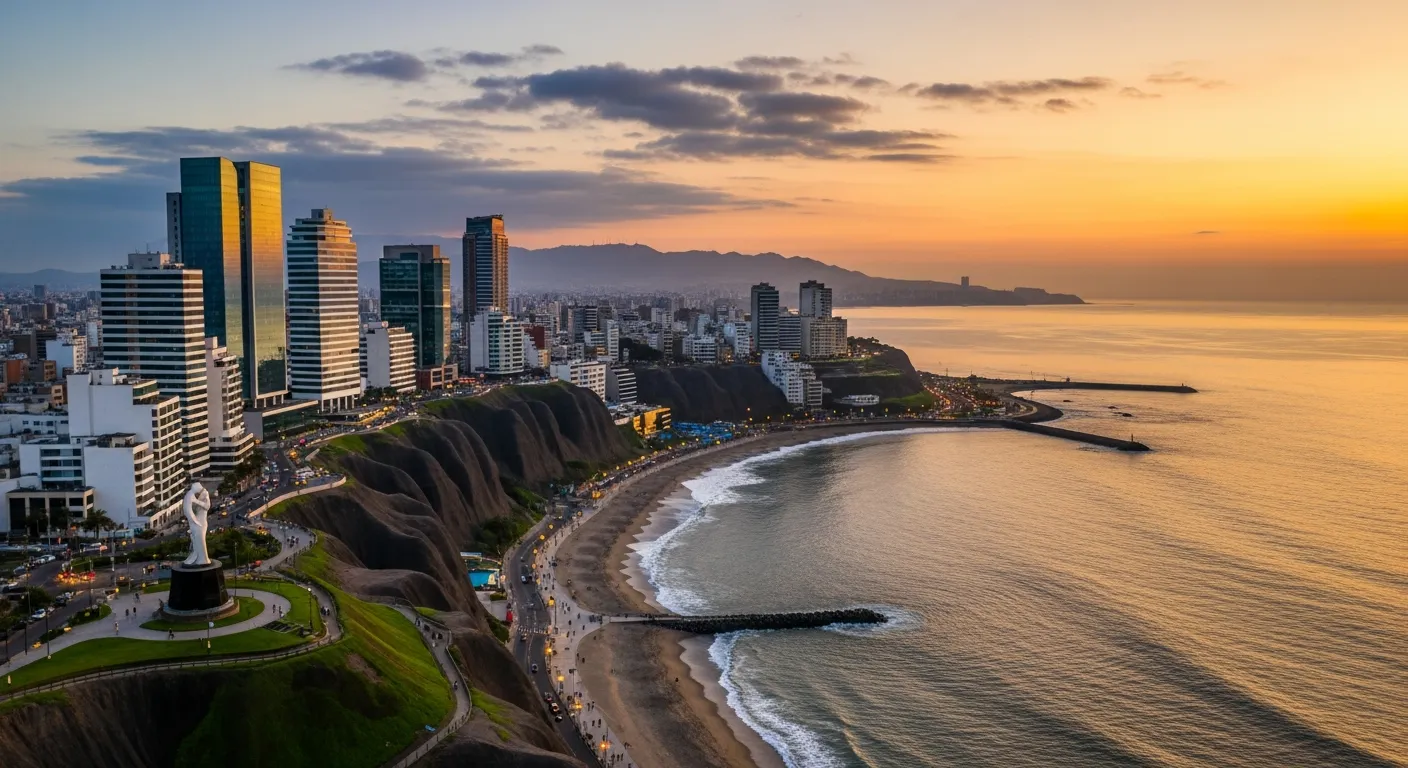
Lima is one of Latin America's fastest-growing mega-cities. The metropolitan area houses approximately 11 million people (one-third of Peru's population) and accounts for approximately half of the country's formal economic activity. Lima's consumer market is stratified by socioeconomic level (NSE A through E) with distinct geographic concentration: NSE A/B consumers in Miraflores, San Isidro, La Molina, and Surco; NSE C in San Martin de Porres, Los Olivos, and Ate Vitarte; NSE D/E in the peripheral cone districts of Comas, Villa El Salvador, and Ventanilla.
This stratification is critical for sampling design. A Lima consumer study that samples only from Miraflores and San Isidro will dramatically over-represent the wealthiest 15% of Lima's population. HRG designs proportional samples across all NSE strata for nationally representative Lima studies.
Research Services in Peru
| Service | Coverage | Cost (USD) |
|---|---|---|
| Consumer survey (CAPI/online) | Lima, Arequipa, Trujillo | $7,000-$13,000 (400 respondents) |
| Focus groups | Lima (all NSE strata), Arequipa | $9,000-$18,000 (6 groups) |
| Brand tracking (quarterly) | Lima and 2 provincial cities | $14,000-$24,000 per wave |
| In-depth interviews | Lima and major cities | $350-$600 per IDI |
| Market entry study | Lima-focused or national | $25,000-$50,000 |
| Rural / provincial study | All 25 regions | $15,000-$30,000 (specialist methodology) |
Indicative pricing. Contact HRG for fixed-price proposals tailored to Peru study objectives.
For the broader Andean and Latin America context, see our Latin America market research overview. For multi-country Andean studies combining Peru with Colombia and Ecuador, contact the HRG team. For CAPI fieldwork methodology, see our CAPI fieldwork guide. For Spanish-language market research across the region, see estudio de mercado Costa Rica and estudio de mercado Paraguay.
Plan Your Peru Market Research
Tell us your target NSE strata, cities, and research objectives. HRG will design the right methodology and deliver a fixed-price proposal within 24 to 48 hours.
Market Research Peru: Frequently Asked Questions
How much does market research cost in Peru?
Market research in Peru is priced in USD. A consumer survey (400 respondents, Lima, CAPI or online) costs USD 7,000 to 13,000. A focus group programme (6 groups, Lima) costs USD 9,000 to 18,000. Quarterly brand tracking (Lima, 300 respondents per wave) costs USD 14,000 to 24,000 per wave. A full market entry study for Peru costs USD 25,000 to 50,000. Multi-city studies adding Arequipa, Trujillo, or Cusco add approximately USD 3,000 to 6,000 per city. Contact HRG for a fixed-price proposal within 48 hours.
Which cities does HRG cover for market research in Peru?
HRG covers Lima (11 million metro population, 30% of national GDP, primary research hub), Arequipa (1.3 million, Peru's second city, industrial and agricultural south), Trujillo (1 million, northern Peru), Cusco (500,000, tourism and Andean cultural research), Piura (800,000, northern coast, agricultural exports), Chiclayo (700,000, northern commercial centre), and Iquitos (500,000, Amazonian research, accessible only by air or river). National studies covering all 25 regions are available using CAPI and online methodologies.
What are the key market research considerations in Peru?
Peru has several research-specific characteristics. Lima dominates consumer spending (accounting for roughly 50% of formal retail), but the interior provincial consumer is increasingly important as urbanisation continues. Indigenous language spoken populations (Quechua is spoken by approximately 13% of Peruvians as a first language) may require adapted instruments or interpreters for rural community studies. Peru's informal economy accounts for approximately 60-70% of employment, requiring fieldwork approaches that capture informal sector consumers beyond panel and online sampling. Social class (NSE A-E stratification is the standard) drives significant consumer behaviour differences in Lima.
What industries does HRG research in Peru?
HRG Peru research covers: FMCG (Gloria, Alicorp, Backus/AB InBev, Inca Kola/Coca-Cola), banking and financial services (BCP, BBVA Peru, Interbank, Scotiabank Peru, digital wallets like Yape and Plin), telecommunications (Claro Peru, Movistar, Entel, Bitel), retail (Saga Falabella, Ripley, Tottus, Plaza Vea, Metro), mining sector (community relations and social licence studies), tourism and hospitality (Machu Picchu corridor, Lima food tourism), and healthcare and pharma.
Can HRG combine Peru research with Caribbean or other LatAm markets?
Yes. HRG regularly coordinates multi-country studies that include Peru alongside Caribbean markets (Jamaica, Trinidad, Dominican Republic) and other LatAm markets (Colombia, Ecuador, Argentina). Peru is commonly included in Andean region studies that also cover Colombia and Ecuador. Single briefing, single project management, and a unified comparative report are standard on all multi-country engagements.
Esta página también está disponible en español: Investigación de Mercado en Peru
Download: Peru Market Research Buyer's Guide
Lima NSE stratification guide, city profiles, methodology comparison, sampling templates, and research pricing benchmarks for Peru.