Early Childhood Education Market in Panama City: Juan Díaz, Costa del Este, Santa María, and Growth Corridors
By Hope Research Group | March 2026 | 10 min read
The early childhood education (ECE) market in Panama City is highly uneven across neighborhoods. Premium zones like Costa del Este and Santa María are saturated with high-end providers. Fast-growing corridors like Juan Díaz, Tocumen, and Arraiján have significant unmet demand and limited quality supply. This analysis maps the opportunity zone by zone for school operators, real estate developers, and education investors evaluating Panama City ECE projects.
Panama City ECE Market Snapshot
Sources: INEC Panama 2023, MEDUCA enrollment records, HRG field analysis 2025-2026
Why Neighborhood Matters More Than City-Level Data
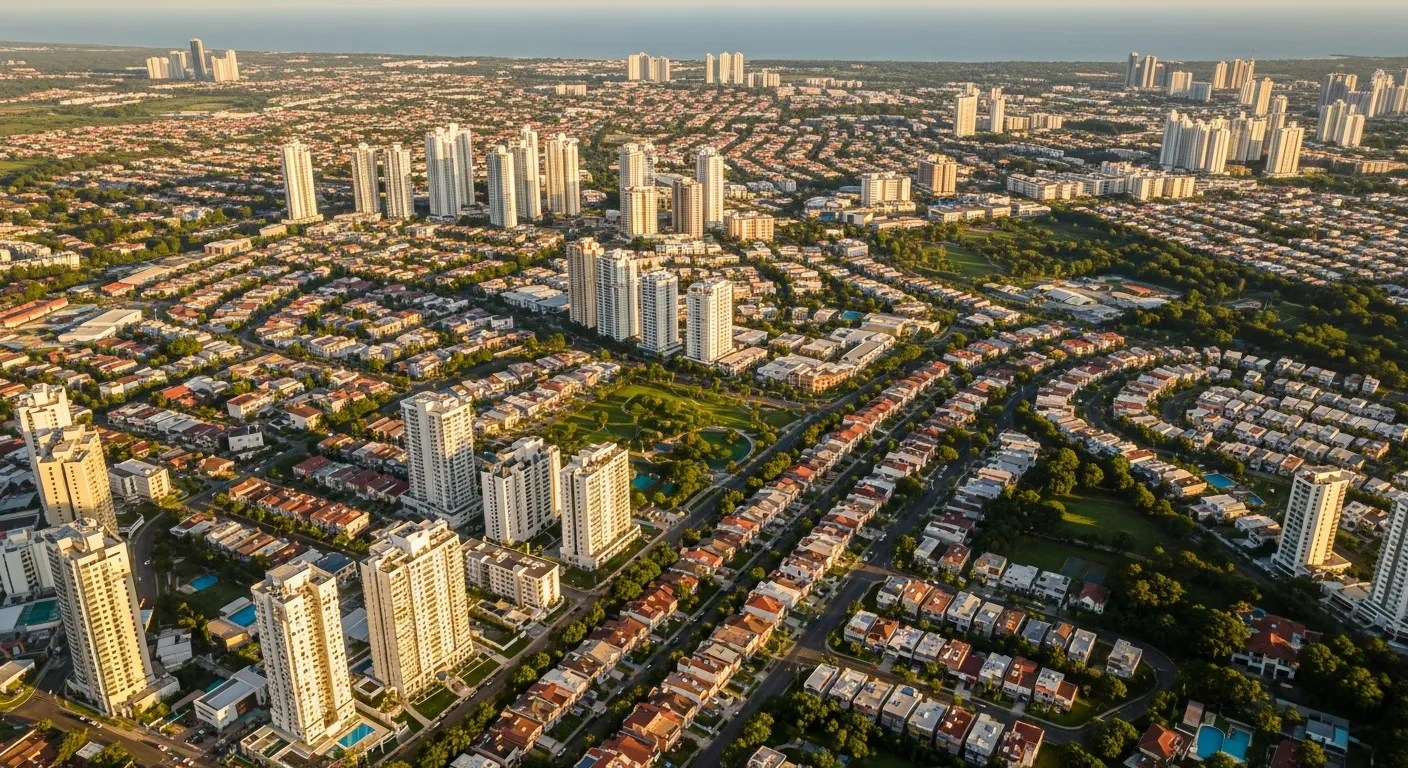
Panama City metro area population of 2.2 million is distributed across 24 corregimientos with dramatically different demographic profiles, income levels, and existing school supply. A city-level feasibility study misses the critical variation. Juan Díaz and Costa del Este are 10 kilometers apart but represent completely different market conditions for an early childhood education facility.
The families in Juan Díaz and Guayabito are predominantly young (ages 25-40), dual-income middle class, many with children under 6. They want bilingual education, they value proximity to home, and they are price-sensitive to premium international school fees but willing to pay USD 350 to USD 500 per month for quality. The families in Costa del Este skew older, more affluent, and more likely to be expatriates or senior corporate employees. They expect a fully international curriculum and will pay USD 800 to USD 1,500 per month, but that market is already well-served.
This is why the most actionable education feasibility studies are designed at the corregimiento level, not the city level.
Juan Díaz and Guayabito: The Highest-Opportunity Zone
Juan Díaz is the most significant under-served opportunity in Panama City's early childhood education market as of 2026. The corregimiento had an estimated population of 105,000 in the 2023 INEC census, with a median family age younger than the city average and a high proportion of dual-income households with children under 6.
The Guayabito area within Juan Díaz is particularly notable: sustained residential construction since 2010 has brought thousands of young families to a zone that previously had a limited housing stock. The existing private school supply in Guayabito skews toward older institutions that have not expanded capacity proportionally to neighborhood growth.
A new mid-market bilingual preschool and daycare in Guayabito serving Maternal 1 through Kínder (ages 12 months to 6 years) and charging USD 350 to USD 500 per month would enter a zone where the closest comparable quality providers are a 15 to 25 minute drive away. Projected catchment area demand (based on household density and current private enrollment rates) suggests a first-cohort enrollment of 60 to 100 children is achievable within 12 months of opening, assuming effective community outreach and quality signaling.
Guayabito Competitive Snapshot
HRG competitor audit (2025-2026) of the Juan Díaz / Guayabito radius identified: 3 established private schools offering K-12 (not specialized early childhood), 2 small independent guarderías with limited capacity (under 30 children each) and limited bilingual offerings, and no mid-market bilingual preschool specifically serving the 12 months to 6 years age range with professional facilities and a structured curriculum. This represents a genuine supply gap in a growing catchment zone.
Tocumen and 24 de Diciembre: High Growth, Very Low Supply
The Tocumen corridor is Panama's most underserved ECE zone in absolute terms. Population has grown rapidly on the back of affordable residential development and proximity to the airport economic zone, but private education supply has not kept pace. Families in this zone are slightly lower income than Juan Díaz on average, which shifts the viable price point to USD 200 to USD 400 per month. The opportunity here is for a semi-bilingual program positioned at an accessible price point with government co-funding potential through MIDES early childhood support programs.
La Chorrera and Arraiján: Western Corridor Opportunity
The western metropolitan expansion zone, La Chorrera, Arraiján, and extending to San Carlos, represents a long-term growth market. Population growth is among the highest in Greater Panama. Current private ECE supply is concentrated in semi-private subsidized programs. A quality mid-market bilingual program charging USD 300 to USD 450 per month would have limited direct competition and a large target family population. The key constraint is travel time from the city, which means facilities need to be geographically specific to La Chorrera or Arraiján center rather than attempting to serve both zones from a single location.
Costa del Este and Santa María: Premium Zones, Limited New Entry Space
Costa del Este is home to the highest concentration of international-style preschools and early childhood centers in Panama City. ISP, Nido de Aguilas, Smart Kids, and several boutique programs serve the expatriate and senior executive population. Monthly fees range from USD 700 to USD 1,500. Occupancy rates are high. New entry into this segment requires a significantly differentiated curriculum (Reggio Emilia, Waldorf, full IB Primary Years) or a premium facility that exceeds current standards.
Santa María has similar dynamics: a planned community with a higher-income population, already served by schools within the Santa María Golf and Country Club development. New ECE entry here would require a partnership with the developer or a niche curriculum position.
Free Caribbean Market Assessment
Discover which research methodology best fits your Caribbean market entry strategy.
Panama City Neighborhood ECE Opportunity Matrix
| Zone | Population | Growth Rate | ECE Demand | ECE Supply | New Entry Opportunity |
|---|---|---|---|---|---|
| Juan Díaz / Guayabito | ~105,000 | High | Very High | Low-Moderate | Strong |
| Tocumen / 24 de Diciembre | ~180,000 | High | High | Low | Strong |
| La Chorrera | ~175,000 | High | High | Moderate | Good |
| Arraiján | ~220,000 | Very High | High | Low | Strong |
| Costa del Este | ~40,000 | Moderate | Moderate | High (Premium) | Limited (saturated) |
| Santa María | ~25,000 | Moderate | Moderate | High (Premium) | Limited (saturated) |
| San Francisco / Marbella | ~65,000 | Low | Moderate | Very High | Very limited |
| David (Chiriqui) | ~155,000 | Moderate | Moderate-High | Low-Moderate | Good |
Source: INEC Panama 2023, HRG field analysis 2025-2026. Population figures are estimates for the broader corregimiento area.
For Real Estate Developers: What an Education Demand Study Tells You
Several of Panama City's largest residential developments, Panamá Pacífico, Altos del Golf, Bijao Beach Club, Brisas del Golf, include on-site educational facilities as part of their master plan. Developers use independent demand studies to answer three specific questions before committing the land area and construction budget:
First: Is the projected resident population large enough and young enough to support an on-site ECE center at buildout? Second: What is the realistic fee structure given the income profile of the target buyer? Third: Should the developer operate the school directly, partner with an established school operator, or sell the land to an independent school?
HRG conducts these development-stage education demand studies for residential projects across Panama, typically within 6 to 8 weeks and for a cost of USD 20,000 to USD 35,000 depending on the complexity of the catchment analysis.
Commissioning a Hyperlocal ECE Market Study
A neighborhood-level ECE feasibility study for a single Panama City zone takes 6 to 8 weeks and costs USD 18,000 to USD 28,000 with full primary research. The study includes household demand surveys, competitor audit, demographic profiling, pricing analysis, regulatory review, and a complete feasibility report with enrollment projections and strategic recommendations.
To get started, contact the HRG Panama research team. You can also view our complete guide to education market research in Panama or our school feasibility study guide for developers and investors.
Related Research and Resources
Education Market Research in Panama: Full Guide for Private Schools covers the complete methodology, cost structure, and commissioning process. For Spanish-language content, see Mercado de Educación Inicial en Panamá. For the Caribbean education market context, see Private School Market Research Across the Caribbean. HRG's full Panama research capabilities are described at our Panama region page.
Related Resources
Frequently Asked Questions
What is the size of the early childhood education market in Panama City?
The early childhood education (ECE) market in Panama City metro area serves an estimated 85,000 to 110,000 children aged 0 to 6. Private sector capacity covers approximately 40 to 50 percent of this population, leaving a significant gap in fast-growing suburban corridors including Juan Díaz, Tocumen, La Chorrera, and Arraiján. The market is growing at an estimated 6 to 8 percent annually in the private segment.
Which neighborhoods in Panama City have the highest demand for preschool and daycare?
Based on HRG field analysis, the highest unmet demand for quality early childhood education in Panama City metro is concentrated in Juan Díaz, Guayabito, Tocumen, 24 de Diciembre, La Chorrera, and Arraiján. These corridors show strong population growth and young family demographics but limited quality private ECE supply. Costa del Este and Santa María are well-served by premium providers but have limited mid-market options.
How does Juan Díaz compare to Costa del Este for a new preschool?
Juan Díaz and Guayabito show stronger unmet demand potential for a new mid-market bilingual preschool or daycare. The zone has high population growth, a large young-family demographic, and limited quality private ECE supply. Costa del Este is already well-served by premium international-style providers charging USD 700 to USD 1,500 per month, making entry as a new competitor more difficult without a highly differentiated offering.
What is the typical monthly fee for a private preschool in Juan Díaz, Panama?
Based on HRG competitor audits, private preschools and early childhood centers in the Juan Díaz and Guayabito corridor currently charge between USD 250 and USD 500 per month for standard bilingual programs. Guarderías (daycare) for children under 3 years range from USD 300 to USD 600 per month. These are lower than comparable services in San Francisco or Costa del Este, reflecting the catchment area's middle-market income profile.
Do real estate developers in Panama need education demand studies?
Yes. Master-planned residential developments in Panama (Panamá Pacífico, Santa María, Altos del Golf, Bijao Beach, Brisas del Golf) frequently need independent education demand studies as part of the amenities planning phase. Developers need to know whether including an on-site school or ECE center is commercially viable before committing the land and construction budget. HRG conducts these demand studies as standalone engagements for the residential development team.
What data sources does HRG use for Panama City neighborhood-level analysis?
HRG combines INEC Panama Census 2023 data (population by corregimiento, age cohort, household income), MEDUCA enrollment statistics by district, primary household surveys (face-to-face CAPI interviews), physical competitor audits, and focus groups with parents in the target zone. This multi-source approach produces neighborhood-specific demand estimates that national statistics alone cannot provide.
Panama City ECE Market Opportunity Report
Download HRG's neighborhood-level early childhood education demand and supply analysis for Panama City: Juan Díaz, Tocumen, Arraiján, La Chorrera, Costa del Este, and Santa María.