Private School Market Research Across the Caribbean: Demand, Competition, and Feasibility Studies
By Hope Research Group | March 2026 | 12 min read
The Caribbean private education market spans 4,200+ schools, 1.4 million students, and more than 30 jurisdictions, each with its own regulatory framework, income profile, and competitive dynamics. For school operators, international education chains, developers, and development banks evaluating education investments in the region, primary market research is the foundation of every credible expansion or entry decision. This guide covers the market, what drives demand, and how to commission a feasibility study.
Caribbean Private Education Market Snapshot
Sources: UNESCO Institute for Statistics, World Bank Education Data, Caribbean Examinations Council, HRG regional field analysis 2024-2026
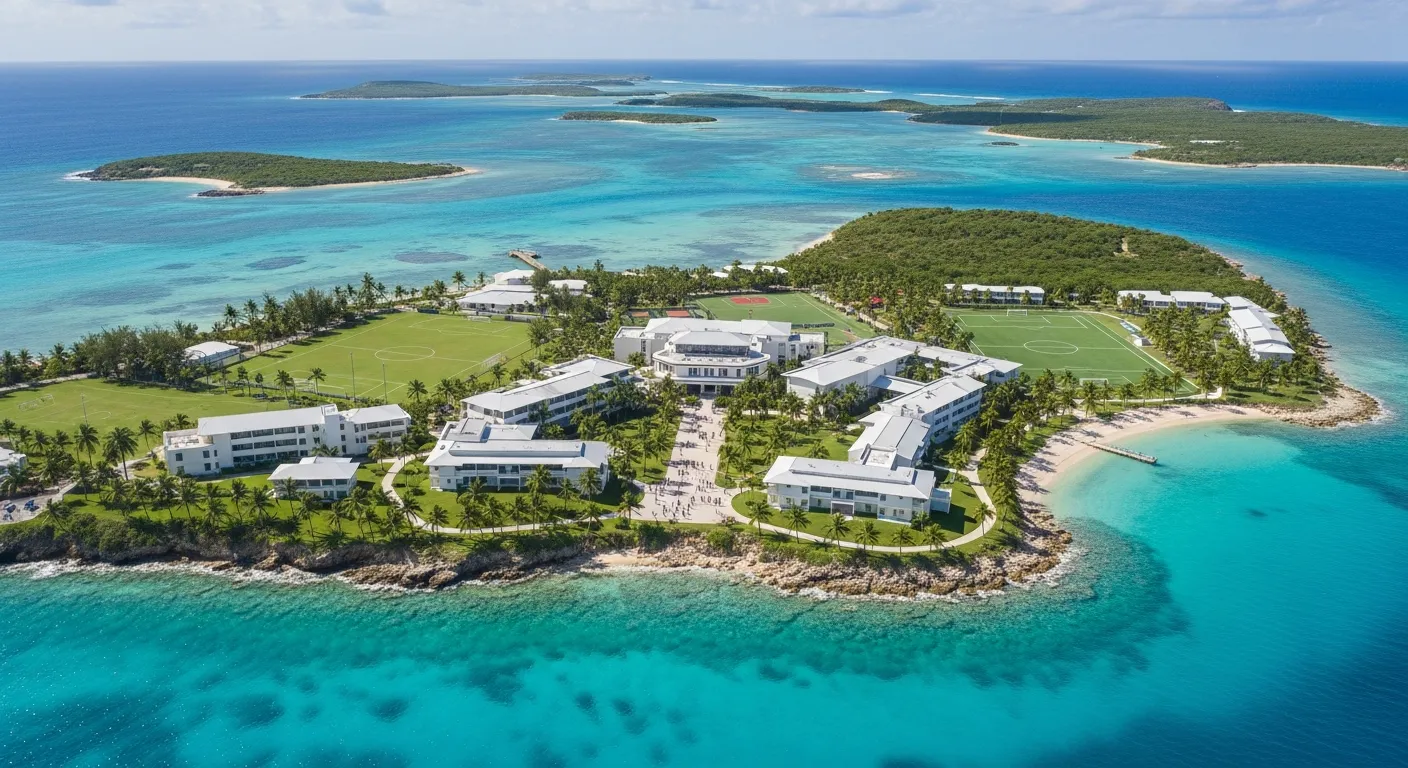
What Drives Private Education Demand in the Caribbean
Private education penetration in the Caribbean is consistently higher than in comparable income-level countries in Asia or Africa. Four structural factors explain this:
Caribbean families have a deeply embedded preference for private education. In Trinidad and Tobago, Jamaica, and Barbados, private schooling is widely seen as the pathway to professional employment and social mobility. This is not a luxury preference, it reflects a genuine quality differentiation between public and private school outcomes that has persisted for decades.
Curriculum differentiation matters. The presence of Cambridge IGCSE, CSEC (Caribbean Examinations Council), International Baccalaureate, and US curriculum tracks gives Caribbean private schools a quality signal that public schools cannot match. Families earning USD 25,000 to USD 50,000 annually routinely allocate 15 to 25 percent of household income to private school fees for this reason.
Tourism and expatriate economies sustain premium segments. Cayman Islands, Turks and Caicos, Barbados, Antigua, and the British Virgin Islands have large expatriate and high-net-worth populations who demand international-standard private education. These markets sustain schools charging USD 10,000 to USD 30,000 per year in annual fees, with stable occupancy driven by employer-sponsored education allowances.
Urbanization is concentrating demand. Kingston, Port of Spain, Santo Domingo, Georgetown (Guyana), and Nassau are all growing through rural-to-urban migration. The urban professional class is expanding, and demand for mid-market quality private schools in suburban corridors is consistently ahead of supply.
Market-by-Market Overview: Caribbean Private Education
Jamaica
Jamaica has approximately 700 private schools serving 180,000 students. The private sector is concentrated in Kingston and St. Andrew (where the professional class is based) and Montego Bay (tourism economy). Strong demand exists for quality early childhood education in expanding suburban areas of St. Andrew (Portmore, Constant Spring Road corridor) and in the Montego Bay growth zone. Average private school fees range from JMD 15,000 to JMD 80,000 per month (approximately USD 100 to USD 530). The premium segment (Hillel Academy, Campion College, Immaculate Conception) is oversubscribed. New entry opportunity exists in the mid-market bilingual and STEM-focused segment in suburban Kingston corridors.
Trinidad and Tobago
Trinidad has one of the highest private school participation rates in the English Caribbean. Approximately 400 private schools serve 120,000 students. The secondary private school market is mature; the early childhood and primary market is more fragmented. Recent oil-sector economic consolidation has put modest pressure on premium fees but mid-market demand has held. Tobago is a distinct sub-market with limited private school supply relative to the island's economic development ambitions under the THA (Tobago House of Assembly). Real estate development activity in Tobago is creating demand for school amenity studies.
Dominican Republic
The Dominican Republic has the largest private education market in the Caribbean by school count and student enrollment. Approximately 2,500 private schools serve 650,000 students. Santo Domingo and Santiago are the primary markets. The private school sector includes a mix of elite bilingual schools (Abraham Lincoln, Carol Morgan, Robert Read Fiallo), well-established mid-market Catholic schools, and a large informal semi-private sector. Tourism-driven provinces (La Romana, Puerto Plata, Bavaro/Punta Cana) are attracting international school investment from expat and tourism-sector professional populations.
Barbados
Barbados has the highest per-capita private school fees in the Eastern Caribbean. Approximately 100 private schools serve a highly educated, professionally mobile population. The Codrington, Grantley Adams, St. James, and Holetown corridors are prime education zones. An influx of remote workers and high-net-worth residents post-pandemic (Welcome Stamp program) has increased demand for international-standard early childhood and primary education. Supply remains limited for the premium IB Primary Years segment.
Guyana
Guyana's oil discovery and rapid economic growth since 2019 is creating new demand for private education at a pace the market has never experienced. Georgetown private schools are at or near capacity. The Guyanese government and private sector are actively investing in new educational infrastructure. HRG has observed increasing inquiry from school operators and developers evaluating Guyana entry or expansion, particularly in the Georgetown corridor and East Bank Demerara.
What a Caribbean Education Feasibility Study Covers
A properly designed Caribbean education feasibility study follows the same structural framework as a Panama study, with market-specific calibrations:
Demand analysis: Household surveys targeting families with school-age children in the catchment zone, conducted in the appropriate language (English, Spanish, or French Creole depending on market). Sample minimum: 60 to 80 households per market for a single-zone study.
Competitor audit: Physical assessments of competing private schools and early childhood centers, collecting fee structures, enrollment capacity, occupancy indicators, and curriculum offerings. In small island markets, this audit can cover the entire island's private school population.
Demographic profiling: Integration of national census data with primary survey findings. Caribbean markets vary significantly in population density, income distribution, and household structure, a uniform regional approach is insufficient.
Pricing and revenue modeling: Fee benchmarks relative to local income levels and competitive alternatives, with enrollment projections under three scenarios. Caribbean markets require local currency modeling as well as USD equivalents given exchange rate exposure.
Regulatory review: Each Caribbean jurisdiction has distinct education licensing requirements. Jamaica (Ministry of Education and Youth), Trinidad (Ministry of Education), Dominican Republic (MINERD), Barbados (Ministry of Education), and Guyana (Ministry of Education) each have specific authorization processes, timeline expectations, and staffing requirements that directly affect project planning.
Free Caribbean Market Assessment
Discover which research methodology best fits your Caribbean market entry strategy.
Caribbean Private Education Market by Country (2025-2026)
| Market | Private Schools | Private Students | Language | Market Growth | Key Notes |
|---|---|---|---|---|---|
| Dominican Republic | ~2,500 | ~650K | Spanish | High | Largest private sector in region |
| Jamaica | ~700 | ~180K | English | Moderate-High | Strong demand in Kingston, Montego Bay |
| Trinidad and Tobago | ~400 | ~120K | English | Moderate | High private enrollment culture |
| Barbados | ~100 | ~30K | English | Moderate | Premium segment dominant |
| Bahamas | ~80 | ~25K | English | Moderate | Nassau premium + family island gaps |
| Puerto Rico | ~500 | ~150K | Spanish/English | Low-Moderate | US territory, IB and bilingual growth |
| Haiti | ~3,000+ | ~900K | French/Creole | Variable | Highly fragmented, NGO-driven |
| Guyana | ~200 | ~55K | English | High | Oil economy driving new investment |
Sources: UNESCO Institute for Statistics 2024, national ministries of education, HRG field analysis. School counts are estimates including all registered private institutions.
HRG's Caribbean Education Research Capability
Hope Research Group has operated across the Caribbean since 1985. Our education sector research portfolio includes school feasibility studies, early childhood education demand assessments, private school competitive landscape studies, and education program evaluations for development banks and NGOs across the region.
All Caribbean education studies include primary fieldwork conducted by pre-qualified local field partners under HRG quality protocols: 15% back-check on household interviews, GPS-stamped CAPI records, and full audit documentation. Multi-market studies are coordinated under a single contract with unified methodology, centralized data management, and a comparative analytical framework that allows direct market-to-market benchmarking.
HRG is an ESOMAR member and adheres to ESOMAR Code of Conduct and ICC research standards across all Caribbean markets. Reports are available in English, Spanish, or French depending on the client's and market's requirements.
To discuss a Caribbean education feasibility study, contact the HRG research team. You can also review related resources including our Panama education market research guide, school feasibility study methodology guide, and early childhood education market analysis for Panama City. HRG's full Caribbean research capabilities are described at our market research services page.
Related Caribbean Market Intelligence
For broader Caribbean market context, see Caribbean Market Size and Economic Data and Caribbean Consumer Behavior Trends. For country-specific research services, see Jamaica market research, Trinidad and Tobago market research, and Dominican Republic market research.
Related Resources
Frequently Asked Questions
What is the size of the Caribbean private school market?
The Caribbean private education market encompasses approximately 4,200 registered private K-12 schools serving an estimated 1.4 million students across the region. The Dominican Republic has the largest private school sector (approximately 2,500 schools), followed by Jamaica (700+), Trinidad and Tobago (400+), and Barbados (100+). Private enrollment rates range from 15 percent in smaller island states to over 35 percent in the Dominican Republic and some Eastern Caribbean territories.
Which Caribbean markets have the highest demand for private school feasibility studies?
Based on HRG field experience, the Caribbean markets with the strongest active demand for education feasibility studies are Jamaica (ongoing private school expansion in Kingston and Montego Bay corridors), Trinidad and Tobago (strong private school culture with growing middle class), Dominican Republic (largest private school market in the region, significant international school investment), Barbados (premium education for expatriate and professional communities), and Bahamas (Nassau and Grand Bahama private education expansion).
How does Caribbean education market research differ from Panama or Latin America?
Caribbean education market research differs in three key ways. First, most Caribbean markets operate in English or in bilingual English-French (Martinique, Guadeloupe, Haiti, Saint Lucia) or Dutch-English contexts, rather than Spanish. Second, school fees are often quoted in local currency (JMD, TTD, BBD) and calibrated to local income levels rather than US dollar benchmarks, requiring country-specific pricing analysis. Third, several Caribbean jurisdictions have education sector regulations tied to UK or US curriculum standards (Caribbean Examinations Council, CXC), which shapes the competitive positioning framework for new schools.
Can HRG conduct education research across multiple Caribbean islands?
Yes. HRG has pre-qualified field partners operating across the English-speaking Caribbean (Jamaica, Trinidad and Tobago, Barbados, Bahamas, Guyana, Belize, Eastern Caribbean), the Spanish-speaking Caribbean (Dominican Republic, Puerto Rico), and the French Caribbean (Martinique, Guadeloupe, French Guiana). Multi-market studies can be coordinated under a single contract with unified methodology, centralized data management, and comparative reporting.
What types of organizations commission Caribbean education market research?
Private school groups planning expansion across Caribbean territories, international education chains evaluating market entry (Cognita, GEMS, Cambridge curriculum franchises), real estate developers in tourism-driven markets (Turks and Caicos, Cayman Islands, Barbados) building communities that require school amenities, CDB (Caribbean Development Bank) and IDB-funded education projects requiring independent demand validation, and NGOs evaluating early childhood education program reach and effectiveness.
How long does a Caribbean multi-country education study take?
A single-market Caribbean education study (one island, primary research) takes 6 to 8 weeks. A two to three country comparative study runs 10 to 14 weeks to allow parallel fieldwork, data harmonization, and comparative analysis. A full Caribbean-region study covering 5 or more markets takes 16 to 24 weeks depending on scope and coordination complexity.
What does private school market research cost in the Caribbean?
Single-market education feasibility studies in the Caribbean cost USD 16,000 to USD 30,000 depending on sample size and methodology complexity. Multi-market studies (2 to 3 markets) run USD 35,000 to USD 65,000. Regional surveys (5+ markets) are scoped on a per-market basis with economies of scale applied. All studies include primary fieldwork, competitor audit, demographic profiling, and full reporting.
Caribbean Education Market Research Briefing
Download HRG's briefing on the Caribbean private education market: market sizing, demand drivers, country-by-country opportunity assessment, and how to commission a school feasibility study across the region.