How to Do Market Research in the Caribbean: A 7-Step Field Guide
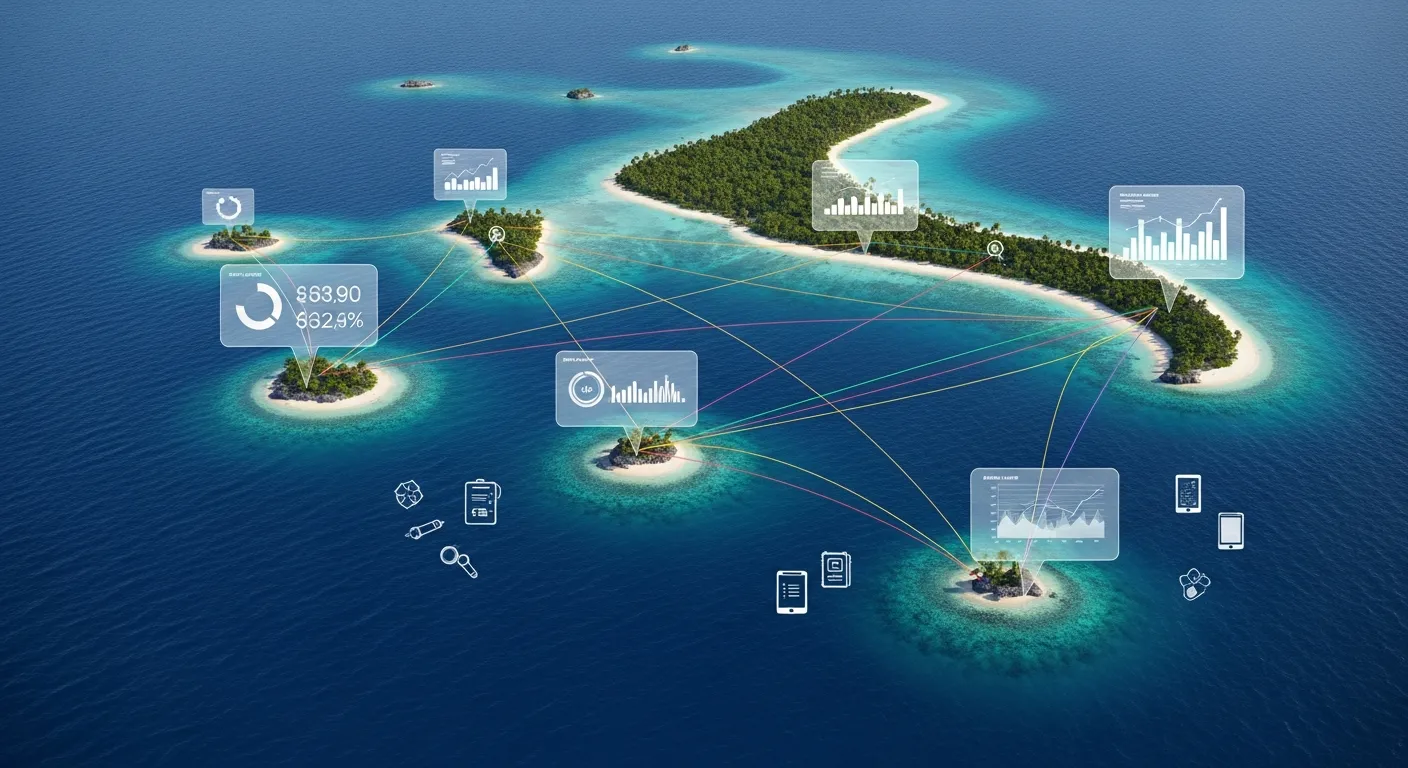
Conducting market research in the Caribbean is not simply a matter of applying standard methodologies to a new geography. The region's fragmented island structure, language diversity spanning at least 6 major language families, small and highly variable population sizes, and logistical challenges that do not exist in continental markets require a fundamentally different approach from the methods developed by global research firms for Europe, North America, or even Latin American continental markets. This guide walks through HRG's 7-step framework for delivering rigorous primary research across Caribbean markets.
Why Caribbean Research Requires Specialist Methodology
6+
Major language families across Caribbean markets: English, Spanish, French, Dutch, Haitian Creole, Papiamento plus regional dialects
5,000
Approximate population of Montserrat, the smallest English-speaking Caribbean market HRG covers, requiring census-style methodology rather than probability sampling
6 months
Atlantic hurricane season duration (June to November), which must be factored into all Caribbean fieldwork scheduling with buffer contingency
20+
Distinct Caribbean market contexts HRG covers, each requiring adapted sampling frames, language instruments, and field logistics
30-40%
Approximate share of consumer spending that flows through informal channels in many Caribbean markets, requiring non-standard channel audit methodology
n=300
HRG minimum recommended sample for Caribbean markets with populations above 50,000 for 5.6% margin of error at 95% confidence
Why Standard Methods Fall Short
Global research providers design their methodologies for scale. A market like France, Germany, or Brazil has millions of potential respondents, well-documented sampling frames from census and administrative data, established panel infrastructure, and logistical simplicity from a single contiguous geography. The Caribbean is the opposite: dozens of separate island markets, many with populations under 100,000, connected by sea or air rather than road, with no regional panel infrastructure worth the name, and with language diversity that makes a single questionnaire instrument unworkable across the region.
Nielsen's retail tracking methodology, for example, relies on a representative sample of retail outlets drawn from a comprehensive store universe. In markets like Jamaica or Trinidad and Tobago where formal trade coexists with large numbers of unregistered informal retail outlets, a sampling frame based on licensed or registered stores systematically underrepresents the purchasing behaviour of lower-income consumers who shop predominantly in informal channels. Getting this right requires local knowledge of the informal trade landscape that no standard database provides.
Step 1: Define the Research Geography and Language Requirements
The first decision in any Caribbean research project is the precise geographic scope and the languages required. This sounds obvious but is frequently underspecified by clients who request "Caribbean coverage" without distinguishing between the Anglophone, Hispanophone, Francophone, and Dutch-speaking sub-regions. Each language zone requires different questionnaire instruments, different moderator profiles for qualitative work, and often different field partner relationships. A single project spanning Jamaica (English), Martinique (French/Antillean Creole), and Curacao (Papiamentu/Dutch/English) effectively requires three parallel research operations with a unified analytical framework.
Language requirements in the Caribbean are also more complex than a simple national language determination. In Haiti, instruments must be available in both standard French and Haitian Creole (Kreyol), as the vast majority of the population is not literate in French even if it carries official status. In the OECS islands, English is standard but Caribbean dialect terms for product categories and brand descriptions can affect question comprehension in ways that metropolitan English questionnaires miss. Cognitive pre-testing of instruments with local respondents before main fieldwork is not optional in Caribbean research, it is essential.
Free Caribbean Market Assessment
Discover which research methodology best fits your Caribbean market entry strategy.
Step 2: Determine the Appropriate Sample Design
Sample size calculation for Caribbean markets must account for the finite population correction when island populations are small. The standard formula for an infinite population recommends n=385 for 5% margin of error at 95% confidence. For a market like Dominica with approximately 73,000 people and an adult population of around 55,000, the corrected required sample is approximately 380, nearly the same as infinite population. But for a market like Saba with approximately 2,000 inhabitants, a sample of 380 would represent nearly 20% of the total population, which is impractical and unnecessary. HRG applies a minimum of n=150 for the smallest markets with near-census geographic coverage as compensation.
Beyond the overall sample size, the stratification structure is critical. Most Caribbean research requires stratification by island (in multi-island nations like Trinidad and Tobago or Antigua and Barbuda), by urban/rural residence, by age group, and in ethnically diverse markets like Trinidad and Guyana by ethnic community. Designing strata that are both statistically sound and operationally feasible given local field capacity is one of the most technically demanding aspects of Caribbean research design.
Step 3: Build the Sampling Frame from Local Sources
Sampling frames in Caribbean markets are frequently outdated, incomplete, or non-existent for the purpose of random probability sampling. Census data is the gold standard but censuses are conducted infrequently, some islands have not conducted one in a decade or more, and population movement since the last census in hurricane-affected areas can be significant. HRG uses a layered approach: start with the most recent census enumeration district map, supplement with electoral roll data where available and up-to-date, cross-reference with community health worker registry data in markets where this exists, and validate the coverage with local field supervisors who know which areas have seen significant population change since the base data was compiled.
For retail audit studies, the store universe is constructed through an enumeration drive across all commercial areas in each island, conducted by local field supervisors who can identify registered and unregistered outlets. This enumeration drive is a billable component of Caribbean retail research that clients from continental markets do not expect but that cannot be omitted without undermining the representativeness of the audit sample.
Steps 4 to 7: Fieldwork, Quality Control, Analysis, and Reporting
Step 4 is interviewer selection and briefing. Caribbean fieldwork quality depends critically on the local interviewer team. HRG maintains relationships with trained field interviewers in each market, with a standard briefing protocol that covers questionnaire navigation, response probing techniques, refusal handling, GPS-verified interview location recording, and back-checking procedures. Interviewers are briefed in person or via video call by the project supervisor before any fieldwork begins. A 10% back-check rate on all completed interviews is the HRG standard, with back-checks conducted by a separate supervisor via telephone or in-person revisit.
Step 5 is pilot fieldwork. A pilot of 20 to 30 interviews in each market, conducted at the start of main fieldwork, identifies comprehension problems, skip pattern errors, and response distribution anomalies before they contaminate the full sample. Pilot findings are reviewed within 48 hours and questionnaire adjustments made before main fieldwork resumes. This is a non-negotiable quality gate in HRG's process. Step 6 is data cleaning, including logic checks, extreme value detection, and duplicate case identification. Step 7 is analysis and reporting, delivered in a format agreed with the client at briefing stage, with executive summary, methodology section documenting all sample design decisions, and a data appendix with full cross-tabulations.
| Market Size | Recommended n | Margin of Error | Sampling Approach |
|---|---|---|---|
| Large (1M+ pop.) | 600-1,000 | 3.1%-4.0% | Stratified random, area probability |
| Medium (100K-1M) | 400-600 | 4.0%-4.9% | Stratified random, census enumeration districts |
| Small (15K-100K) | 200-400 | 4.9%-6.9% | Systematic random, full geographic coverage |
| Micro (<15K) | 150-200 | Variable | Near-census, all accessible communities |
Common Pitfalls and How to Avoid Them
The most common pitfall in Caribbean research is over-reliance on convenience samples concentrated in capital cities. In markets like Jamaica, St. Lucia, or Barbados, the capital and its surroundings can account for 40% to 70% of the national population, so a Kingston-heavy or Bridgetown-heavy sample may appear representative but systematically underweights rural, lower-income, and older respondent profiles. HRG's sampling protocol explicitly requires minimum proportional coverage of non-capital geographic areas regardless of the practical convenience of interviewing in urban centres.
A second common pitfall is using online surveys without accounting for the digital divide. Internet penetration varies enormously across Caribbean markets, from 87% in Puerto Rico to less than 35% in Haiti (DataReportal, 2024). An online survey in Haiti is not a representative consumer survey, it is a survey of the educated, urban, digitally connected minority. Even in markets with 70%+ internet penetration, online samples skew younger, urban, higher-income, and more educated than face-to-face samples in the same market. Hybrid methodologies that weight online and face-to-face subsamples are possible but require careful design.
Caribbean Market Intelligence
Monthly research insights, consumer trends data, and industry analysis from 30+ Caribbean and Latin American markets.
Need Caribbean Research Designed to Deliver Reliable Data?
HRG has refined Caribbean research methodology through decades of fieldwork across 20+ island markets. Our approach is purpose-built for the logistical, linguistic, and statistical realities of the region. Contact us to discuss the methodology for your next Caribbean research project.
Discuss Your ProjectRelated Research
Qualitative Research Methods in the Caribbean
Focus groups, in-depth interviews, and ethnographic approaches adapted for Caribbean cultural contexts.
Consumer Survey Methodology for Small Islands
Sampling, questionnaire design, and fieldwork protocols for markets with populations under 100,000.
Trade Audit Methodology in the Caribbean
Building a representative store universe and conducting retail audits across formal and informal Caribbean trade channels.
Market Sizing Methodology for Emerging Markets
Bottom-up market sizing approaches for markets where secondary data is scarce or unreliable.
Caribbean Food Import Analysis
An example of how rigorous primary and secondary research methodology produces actionable Caribbean market intelligence.
HRG Feasibility Studies
How HRG applies Caribbean research methodology to feasibility studies for market entry, new product launch, and investment decisions.
how to conduct market research Caribbean Research Report
Get our comprehensive how to conduct market research caribbean data pack with market analysis, competitive insights, and growth forecasts for strategic planning.