US Virgin Islands Consumer Market Data 2026: Population, GDP, and Research Landscape
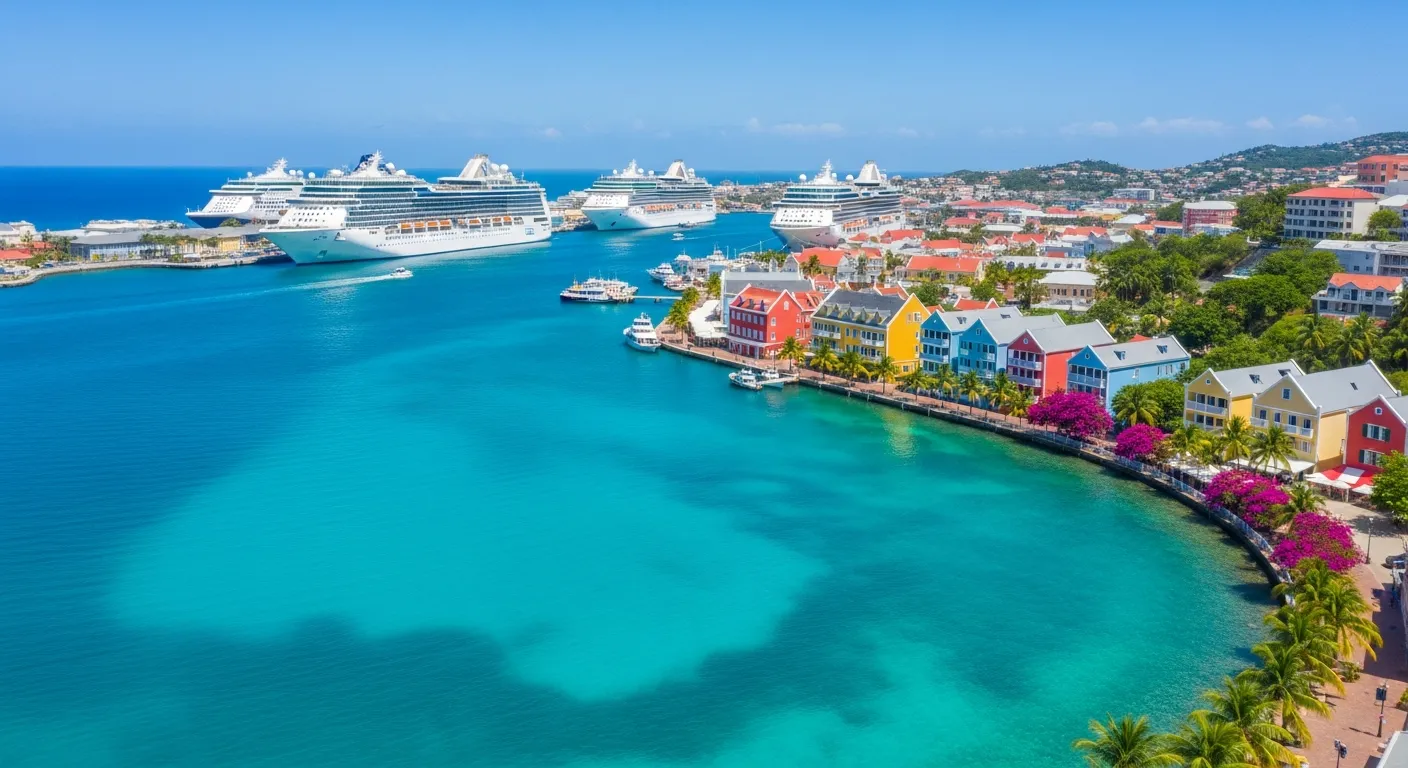
The US Virgin Islands (USVI) is a small, high-income US territory with approximately 100,000 residents and a GDP per capita of USD 39,000, making it one of the wealthiest territories in the Caribbean. For researchers, nonprofits, healthcare organizations, and private sector clients, the USVI presents a distinctive consumer market that combines US legal and currency standards with Caribbean geography, culture, and island-specific consumption patterns.
USVI Market Profile: Key Statistics 2026
Total Population
~100,000
2026 estimate
GDP per Capita
USD 39,000
2024, BEA
Currency
USD
No FX risk for US buyers
St. Thomas Cruise Arrivals
2.0M
2024 (USVI Tourism)
Main Language
English
US territory
Internet Penetration
88%
ITU 2024
Sources: US Census Bureau ACS 2024, US Bureau of Economic Analysis 2025, USVI Bureau of Economic Research 2025, USVI Department of Tourism 2024
Island-by-Island Consumer Profile
The three main islands of the USVI serve distinctly different consumer economies, and research programme design must account for these structural differences rather than treating the territory as a single homogeneous market.
St. Thomas: The Tourism and Trade Hub
St. Thomas, with its capital Charlotte Amalie, is the commercial and financial hub of the USVI. The island hosts the Cyril E. King Airport, the territory's primary international air gateway, and the Charlotte Amalie cruise terminal, one of the busiest cruise ports in the Caribbean. Charlotte Amalie's duty-free shopping strip, clustered around Main Street and the adjacent alleys, is internationally recognized as one of the top duty-free retail destinations in the Caribbean, with strengths in jewelry, watches, spirits, and luxury goods.
The resident consumer economy on St. Thomas is supplemented, and in peak season dominated, by tourist spending. During the December to April high season, tourist arrivals to St. Thomas can temporarily exceed the resident population on a daily basis. This creates a dual consumer landscape: resident purchasing driven by income, lifestyle, and brand loyalty; and tourist purchasing driven by price, novelty, and duty-free savings. For research designs that need to separate these populations, a residency screening question and appropriate sampling locations are essential.
St. Croix: The Resident Consumer Market
St. Croix is the largest island by area in the USVI and hosts the territory's largest resident population at approximately 50,000 people. The consumer economy on St. Croix is predominantly resident-driven, with a more diversified economic base that includes petrochemical refining (the idled HOVENSA refinery and its successor operations), light manufacturing, agriculture, and a smaller but growing tourism sector centred on Christiansted and the East End resort area.
St. Croix consumers exhibit purchasing patterns more characteristic of a stable middle-income US market than of a heavily tourism-influenced island. Major US retail brands including Cost-U-Less (a membership warehouse retailer), local supermarket chains, and standard US fast food and quick service restaurants are well-established on St. Croix. Online shopping via Amazon and other US mainland e-commerce platforms is highly prevalent due to USVI's status as a US territory, though shipping times are longer and costs higher than for continental US addresses.
St. John: Smallest Island, Highest Income Profile
St. John has a resident population of approximately 5,000, with a disproportionately affluent profile driven by second-home ownership among continental US buyers, the presence of the Virgin Islands National Park (which covers approximately 60% of the island), and a luxury resort and villa rental industry concentrated in Cruz Bay and Coral Bay. Consumer spending on St. John is heavily oriented toward premium food, beverage, and experiential categories. Grocery and household supply logistics to St. John are managed through a ferry connection to St. Thomas, approximately 20 minutes each way.
USVI Household Spending Allocation by Island (% of total expenditure)
Estimated household budget allocation across spending categories by island, 2024. Sources: US Census Bureau ACS 2024, BLS Consumer Expenditure Survey Caribbean supplement 2024.
Consumer Spending Patterns
USVI consumer spending reflects the territory's blend of US consumer culture and island market constraints. Food and beverage costs in the USVI are approximately 20 to 35% higher than US mainland averages due to the Jones Act, which requires goods shipped between US ports to use US-flagged vessels, imposing a structural cost premium on imported goods. Healthcare costs are also elevated relative to the US mainland, reflecting the territory's limited provider base and dependence on off-island referrals for specialist care.
Housing costs on St. Thomas and St. John are among the highest in the Caribbean, driven by land scarcity, construction cost premiums for island logistics, and competition from second-home buyers and the short-term rental market. St. Croix offers lower housing costs and a larger stock of affordable residential options.
Retail channel preferences in the USVI are consistent with US mainland patterns for most categories, with a strong preference for branded goods, established retail formats, and online convenience. The limited physical retail density, particularly on St. John and in areas of St. Croix outside Christiansted, means that online commerce fills a more significant role than in comparably sized US mainland communities.
The USVI as a Research Market: Healthcare, Aging, and Social Research
The USVI has a significant body of healthcare and social services research, driven by federal agency requirements, the territory's aging population, and the ongoing post-hurricane recovery context following the 2017 hurricane season. Key research themes that have been commissioned in the USVI include caregiver support needs and services, aging in place programmes, chronic disease prevalence and healthcare access, food security, and economic resilience among lower-income households.
The USVI's status as a US territory makes it accessible to US federal grant funding mechanisms that do not apply to the wider Caribbean, and this has supported a body of academic and applied research that provides useful secondary data context for private sector research buyers. The US Census Bureau American Community Survey provides annual demographic updates on income, education, housing, and employment for the USVI at both territory and island level.
For healthcare organizations, nonprofits, and government agencies commissioning research in the USVI, HRG offers face-to-face fieldwork capability across St. Thomas and St. Croix, with inter-island coordination for studies requiring both islands. The USVI research landscape is described in further detail in our Caribbean B2B market research guide, and fieldwork methodology is outlined in the CAPI fieldwork methodology guide.
USVI Population Age Distribution 2024
Resident population by age group across all three main islands. The USVI has a relatively older age profile, with significant implications for healthcare, retirement services, and consumer goods categories. Sources: US Census Bureau ACS 2024.
Free Caribbean Market Assessment
Discover which research methodology best fits your Caribbean market entry strategy.
Market Research in the USVI: Practical Considerations
The USVI's small population creates specific sample design challenges. A territory-wide representative survey at N=400 will have a margin of error of plus or minus 4.9 percentage points at the 95% confidence level, which is acceptable for most market sizing and brand tracking purposes. However, island-level cuts within that same study will have much larger margins of error, as the St. John sub-sample at N=20 (proportional to island share) cannot produce statistically reliable island-level estimates.
For studies requiring island-level data for St. Croix, a deliberate oversampling strategy is required, allocating a minimum of 100 interviews to each island regardless of population proportion. This disproportionate sample design must then be weighted back to the territory's actual population distribution before reporting territory-level results, ensuring that St. Thomas's larger population receives its appropriate weight in aggregate estimates.
Field access on St. Thomas is straightforward, with high-footfall sampling locations available at the Havensight and Crown Bay shopping areas, the Market Square, and the Tutu Park Mall. St. Croix fieldwork centres on Sunny Isle Shopping Centre, the Gallows Bay waterfront area in Christiansted, and the La Reine Shopping Centre. Both islands have sufficient interview locations for structured quota-based sampling without requiring door-to-door recruitment.
HRG's USVI capability covers consumer surveys, healthcare and social research, focus groups, and stakeholder interviews. For a cost estimate on a specific USVI study, contact us via the project enquiry page or schedule a scoping call via HRG Discovery Call.
What is the population of the US Virgin Islands in 2026?
The US Virgin Islands resident population is approximately 100,000 as of 2026 estimates, following modest recovery from the 2017 hurricane season which caused temporary out-migration. St. Croix is the most populous island at approximately 50,000 residents, followed by St. Thomas at approximately 45,000, and St. John at approximately 5,000. The population is predominantly African American (76%), with significant Hispanic (17%), white (15%), and Asian (1%) communities. The USVI is an unincorporated territory of the United States, and residents are US citizens. Source: US Census Bureau American Community Survey 2024, USVI Bureau of Economic Research 2025.
What is the GDP per capita of the US Virgin Islands?
The US Virgin Islands GDP per capita was approximately USD 39,000 in 2024, placing it among the highest income territories in the Caribbean and significantly above the Caribbean regional average. However, the USVI income distribution is markedly unequal, with a significant affluent professional class concentrated on St. Thomas and St. John, and lower average incomes on St. Croix, which has a larger working-class population and a less developed tourist economy. The USVI uses the US dollar as its currency, which eliminates currency risk for US-headquartered research buyers and simplifies procurement. Source: US Bureau of Economic Analysis, USVI Bureau of Economic Research 2025.
How is the USVI consumer market divided between St. Thomas, St. Croix, and St. John?
St. Thomas dominates the tourist-driven consumption economy, hosting Charlotte Amalie, the primary cruise port and duty-free shopping zone, and the Cyril E. King Airport, which serves international air arrivals. St. Thomas receives approximately 2 million cruise visitors annually (2024), generating very high premium spending in jewelry, spirits, and luxury goods. St. Croix has a larger resident consumer base and a more diversified economy with light manufacturing, petroleum refining, and a growing agricultural sector. St. Croix consumer spending is more resident-driven and less exposed to tourist peaks and troughs. St. John is the smallest island with the highest income profile among residents, dominated by the Virgin Islands National Park and luxury resort tourism.
What consumer research has been conducted in the USVI?
Consumer research in the USVI spans multiple sectors. The USVI tourism authority commissions regular visitor satisfaction and spending studies. Healthcare and social services research has been conducted for the USVI Department of Health and federal partners, covering areas such as caregiver wellbeing, aging population services, and chronic disease prevalence. Economic and household consumption surveys are conducted periodically by the US Census Bureau as part of the American Community Survey, providing publicly available demographic and income data. Private sector consumer research has been conducted for retail, hospitality, and financial services clients seeking to understand brand preference, awareness, and usage patterns in the USVI market.
How does fieldwork in the USVI work logistically?
USVI fieldwork is logistically accessible from both the continental United States and from other Caribbean markets. Flights from Miami to St. Thomas (STT) operate several times daily and take approximately 3 hours. Flights from San Juan, Puerto Rico are approximately 25 minutes. HRG deploys field teams to the USVI from its Jamaica base via San Juan or Miami connections. Accommodation on St. Thomas ranges from USD 120 to 250 per night for a mid-range property. Ground transport for fieldwork purposes involves a rental vehicle at approximately USD 60 to 80 per day, as public transport coverage on St. Thomas is limited. For studies requiring presence on both St. Thomas and St. Croix, a ferry crossing (approximately 40 minutes) or inter-island flight is required. Full fieldwork costs for a 150 to 200 interview face-to-face study in the USVI are available on request.
Is the USVI a good proxy market for US mainland consumer behavior?
The USVI is not a reliable proxy for US mainland consumer behavior, despite sharing US dollar currency, US legal framework, and access to US retail brands. Consumer purchasing behavior in the USVI is heavily influenced by the territory's island context, including higher food and goods prices due to import dependency, strong tourism-driven retail patterns, a smaller and more tightly networked social environment, and exposure to broader Caribbean cultural influences. For research clients seeking to understand Caribbean consumer behavior through a US-income lens, the USVI provides a useful but contextually specific data point. For research clients seeking to generalize to the US mainland market, the USVI is too small and contextually distinct to serve as a valid proxy.
Caribbean Market Entry Guide 2026
28-page guide covering consumer data, fieldwork protocols, and market entry frameworks across 14 Caribbean territories including the USVI.