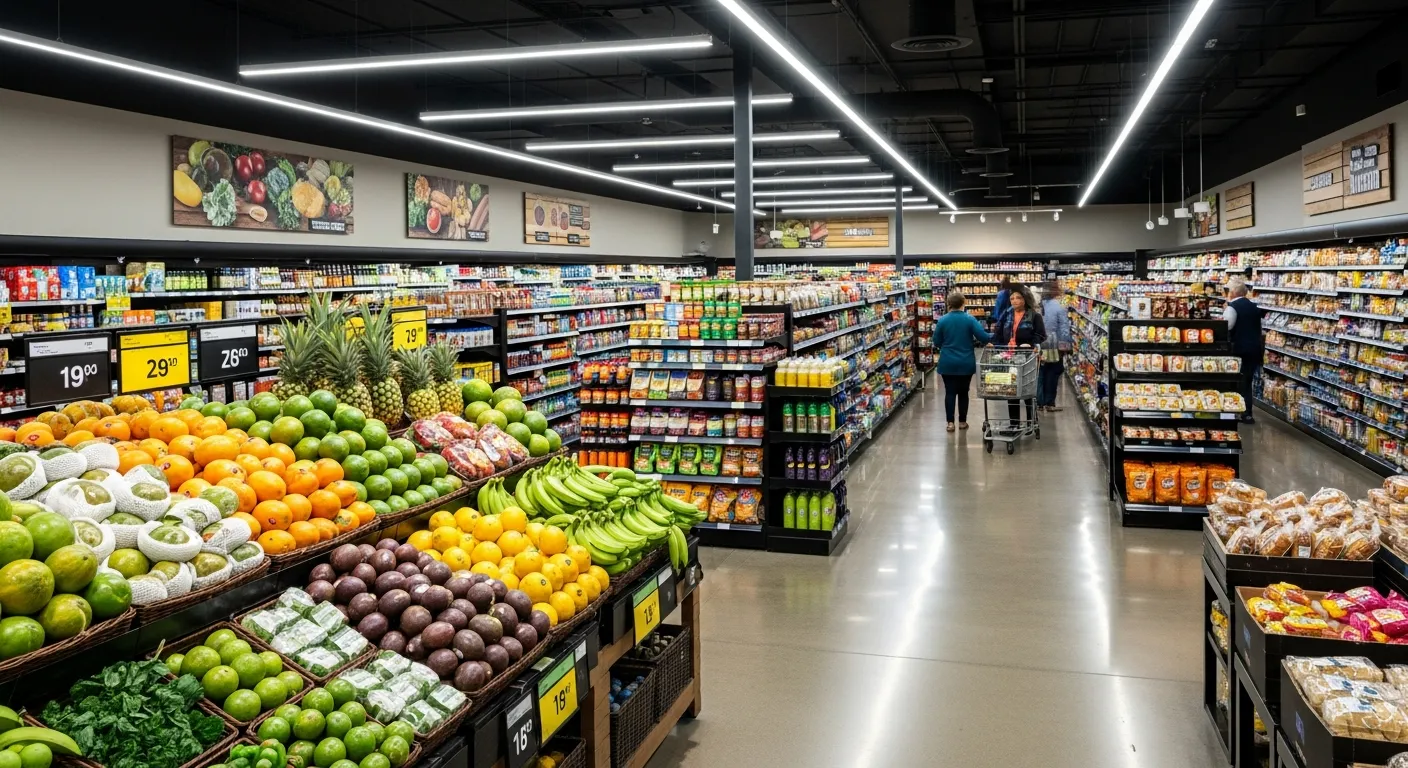
Shopper Research Methods in the Caribbean
| Method | Sample Size | Best For | Cost (1 market) |
|---|---|---|---|
| Shop-along | 30-50 accompanied shops | Deep path-to-purchase, category navigation | $8,000-$15,000 |
| Exit intercept interview | 200-300 interviews | Purchase decision factors, quick diagnostics | $6,000-$12,000 |
| In-store observation | 50-100 coded observations | Shelf behaviour, dwell time, product interaction | $5,000-$9,000 |
| Pantry check + diary | 30-50 households | Purchase frequency, brand rotation, stocking habits | $7,000-$13,000 |
| Virtual shelf test | 100-200 participants | Planogram testing, new pack design | $5,000-$10,000 |
Source: HRG shopper research service portfolio, 2026. Prices are indicative and subject to market-specific conditions.
Caribbean Retail Landscape for Shopper Research
Caribbean retail is bifurcated between modern trade and traditional trade. Modern trade covers supermarket chains (Super Plus, Progressive Grocers, and Loshusan in Jamaica; Massy Stores and Hi-Lo in Trinidad; La Sirena, Nacional, and Bravo in Dominican Republic), hypermarkets, and organised convenience chains. Traditional trade covers the vast network of corner stores, parlours, roti shops, and small grocers that still account for 40 to 60% of FMCG purchases in Jamaica and Trinidad (HRG FMCG Distribution Survey, 2024).
Shopper research programmes that cover only supermarkets miss a substantial share of purchase occasions. HRG designs Caribbean shopper research to cover both channels, weighting them appropriately by category and market.
For retail audit services covering outlet universe mapping and in-store execution tracking, see our retail audit Caribbean page. For FMCG distribution research, see FMCG distribution Caribbean. For mystery shopping as a complementary channel check, see mystery shopping Caribbean.
For the broader consumer research picture, see our Caribbean consumer research overview and our Caribbean consumer behavior trends analysis.
For beverage shopper studies covering beer, rum, and soft drinks at point of purchase, see our Caribbean beverage market research page. For qualitative research that complements shopper data, see qualitative research Caribbean. For CAPI quantitative validation of shopper research findings, see our CAPI fieldwork Caribbean guide.
Design Your Caribbean Shopper Research Study
Tell us your category, target retail channels, and markets. HRG will propose the right methodology and provide a fixed-price quote within 24 to 48 hours.
Caribbean Shopper Research: Frequently Asked Questions
What is shopper research and how is it different from consumer research?
Shopper research studies behaviour at or near the point of purchase: how consumers navigate a store, what triggers product selection, how they evaluate shelf sets, and what influences the final decision. Consumer research studies attitudes and motivations at home or away from the store. The distinction matters because the shopper and the consumer are often different people (e.g. a mother buying snacks for children she did not consult) and because in-store behaviour often differs significantly from stated preferences measured in surveys or focus groups. HRG uses shop-alongs, in-store observation, and exit interviews to capture actual shopper behaviour in Caribbean retail environments.
Which Caribbean markets does HRG cover for shopper research?
HRG runs shopper research in all major Caribbean retail markets: Jamaica (Kingston supermarkets, Montego Bay malls, Portmore convenience stores), Trinidad and Tobago (Port of Spain, San Fernando, Chaguanas commercial strip), Dominican Republic (Santo Domingo, Santiago hypermarkets), Barbados (Bridgetown and suburban retail corridors), Guyana (Georgetown, Berbice), Bahamas (Nassau and Grand Bahama), and Eastern Caribbean markets including St. Lucia, Grenada, and Antigua. For Spanish-language shopper research in the Dominican Republic and Puerto Rico, bilingual field teams are available.
What shopper research methods are available in the Caribbean?
HRG Caribbean shopper research methods include: shop-alongs (researchers accompany shoppers through the store, observing and asking real-time questions), intercept exit interviews (brief structured interview at store exit, 5-10 minutes, capturing purchase decisions just made), in-store observation with coding (structured observation of shopper navigation, dwell time, and product interaction without interviewer contact), virtual store testing (digital shelf simulations for planogram and packaging research), and accompanied home visits (pantry checks combined with purchase diary review).
How much does shopper research cost in the Caribbean?
A shop-along programme with 30 to 50 accompanied shops across 2 retail formats in one Caribbean market costs USD 8,000 to 15,000. Exit intercept programmes (200-300 interviews, 1 market, 3 to 5 store locations) cost USD 6,000 to 12,000. In-store observation studies (50-100 observed shoppers, coded with structured behaviour framework) cost USD 5,000 to 9,000 per market. Multi-market shopper studies covering Jamaica, Trinidad, and Barbados simultaneously are priced from USD 18,000 to 35,000. All prices are inclusive of recruitment, fieldwork, analysis, and report. Fixed-price quotes are available within 48 hours.
Can shopper research in the Caribbean cover both supermarkets and traditional trade?
Yes. HRG covers both modern trade (supermarkets, hypermarkets, convenience chains) and traditional trade (parlours, small grocers, mini-marts, market stalls) in its Caribbean shopper research. Traditional trade remains significant in Jamaica, Trinidad, Dominican Republic, and Guyana, particularly for FMCG categories like snacks, beverages, and personal care. HRG's retail audit and shopper research programmes are designed to cover both channels in the same study for a complete picture of the shopper journey.
Download: Caribbean Shopper Research Toolkit
Shop-along moderator guide, in-store observation coding template, exit intercept screener, and retail channel weighting benchmarks for Caribbean shopper studies.