Taste Testing and Sensory Evaluation in South Florida
HRG runs central location tests in hired venues in Broward County with a screened multicultural panel spanning Miami-Dade, Broward, and Palm Beach. We deliver blind product testing, competitive benchmarking, and sensory evaluation for food, beverage, and CPG brands targeting South Florida's general-market and Hispanic consumers.
What is taste testing in South Florida?
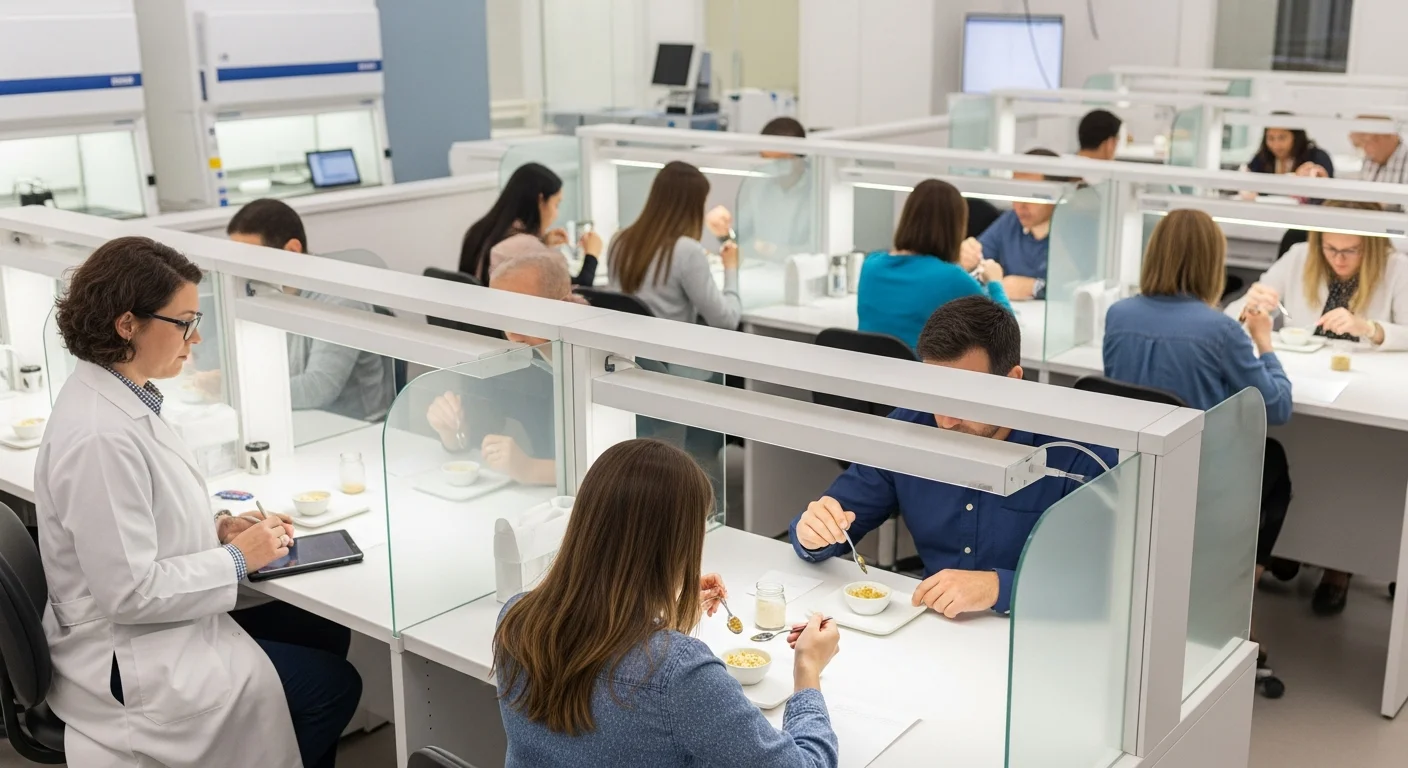
Taste testing in South Florida means recruiting consumers from the region's multicultural tri-county population to evaluate food, beverage, or supplement products in a controlled venue. HRG conducts central location tests (CLT) at hired venues in Broward County, administering blind and branded product evaluations to English-speaking, Spanish-speaking, and Haitian Creole-speaking participants. Studies cover sensory dimensions including taste, texture, aroma, mouthfeel, and appearance. Results inform product development, reformulation decisions, and competitive positioning for brands operating in or entering the South Florida and broader Caribbean market.
Why South Florida for Taste Testing?
South Florida's tri-county region of Miami-Dade, Broward, and Palm Beach has a combined population of approximately 6.3 million. More than 2.5 million are Hispanic or Latino, representing Cuban, Venezuelan, Colombian, Nicaraguan, Dominican, Puerto Rican, and Guatemalan national-origin groups. An additional 300,000 to 400,000 residents are of Caribbean origin, including one of the largest Haitian-American communities in the United States.
For food and beverage brands, this combination is commercially significant. No other US metro area offers the same concentration of multicultural consumer segments in a single drivable geography. A CLT study at hired venues in Broward County can simultaneously recruit general-market English-speaking consumers and Spanish-dominant Hispanic consumers, producing split-cell data from a single fieldwork event. Brands targeting Caribbean markets can extend the same screener to Haitian, Jamaican, and Trinidadian-origin respondents within the same metro.
Services in the Taste Testing Cluster
Children's Product Taste Testing
FlagshipBlind and branded testing for food, beverage, and supplement products targeting children. Parental consent, allergen screening, kid-appropriate scales, and insurance for ingestible testing.
Central Location Testing (CLT)
MethodControlled product evaluations at hired venues in Broward County. Individual booths, standardized serving, temperature control, and certified field staff.
Product Comparison & Benchmark Testing
Method60/40 protocols and sequential monadic designs for head-to-head competitor comparisons. Blind benchmarking against named competitor products.
Multicultural & Hispanic Taste Testing
DifferentiatorBilingual English/Spanish panels with coverage of Cuban, Colombian, Venezuelan, Dominican, and Haitian communities across the tri-county area.
What HRG Measures in a Taste Test
A full sensory evaluation covers five primary dimensions. Taste measures overall flavor profile, sweetness, saltiness, bitterness, acidity, and aftertaste. Texture assesses mouthfeel, chewiness, crunchiness, or creaminess depending on the product category. Aroma evaluates the product before and during consumption. Appearance covers color, clarity, visual appeal, and packaging adequacy where relevant. Overall liking is captured on a standardized hedonic scale, typically nine points, and serves as the primary comparator metric in competitive benchmarks.
For children's products, HRG uses a five-point smiley-face scale rather than a numeric scale, which is developmentally appropriate for respondents aged 6 to 12. For adult panels, a nine-point hedonic scale or a 100-point line scale is standard, depending on the study design and the analytical depth required.
Facility and Recruitment
Hired venues in Broward County accommodate individual testing stations with standardized serving conditions. Products are coded with three-digit random numbers to prevent order and position bias. Temperature control is maintained for cold-chain and hot-serve products. Preparation follows the client's exact protocol, documented in a fieldwork brief reviewed and approved before sessions begin.
Recruitment draws from HRG's pre-screened South Florida panel. Participants are screened for product category usage, purchase frequency, and dietary restrictions or allergies relevant to the product being tested. For allergen-sensitive products, additional medical screening criteria apply.
Related Reading
Frequently Asked Questions
Why conduct taste testing in South Florida specifically?+
South Florida is the only US market where you can simultaneously reach English-dominant general-market consumers, Spanish-dominant Hispanic consumers from more than seven national-origin groups, and Caribbean-origin communities including Haitian, Jamaican, and Trinidadian households. For food and beverage brands targeting multicultural US consumers or planning Caribbean and Latin American expansion, a single South Florida CLT study can generate data across all three segments. HRG hires venues in Broward County and has an established multicultural panel drawn from proprietary recruitment across Miami-Dade, Broward, and Palm Beach.
What types of products does HRG test in South Florida?+
HRG conducts taste and sensory tests on beverages including carbonated drinks, juices, sports drinks, and alcoholic beverages; snack foods and confectionery; dairy and refrigerated products; condiments, sauces, and seasonings; baked goods and cereals; and children's food and supplement products. For products intended for children, HRG applies additional safeguards including parental consent forms, allergen disclosure and screening, and specific insurance provisions for ingestible testing.
How many participants does a South Florida taste test require?+
For directional product development work, 50 to 75 participants per test cell is typically sufficient. For statistically robust comparisons between two or more products, 100 to 150 participants per cell is the standard. When the study must support a major reformulation or launch decision, 200 or more participants provides stronger confidence intervals. HRG can recruit within South Florida's tri-county area for all sample sizes using our pre-screened multicultural panel.
How long does a South Florida taste test study take from start to finish?+
A standard CLT taste test in South Florida takes three to five weeks from project kick-off to final data delivery. This includes one week of screener and discussion guide finalization, one week of venue scheduling and participant pre-recruitment, two to three days of fieldwork at hired venues in Broward County, and one week of data processing and reporting. Rush turnarounds of two to three weeks are possible for simpler designs with smaller samples.
What is the difference between a blind test and a branded test?+
In a blind test, products are served in identical unmarked containers so respondents evaluate only the sensory qualities: taste, texture, aroma, mouthfeel, and appearance. Blind tests isolate actual product performance from brand perception. In a branded test, packaging and branding are visible, which introduces brand equity effects. Most product development and competitor benchmarking studies begin with a blind test. Branded tests are useful for testing packaging claims or measuring how much brand equity lifts or suppresses product scores.
Can HRG test products in multiple languages for South Florida panels?+
Yes. HRG conducts taste test sessions in English, Spanish, and Haitian Creole in South Florida. Bilingual fieldworkers administer questionnaires in the respondent's preferred language. For studies that require separate monolingual cells by language group, HRG can design and field split sessions on consecutive days at hired venues in Broward County.
Free Caribbean Market Assessment
Discover which research methodology best fits your Caribbean market entry strategy.