Ethnographic Research in the Caribbean: Methods, Costs, and Applications
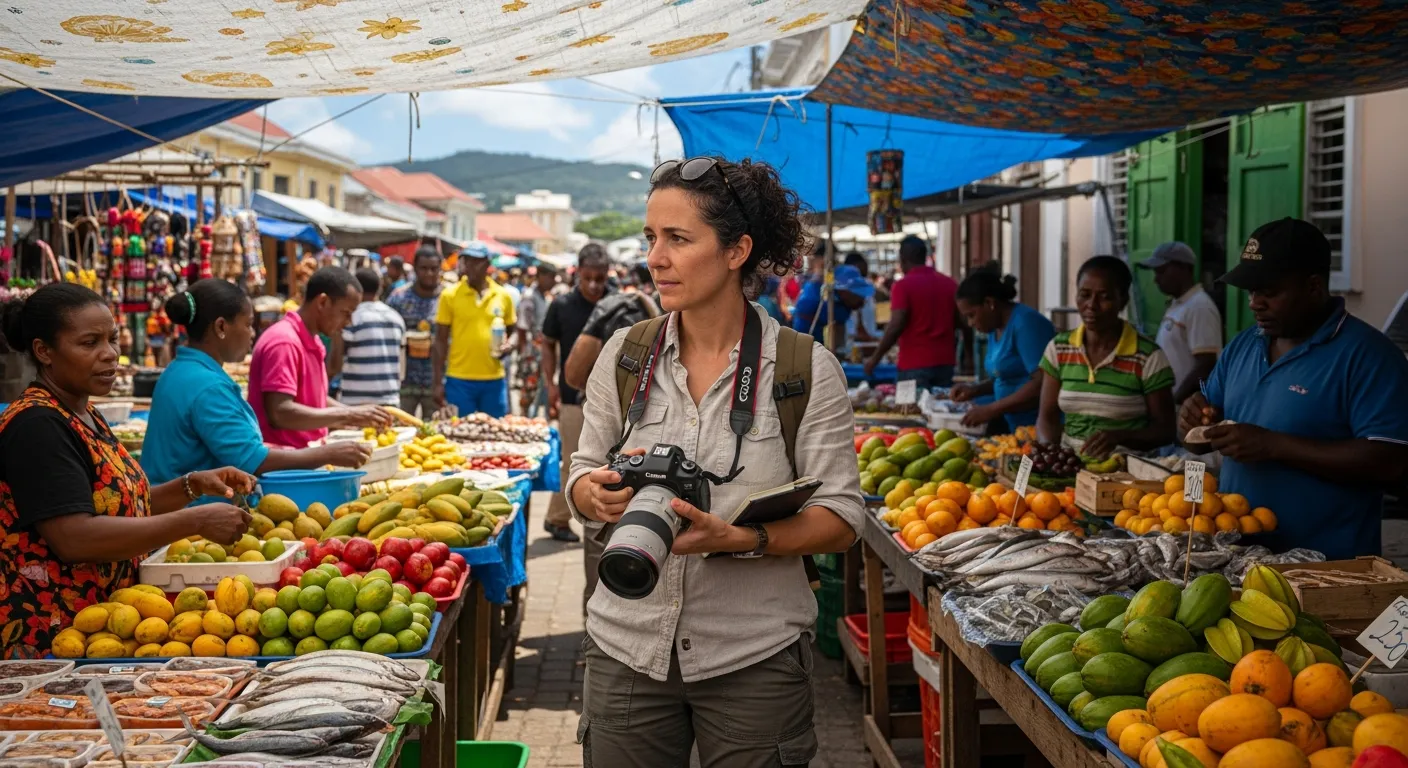
Ethnographic consumer immersion research closes the gap between what Caribbean consumers say they do and what they actually do. For FMCG brands, financial services companies, and healthcare providers operating in Caribbean markets, this gap is consistently larger than in developed market contexts. HRG has conducted ethnographic programmes across 10 Caribbean countries and this article documents what works, what costs what, and when to use it.
Caribbean Ethnography: Quick Reference
When Ethnography Is the Right Tool in the Caribbean
Ethnographic research is not appropriate for every Caribbean research question. It is significantly more expensive per respondent than focus groups or surveys, and its sample size is too small to support statistical inference. It is the right tool when the research question is about behaviour (what people do), context (the physical, social, and cultural environment in which consumption occurs), or latent needs (what consumers want but have not been able to articulate because they have never been asked in the right way).
The Caribbean context creates specific conditions where ethnography outperforms other methods. Social desirability bias is high across virtually all Caribbean markets: in focus groups and surveys, participants routinely report healthier diets, better financial management, and more aspirational purchasing behaviour than is actually the case. In a home visit, the observer sees what is actually in the refrigerator, the pantry, and the medicine cabinet. This is not the same as what the participant says is there when asked in a survey context.
Caribbean Ethnographic Research Formats
| Format | Duration | Best For | Cost per HH |
|---|---|---|---|
| Home visit ethnography | 90-120 minutes | FMCG usage, food preparation, household product category | $800 - $1,500 |
| Accompanied shopping | 2-3 hours | Retail brand interaction, category navigation, basket construction | $900 - $1,600 |
| Day-in-the-life | 6-8 hours | Financial decision-making, services usage, work-life daily routine | $1,800 - $3,500 |
| Workplace observation | 3-4 hours | B2B research, informal sector worker studies, SME owner studies | $1,200 - $2,000 |
| Digital ethnography | 1 week diary | Social media behaviour, app usage, digital finance, food diary | $500 - $900 |
Per-household costs in USD. Total programme cost includes observer fees, recruitment, incentives, video documentation, analysis, and reporting. Contact HRG for project-specific pricing.
Country-by-Country Considerations
Jamaica
Jamaica is HRG's most active ethnographic market in the English-speaking Caribbean. Home access is high if community recruitment is managed correctly through established community contacts in Kingston (Portmore, Spanish Town) and Montego Bay. Participants are expressive and comfortable with video observation once trust is established. The primary protocol requirement is engaging community leaders in lower-income communities before any home visit schedule is confirmed.
Trinidad and Tobago
Trinidad has a sophisticated consumer class with high media literacy and a diverse ethnic mix (Afro-Trinidadian and Indo-Trinidadian communities have distinct consumption patterns). Ethnographic research must be designed to capture both communities if the research objective is nationally representative. Indo-Trinidadian household research requires specific cultural sensitivity around food preparation, religious spaces in the home, and gender dynamics in the household purchasing role.
Dominican Republic
Santo Domingo ethnographic research works well in middle-class communities (Los Prados, Arroyo Hondo, Bella Vista). Access to lower-income barrios (Los Alcarrizos, Los Mina) requires community liaison. Rural DR ethnography is feasible but adds significant logistics cost (transport, overnight stays for researchers). Spanish-language observation is essential throughout; no interpreter is suitable for unobtrusive home observation.
Guyana
Guyana's rapidly growing economy (16.4% GDP growth in 2024 driven by oil revenues) makes it an active ethnographic target for FMCG brands entering the market. Georgetown-based research is operationally straightforward. East Indian-Guyanese and Afro-Guyanese communities have distinct consumption patterns that require stratified sampling to capture. HRG has operational ethnographic access in Georgetown and New Amsterdam.
Free Caribbean Market Assessment
Discover which research methodology best fits your Caribbean market entry strategy.
Frequently Asked Questions
What is ethnographic research and when is it used in the Caribbean?
Ethnographic research is a qualitative methodology in which a researcher observes consumers in their natural environment (home, workplace, retail environment) rather than in a research facility. It is used when the research question requires understanding actual behaviour, not reported behaviour. In the Caribbean context, ethnographic research is particularly valuable for: FMCG product usage studies (how households actually use a product differs from how they say they use it), retail shopping behaviour (route taken, decision points, basket construction), financial decision-making in informal economy households, and food preparation and consumption habits. HRG has conducted ethnographic programmes in Jamaica, Trinidad and Tobago, Barbados, the Dominican Republic, Guyana, and Haiti.
How much does ethnographic research cost in the Caribbean?
Ethnographic research in the Caribbean costs more per respondent than focus groups or surveys because it is time-intensive and requires skilled observers with local community access. A typical 10-15 participant ethnographic programme in one Caribbean country ranges from $22,000 to $42,000 USD, including observer fees, participant incentives, video documentation, analysis, and reporting. Programmes spanning multiple Caribbean markets add a country premium of $8,000 to $15,000 per additional country. HRG provides project-specific pricing based on the number of respondents, observation duration (1-hour home visit vs. full-day accompaniment), and reporting requirements.
What types of ethnographic research does HRG offer in the Caribbean?
HRG offers four ethnographic research formats in the Caribbean: (1) Home visit ethnography: 90-120 minute visit to a participant's home to observe product use, household routines, and shopping behaviour; (2) Accompanied shopping: observer accompanies the participant through their regular shopping trip, documenting decision points and brand interactions; (3) Day-in-the-life: full-day observation of a participant's daily routine, used for services and financial decision-making research; (4) Workplace observation: applicable for B2B research or studies of informal sector workers. All formats include video/photo documentation with participant consent and structured observer notes.
What are the cultural considerations for ethnographic research in the Caribbean?
Caribbean homes are private social spaces with significant hospitality expectations. Researchers entering a participant's home are guests and must follow local norms: accepting offered food and drink, respecting privacy zones within the home, and not photographing religious items, personal documents, or areas that feel sensitive without explicit additional consent. In Jamaica and Trinidad, community gatekeepers (community leaders, local churches) often need to be engaged before home visits are feasible in lower-income areas. In Haiti, interpreter presence is essential even for French-speaking researchers, as Haitian Creole is the language of everyday life in the household.
How does ethnography differ from focus groups in Caribbean research?
Focus groups reveal what consumers say and think (in a social, moderator-led setting). Ethnography reveals what consumers actually do. In Caribbean research, the gap between these two is often significant. For example, HRG's FMCG usage studies in Jamaica consistently show that household product usage (portion size, frequency, preparation method) differs from stated usage in survey or focus group data by 30-50%. Social desirability is lower in home settings because participants are in their own environment rather than a formal research context. The tradeoff is scale: focus groups reach 6-8 people per session, while ethnography reaches 1-2 people per observation day.
Related Resources
Caribbean Ethnographic Research Planning Guide
Download HRG's practical guide to planning ethnographic consumer immersion research across Caribbean markets, including country protocols, cost benchmarks, sample design recommendations, and documentation standards.