TV Audience Measurement in the Caribbean: A USD 400M Ad Market with No Ratings Currency
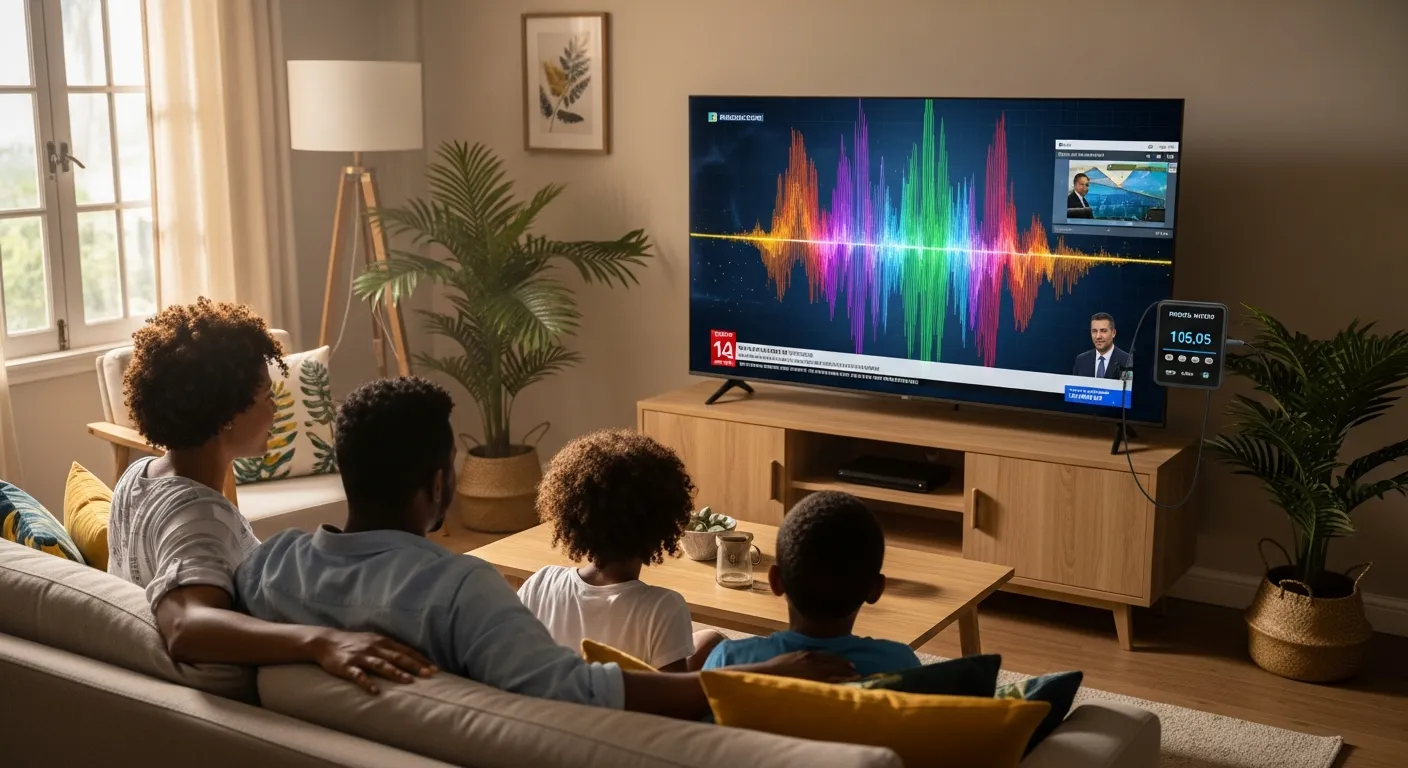
The Caribbean television advertising market is estimated at USD 380 to 450 million annually. Not one of the 13 major Caribbean territories has a continuous, panel-based TV audience measurement system. Jamaica, Trinidad and Tobago, Barbados, and the Eastern Caribbean states all operate without a ratings currency, leaving advertisers and broadcasters to negotiate on claimed circulation and periodic recall estimates rather than verified audience data.
Caribbean TV Measurement Gap: Key Facts
The Caribbean TV Measurement Gap: Why It Has Persisted
Continuous TV audience measurement using people-meter technology has been the global standard in advertising markets since the 1980s. Nielsen established people-meter panels across the United States and major European markets. Kantar IBOPE extended the model across Brazil, Argentina, Colombia, Mexico, Chile, and Peru. Yet the Caribbean, despite having an active television industry and a significant advertising market, has no equivalent service.
The core reason is market economics. A commercially viable people-meter panel requires substantial upfront investment in hardware (the meters and household handsets), panel recruitment and maintenance, data processing infrastructure, and a client base willing to subscribe to the ratings service. In markets where the total TV advertising spend is USD 20 to 30 million (roughly the size of Jamaica or Trinidad individually), the return on investment for a standalone service is marginal. The global TV measurement companies have historically prioritised markets where advertising spend can justify the infrastructure.
New generations of digital people-meter technology, including router-based passive measurement systems that track household streaming and linear TV consumption simultaneously, have substantially reduced the hardware cost per household. This changes the economics of Caribbean panel deployment and opens a credible pathway for the first time.
How TV Audience Measurement Works: From People-Meter to Ratings Point
A people-meter panel operates through five core components, each requiring distinct infrastructure investment and ongoing operational management.
Panel Recruitment and Design
A representative household panel is recruited using probability-based sampling from a census-linked household frame. In the Caribbean context, each territory requires its own representative sample, typically 200 to 500 metered households per territory to achieve statistical projections at the market level. Panel design must account for household size, geographic zone, age and gender composition, and socioeconomic classification. HRG's existing household panel recruitment infrastructure across Jamaica, Trinidad, Barbados, and the Eastern Caribbean provides the foundation for rapid panel establishment.
Meter Installation and Household Setup
Each sample household receives a meter device connected to their television (or, in router-based systems, their home network router). Installation requires a field technician visit, household consent protocols, and an ongoing relationship with the panel household to maintain cooperation and replace non-participating households as attrition occurs. Panel maintenance visits are required quarterly or bi-annually to verify equipment function and household composition updates.
Continuous Data Capture
People-meters capture second-by-second viewing data and transmit it to a central data collection facility daily, typically via mobile data connection. Modern router-based systems can capture both linear TV viewing (broadcast channels) and connected TV streaming activity, providing a unified view of video consumption that traditional set-top meters cannot achieve. This is particularly relevant in the Caribbean, where streaming platform penetration is growing rapidly alongside traditional broadcast viewing.
Data Processing and Audience Projection
Raw meter data is validated, weighted to match the population profile, and projected using the census-linked panel design to produce audience estimates for the total viewing population. Standard outputs include ratings (percentage of total population watching at a given time), share of viewing (percentage of all viewers watching a specific channel), reach (unduplicated audience over a defined period), and audience demographic profiles by programme and time segment.
Subscriber Reporting and Ratings Currency
TV ratings data is distributed to subscribers, typically broadcasters and advertising agencies, through a licensed data platform. The existence of a shared ratings currency allows advertisers to plan media buys based on verified audience delivery rather than estimated circulation, and to hold broadcasters accountable for audience guarantees.
Free Caribbean Market Assessment
Discover which research methodology best fits your Caribbean market entry strategy.
What Exists in the Caribbean Today: Current Measurement Approaches
In the absence of continuous metered measurement, Caribbean broadcasters and media buyers use a combination of imprecise alternatives that leave significant uncertainty in advertising planning.
| Method | How It Works | Limitations | Frequency |
|---|---|---|---|
| Recall Survey | Ask respondents what they watched yesterday or last week | High recall error, no minute-by-minute granularity, social desirability bias | Ad hoc, annual or bi-annual |
| Diary Study | Participants self-record TV viewing in a written log | Compliance fatigue, inaccurate for low-attention viewing, week-long window only | Ad hoc |
| Broadcaster Estimates | Station-claimed audience based on transmitter coverage or set ownership | Self-reported, no verification, conflicts of interest | Ongoing but unverified |
| Social Media Metrics | Programme hashtag engagement and social shares as proxy for TV viewership | Highly skewed toward younger, mobile-heavy audiences, not representative | Continuous for social, not TV |
Source: HRG Caribbean Media Research Review, 2025.
The Business Case for Caribbean TV Audience Measurement
The case for establishing a Caribbean TV measurement currency rests on several converging factors.
Advertiser Demand for Accountability
Multinational advertisers operating in the Caribbean, including Diageo, Nestlé, Colgate-Palmolive, and telecommunications operators Digicel and Flow, spend significant sums on Caribbean TV advertising with no independent verification of audience delivery. As global marketing operations face increasing pressure for media accountability and return on investment, the absence of a ratings currency becomes an obstacle to Caribbean market investment. A verified audience measurement system would likely increase total TV advertising spend in the region by improving advertiser confidence.
Platform Convergence: Linear Plus Streaming
Caribbean households are increasingly consuming video content across both traditional broadcast TV and streaming platforms including Netflix, YouTube, and regional streaming services. A modern router-based measurement system can capture this unified video consumption landscape in a way that traditional set-top people-meters cannot, providing a more complete picture of media consumption that is relevant to both broadcast advertisers and digital platforms.
Government and Regulator Interest
Broadcasting regulators in Jamaica, Trinidad, and Barbados have a statutory interest in understanding the reach and influence of their licensed broadcasters. A territory-level TV audience measurement system would serve regulatory objectives including monitoring public service broadcasting compliance and quantifying news and information reach across the population.
HRG's Role in Caribbean TV Audience Measurement
HRG does not manufacture people-meter hardware or operate data processing systems. HRG's contribution to any Caribbean TV measurement programme is in the fieldwork layer: the household recruitment, panel management, meter installation coordination, and quality assurance activities that require on-the-ground Caribbean presence and established household access networks.
With active recruiter networks and household interview programmes running continuously across Jamaica, Trinidad, Barbados, Guyana, and the Eastern Caribbean, HRG has the infrastructure to recruit and maintain representative household panels to the specifications required by people-meter technology providers. This positions HRG as the natural Caribbean field partner for any global or regional TV measurement technology company entering the market.
The Caribbean media consumption and advertising research overview provides further context on how Caribbean households currently consume media across TV, radio, digital, and print channels. For brands operating in the Caribbean and needing tourism and hospitality market research that incorporates media channel analysis, HRG's consumer research programmes can include media consumption modules alongside standard brand health tracking.
Caribbean Territory Profiles: TV Landscape by Market
Jamaica
Jamaica has the most active broadcast TV sector in the English-speaking Caribbean, with TVJ (Television Jamaica) and CVM TV as the dominant free-to-air broadcasters, alongside the newer LOVE TV channel. Cable television penetration is high in the Kingston metropolitan area. Advertising on Jamaican television is negotiated without independent audience verification, with agencies relying on broadcaster-claimed audience estimates and periodic recall surveys. Jamaica's population of 2.8 million and advertising market size make it the most commercially viable starting point for a Caribbean people-meter panel.
Trinidad and Tobago
Trinidad's broadcast TV market includes TV6 and CNC3 as the leading free-to-air broadcasters, alongside Gayelle the Channel (the nation's first independent TV station), with cable and satellite television widely available across the twin-island republic. The Trinidad advertising market benefits from a relatively high GDP per capita and strong advertiser activity in the FMCG, banking, and energy sectors. A joint Jamaica-Trinidad two-territory panel would capture approximately 50 percent of English Caribbean TV ad spend and would be commercially viable as a combined service. See also Trinidad and Tobago retail distribution intelligence for the broader market research context.
Barbados
Barbados, with a population of approximately 285,000 (World Bank, 2023), is a small market individually but operates one of the most developed financial services and tourism sectors in the Eastern Caribbean, making it an important advertising market for luxury, financial services, and premium consumer goods brands. CBC TV, the public broadcaster, and several cable channels serve the island. Barbados is typically included in any multi-territory Caribbean measurement panel as a tier-two market with smaller sample size but important demographic and category-specific value.
Eastern Caribbean
The six OECS member states combined have a population of approximately 600,000, too small for individual territory panels but viable as a collective Eastern Caribbean sample frame. HTS (Helen Television System) in St. Lucia, ABS TV in Antigua, and GBN TV in Grenada serve their respective markets with limited independent audience data. Eastern Caribbean TV measurement would primarily serve regional FMCG and financial services advertisers operating across the sub-region.
Related Research
Caribbean Media Consumption and Advertising Research
How Caribbean households consume TV, radio, digital, and print media across 13 territories
Caribbean Retail Audit and Trade Census
FMCG and electronics distribution intelligence across 40,000+ Caribbean outlets
Caribbean Market Research
Full Caribbean research capability across consumer, media, retail, and field intelligence
Caribbean Consumer Behavior Trends
Digital adoption, media habits, and consumer spending patterns across Caribbean households
Does the Caribbean have TV audience measurement like Nielsen ratings?
No Caribbean territory currently has a continuous, panel-based TV audience measurement system comparable to Nielsen in the United States or Kantar IBOPE in Brazil or Mexico. Individual broadcasters may conduct periodic diary-based or recall surveys to estimate viewership, but there is no independent, meter-based ratings service providing continuous audience data in Jamaica, Trinidad and Tobago, Barbados, or any Eastern Caribbean territory as of 2026.
What is people-meter technology and how does it measure TV audiences?
A people-meter is a device installed on a household television that automatically records what channel is being watched, at what time, and for how long. Each household member registers their presence using a handset, allowing the system to measure not just what is on the TV but who is watching. Data from a representative panel of metered households is aggregated and projected to the full population to produce audience ratings, share of viewing, and reach and frequency metrics for advertisers and broadcasters.
Why does the Caribbean have no continuous TV audience measurement?
The primary barrier is market size. People-meter panel setup costs (hardware, recruitment, maintenance, and data processing) typically require a minimum addressable advertising market of USD 80 to 150 million to sustain a commercial TV measurement service. Most individual Caribbean territories fall below this threshold, making a single-country service economically marginal. A multi-territory panel covering Jamaica, Trinidad, Barbados, and the Eastern Caribbean collectively would represent a viable advertising market, but the cross-territory coordination complexity has historically deterred investment.
What TV audience research methods exist in the Caribbean today?
In the absence of continuous metered measurement, Caribbean broadcasters and advertisers rely on periodic recall surveys (asking respondents what they watched in the past day or week), diary studies (participants record viewing in a written log over a week or two), and occasional focus group research on programme preferences. These methods provide directional insights but lack the precision, frequency, and demographic granularity that people-meter panels deliver.
How large is the Caribbean television advertising market?
HRG estimates the Caribbean television advertising market at USD 380 to 450 million annually across the 13 major territories, with Jamaica, Trinidad and Tobago, the Dominican Republic, and Barbados accounting for approximately 75 percent of total TV ad spend. This market operates without an independent audience currency, meaning advertisers and broadcasters negotiate rates based on claimed circulation, recall estimates, and historical precedent rather than verified audience data.
What role would HRG play in a Caribbean TV audience measurement panel?
HRG provides the fieldwork infrastructure that any technology-based TV measurement system requires: panel recruitment from representative household samples, in-home meter installation coordination, ongoing panel maintenance including back-check visits and household replacement, and quality assurance fieldwork. With established recruiter networks and household access across Jamaica, Trinidad, Barbados, and the Eastern Caribbean, HRG is positioned to serve as the field partner for meter technology providers entering the Caribbean market.
What is the difference between TV audience measurement and media monitoring?
TV audience measurement quantifies who is watching which programmes and when, using representative household panels with metering devices. Media monitoring tracks what content is broadcast or published across media channels, typically through automated content capture and cataloguing. Advertisers use audience measurement to plan and verify TV buy effectiveness. Brands and PR firms use media monitoring to track brand mentions, competitive advertising activity, and editorial coverage. Both disciplines are underdeveloped in the Caribbean, but audience measurement has a clearer commercial framework and a proven technology pathway through people-meter providers operating in comparable markets globally.
Caribbean TV Audience Measurement: Market Analysis and Field Infrastructure Report
Get HRG's analysis of Caribbean TV advertising markets, the people-meter technology gap, and field infrastructure requirements for establishing a panel-based TV measurement service across Jamaica, Trinidad, Barbados, and the Eastern Caribbean.