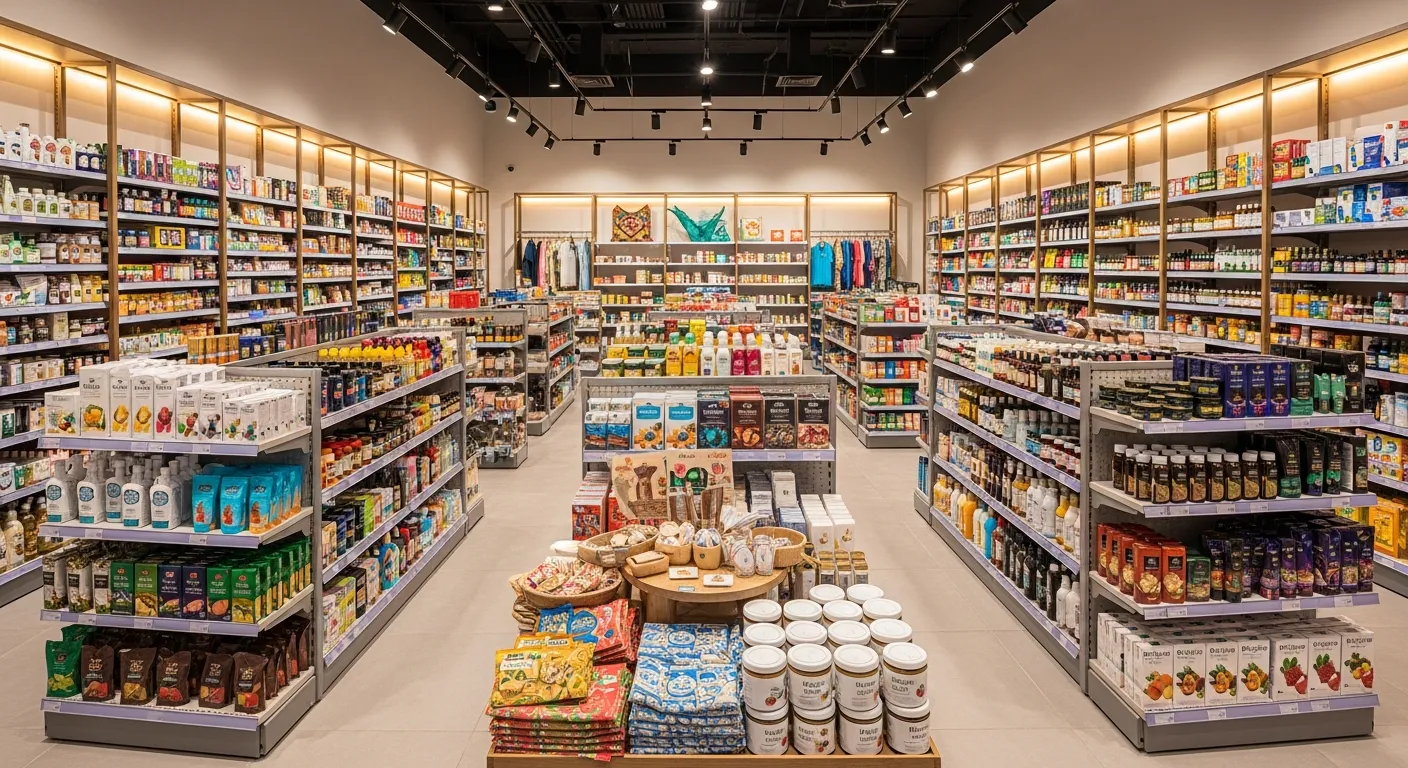
At a glance
Hope Research Group runs retail execution programmes, shelf photography audits, distribution census fieldwork, planogram compliance checks, and store-format micro-potential studies across Latin America and the Caribbean. Format coverage spans hypermarket, hard discounter, cooperative discounter, drugstore, convenience store, standard-format supermarket, and specialist retail where in scope. Country coverage includes Mexico, Brazil, Colombia, Argentina, Peru, Chile, Panama, Costa Rica, El Salvador, Guatemala, and the full approved Caribbean coverage.
Programme pricing, store selection, and reporting format are stated in the proposal issued per engagement. Hope Research Group has run retail audit and trade census programmes in Jamaica since 1985 and Trinidad and Tobago distribution census fieldwork including waves in 2013 and 2018.
What Hope Research Group retail execution covers
Hope Research Group designs and fields retail execution programmes as structured, repeatable audits. Each engagement specifies:
- Store sample by country, city, catchment, format, and chain or independent allocation.
- Category and SKU list aligned to the client's brand portfolio and competitive set.
- Audit protocol covering shelf photography, facings counts, out-of-stock measurement, planogram compliance, price checks, promotion presence, and secondary placement observation.
- Photography specification covering top-to-bottom shelf runs, individual overlapping shots, product label legibility, and avoidance of angled or backlit frames.
- Observation forms for structured data capture alongside the photographs.
- Reporting cadence is agreed per engagement. Quarterly tracking is the recommended standard engagement pattern. Monthly is available as a minimum cadence. Single-wave diagnostic and continuous rolling programmes are also supported.
Format coverage
Hope Research Group fields retail execution across the standard LATAM and Caribbean retail format set:
- Hypermarket; hard discounter; cooperative discounter (where present in a given market); drugstore and pharmacy; convenience store; standard-format supermarket; specialist retail where included in scope (electronics, DIY, hardware, beauty, apparel, and others); and traditional trade including small groceries, kiosks, bodegas, and on-premise outlets where the client requires traditional-trade coverage.
- Format availability varies by country. Hard discounters are well-established in Mexico, Colombia, and parts of Central America but less so in some Caribbean markets. Cooperative discounters are limited to specific countries. Hope Research Group's proposal confirms format availability per country and flags any gaps rather than silently substituting.
Country coverage
Latin America primary markets: Mexico, Colombia, Brazil, Argentina, Peru, Chile, Costa Rica, Panama, El Salvador, Guatemala. These ten markets are served through Hope Research Group's established strategic partner arrangements.
Caribbean direct markets: Jamaica, Trinidad and Tobago, Dominican Republic, Haiti, Suriname, Guyana, Cayman Islands, Bermuda, Bahamas, Barbados, Puerto Rico, and the full Eastern Caribbean. Residents of Cuba can register with the panel, but are not currently eligible for paid projects. Hope Research Group operates direct field infrastructure in Jamaica, Trinidad and Tobago, and Dominican Republic.
South Florida: US Hispanic retail fieldwork for brands targeting the diaspora trade. UK client service: UK clients are supported from Hope Research Group's regional offices.
Specific store selection per country is agreed with the client before fielding, using local operating knowledge rather than a single global chain list that assumes uniform availability.
How Hope Research Group runs a retail execution wave
- Store selection. Hope Research Group agrees the store sample with the client, checking each candidate chain's actual operations in the target country rather than assuming presence from global brand recognition. The sample reflects true market coverage: in some countries one format may have one large national chain and several smaller regional operators; in others the same format may have five or more competitors.
- Permission and access. Hope Research Group secures store-access permissions where required by chain policy. Where a chain declines access, the proposal documents the exception rather than silently substituting. Where a format is unavailable in a country, the proposal flags this explicitly.
- Field team deployment. Fielding uses Hope Research Group's standing field teams in direct markets and established strategic partners in LATAM primary markets. Each shopper or auditor is briefed on the audit protocol, photography specification, and observation form before deployment. Over-recruitment of 15 to 20 percent on-site capacity is standard to protect against access refusals, store reschedules, and ad-hoc closures.
- Photography discipline. Shelf runs are photographed straight on, top to bottom, with overlapping individual shots rather than single panoramic images. Product labels and brand names are captured legibly. Angled shots, strong reflections, and backlighting are rejected during quality review. Each photograph is tagged with store identifier, bay or section, and date.
- Observation capture. Structured observations are captured alongside the photographs using either a client-supplied form or a Hope Research Group template. Observation data covers facings count, out-of-stock, price point, promotion presence, secondary placement, and competitor set.
- Quality assurance. Each returned audit is reviewed for photograph quality, observation completeness, and internal consistency. Audits failing quality review are refielded. Independent back-checks are run on a random sample per the client brief.
- Reporting. Hope Research Group delivers a per-wave dashboard with per-store photograph library, structured observation data, and summary tabulations. For tracking programmes, period-over-period trend reporting surfaces store-level and market-level change. Raw data is delivered in the client's preferred format for analytical integration.
Fieldwork heritage in LATAM and Caribbean retail
Hope Research Group has run retail audit and trade census programmes in Jamaica since 1985. The Trinidad and Tobago Distribution Census has been fielded by Hope Research Group with waves in 2013 (14,627 audited outlets, 8,547 surveyed) and 2018. Fortune 500 clients in beverages, banking, telecoms, and other sectors have engaged Hope Research Group directly and as a fieldwork subcontractor to international research agencies including Ipsos, Kantar, Millward Brown, Toluna, and Nielsen. This operating heritage underpins the audit discipline, field team quality, and reporting conventions used in Hope Research Group's retail execution work today.
Frequently asked questions
Which LATAM countries does Hope Research Group cover for retail execution?
Hope Research Group covers ten primary Latin American markets through established strategic partner arrangements: Mexico, Colombia, Brazil, Argentina, Peru, Chile, Costa Rica, Panama, El Salvador, and Guatemala. Additional markets can be added by request. Caribbean markets are served through direct field infrastructure in Jamaica, Trinidad and Tobago, and Dominican Republic, with project-based deployment across the wider approved Caribbean coverage.
What retail formats does Hope Research Group audit?
Hope Research Group audits hypermarket, hard discounter, cooperative discounter (where present), drugstore and pharmacy, convenience store, standard-format supermarket, and specialist retail where included in scope. Traditional trade (small groceries, kiosks, bodegas, and on-premise outlets) is also covered where the client requires it. Format availability varies by country and is confirmed in the proposal.
Does Hope Research Group provide shelf photography and structured observation data together?
Yes. Standard engagements include shelf photography (top-to-bottom, straight-on, overlapping individual shots rather than panoramic) alongside structured observation data covering facings, out-of-stock, price, promotion presence, and secondary placement. Clients can commission photography-only engagements where the brief calls for a visual record without analytical capture.
How quickly can Hope Research Group launch a multi-country LATAM retail execution wave?
Fielding lead time depends on project scope and is stated in the proposal issued per engagement. Proposal turnaround itself is 24 to 48 hours depending on complexity.
Can Hope Research Group photograph shelves in markets where some retail formats are not available?
Yes. The proposal confirms format availability per country before fielding. Where a format is unavailable in a specific market, Hope Research Group documents the exception rather than silently substituting. Where a chain declines access to its stores, the proposal notes this and offers alternative chains or formats within the same brief.
What is the standard reporting output for a Hope Research Group retail execution wave?
A per-wave dashboard with per-store photograph library, structured observation data (facings, out-of-stock, price, promotion, secondary placement), and summary tabulations. Period-over-period trend reporting is standard for tracking engagements. Quarterly tracking is the recommended standard engagement pattern. Monthly is available as a minimum cadence. Raw data is delivered in the client's preferred format including Excel, CSV, and client-specified BI formats for analytical integration.
Related services
Plan the fieldwork around your decision.
Share the audience, markets, and practical constraints. Hope Research Group can scope a research approach for your brief.
Talk with the team