Customer Experience Research in the Caribbean: NPS, CSAT & Journey Mapping for 21 Markets
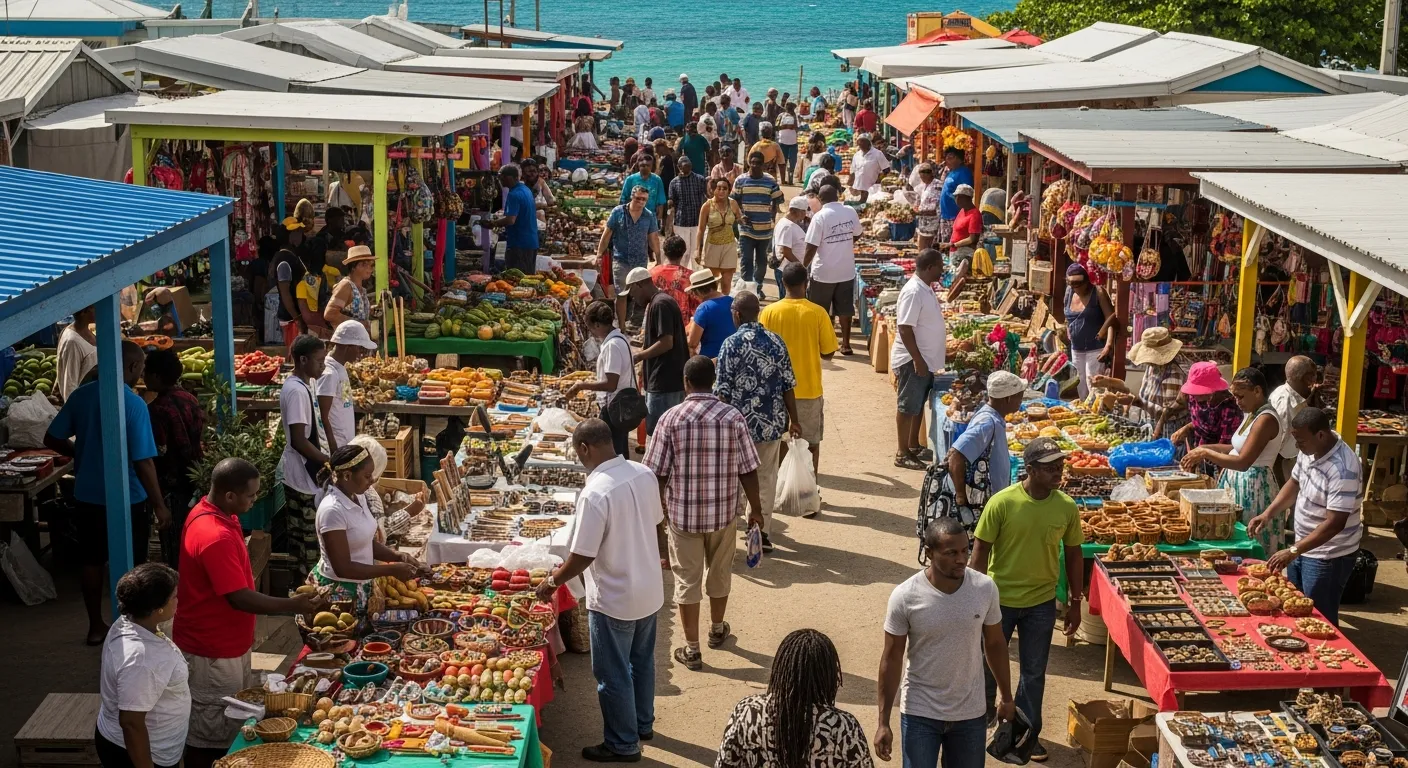
Customer experience (CX) research in the Caribbean is fundamentally different from CX measurement in North America or Europe. Smaller markets, relationship-driven service cultures, multi-channel customer journeys that blend digital and face-to-face interactions, and limited benchmarking data all require adapted methodologies. This guide covers how to measure, benchmark, and improve customer experience across 21 Caribbean markets using NPS, CSAT, journey mapping, and mystery shopping.
Caribbean CX Research at a Glance
65%
Caribbean businesses using WhatsApp as a customer service channel
22-38
Average NPS range across Caribbean industries (telecom to hospitality)
200+
Mystery shoppers in HRG's Caribbean evaluation network
3.2x
Revenue impact of high CX scores vs. low scores in Caribbean retail
21
Markets where HRG conducts customer experience research
76%
Caribbean consumers who say personal service influences loyalty more than price
Why Customer Experience Matters More in the Caribbean
Customer experience is a disproportionately powerful competitive differentiator in Caribbean markets. In small economies with limited competitive sets, where consumers often have just 2-3 options in major categories (telecommunications, banking, grocery), the quality of the customer experience directly determines market share dynamics. HRG's research across 15+ Caribbean markets consistently shows that CX-leading companies achieve 3.2x higher customer retention rates and 2.1x higher revenue per customer than CX laggards in the same market.
Caribbean consumer culture places exceptional value on personal relationships in commercial interactions. A 2025 HRG consumer survey across Jamaica, Trinidad, and Barbados found that 76% of respondents said personal service and recognition by staff influenced their loyalty more than price alone. This relational orientation means that CX measurement must capture qualitative dimensions of human interaction that standardized global CX frameworks often miss. Understanding these Caribbean consumer behavior patterns is essential for designing effective CX programmes.
CX Measurement Frameworks for Caribbean Markets
Net Promoter Score (NPS)
NPS is the most widely adopted CX metric in the Caribbean, used by major telecommunications companies, banks, and retail chains. The methodology translates well to Caribbean markets, as the simple 0-10 recommendation question is easily understood across education levels and languages. However, Caribbean NPS programmes require several adaptations.
First, score calibration: Caribbean respondents tend to use the upper end of rating scales more frequently than US or European respondents. A respondent giving a "7" in Jamaica may have similar sentiment to a "6" in the US. HRG adjusts for this cultural response bias through statistical normalization based on regional baseline studies. Second, collection channels: email-based NPS surveys achieve response rates of only 8-12% in most Caribbean markets, compared to 20-35% in the US. SMS and WhatsApp-delivered surveys achieve 25-40% response rates and should be the primary collection channel.
| Industry | Caribbean NPS Range | US Benchmark | Key Drivers |
|---|---|---|---|
| Telecommunications | 10-25 | 25-35 | Network coverage, data pricing, customer service wait times |
| Banking | 20-40 | 30-45 | Branch experience, digital banking, loan processing speed |
| Retail/Grocery | 25-45 | 35-55 | Product availability, checkout speed, staff helpfulness |
| Hospitality | 35-60 | 45-65 | Service warmth, facility quality, value perception |
| Insurance | 15-30 | 25-40 | Claims processing, policy clarity, agent responsiveness |
Customer Satisfaction Score (CSAT)
CSAT measurement in the Caribbean works best when applied to specific touchpoints rather than overall brand perception. HRG's CX practice uses touchpoint-specific CSAT to identify exact moments in the customer journey where satisfaction drops. For Caribbean markets, the most critical touchpoints are: initial contact and greeting (where cultural expectations of warmth and personal acknowledgment set the tone), problem resolution (where follow-through and accountability matter more than speed alone), and post-purchase communication (where proactive outreach builds the relational loyalty that Caribbean consumers value).
Customer Effort Score (CES)
Customer Effort Score measures how easy it is for customers to accomplish their goals. In the Caribbean, CES is particularly revealing because many customer processes remain friction-heavy. Banking transactions that require in-branch visits, insurance claims requiring multiple document submissions, and utility service requests that involve queuing are common pain points. HRG uses CES alongside NPS and CSAT to create a three-dimensional view of customer experience that identifies both emotional satisfaction and functional efficiency gaps. This complements the consumer survey methodologies HRG uses across the region.
Free Caribbean Market Assessment
Discover which research methodology best fits your Caribbean market entry strategy.
Customer Journey Mapping in Caribbean Markets
Customer journey mapping in the Caribbean must account for touchpoints that do not exist in developed markets. The most important Caribbean-specific journey elements include:
- WhatsApp as a primary service channel: 65% of Caribbean businesses now use WhatsApp for customer communication, making it a critical touchpoint that must be mapped, measured, and optimized
- In-store relationship dynamics: Caribbean customers develop ongoing relationships with specific staff members, creating loyalty to individuals rather than brands
- Word-of-mouth amplification: In small markets, negative experiences spread rapidly through personal networks, amplifying CX failures far beyond the affected customer
- Diaspora purchasing patterns: Customers in the US, UK, and Canada purchasing products or services on behalf of family in Caribbean markets create dual-market journey maps
- Cash-to-digital payment transitions: Many Caribbean customer journeys involve switching between cash and digital payment channels, creating friction points at the boundary
HRG's journey mapping methodology combines ethnographic observation (shadowing customers through real transactions), in-depth interviews with customers at each journey stage, and quantitative surveys validating journey patterns at scale. This mixed-method approach produces journey maps that reflect actual customer behavior rather than the idealized flows that companies design internally. These insights connect directly to Caribbean consumer intelligence that drives business strategy.
Mystery Shopping Across the Caribbean
Mystery shopping is one of the most demanded CX research services in the Caribbean, used by banks, telecommunications companies, retail chains, hospitality groups, and quick-service restaurant brands. HRG operates a network of 200+ trained mystery shoppers across 15+ Caribbean markets through its mystery shopping programme.
Caribbean mystery shopping evaluations are calibrated for regional service expectations. While a US mystery shopping programme might penalize a greeting that takes more than 30 seconds, Caribbean programmes account for the conversational style of service interactions that customers expect. Evaluations measure adherence to brand standards while recognizing culturally appropriate service delivery. Key metrics include greeting quality and warmth, wait time management, product knowledge demonstration, upselling and cross-selling execution, problem resolution effectiveness, physical environment standards, and brand presentation consistency.
| CX Methodology | Best For | Caribbean Adaptation | Cost per Market |
|---|---|---|---|
| NPS Tracking | Overall brand health, competitor comparison | SMS/WhatsApp delivery, cultural score calibration | $8,000-$18,000 |
| Journey Mapping | Identifying CX gaps, redesigning experiences | WhatsApp channel mapping, diaspora journeys | $25,000-$50,000 |
| Mystery Shopping | Service standards compliance, staff performance | Cultural service norms, local shopper network | $12,000-$25,000 |
| CSAT Surveys | Touchpoint-specific satisfaction, trend tracking | Multi-channel collection, Creole translation | $6,000-$15,000 |
| Voice of Customer | Unstructured feedback, emerging issues | WhatsApp voice notes, social listening | $10,000-$22,000 |
Source: HRG CX Practice, 2025-2026 project pricing. Per-market costs, multi-market discounts of 15-25% available.
Industry-Specific CX Research Applications
Telecommunications
Caribbean telecom CX research is driven by intense competition between Digicel, FLOW (Liberty Latin America), and Bmobile. Key research areas include network experience satisfaction, digital channel adoption, customer service quality monitoring, churn prediction modelling, and price sensitivity analysis. HRG conducts quarterly NPS tracking programmes for major Caribbean telecom providers, using mobile-based surveys that capture real-time experience data. This work connects to broader telecommunications industry research.
Banking and Financial Services
The digital transformation of Caribbean banking is creating new CX research needs. As banks like NCB, Scotiabank, Republic Financial, and CIBC FirstCaribbean invest heavily in mobile banking platforms, understanding customer adoption barriers, feature preferences, and cross-channel experiences becomes critical. HRG's financial services research practice conducts branch experience audits, digital banking usability studies, and customer segmentation research that informs CX investment priorities.
Retail and FMCG
Retail CX in the Caribbean is shaped by the relationship between store staff and repeat customers. In markets like Jamaica and Trinidad, consumers develop ongoing relationships with specific supermarket or store staff, returning to particular cashiers and seeking out knowledgeable staff for recommendations. This creates a CX dynamic where staff turnover has a measurably greater impact on customer satisfaction than in developed markets. HRG measures retail CX through retail audit programmes that combine mystery shopping with customer intercept interviews.
Tourism and Hospitality
Guest experience research for Caribbean tourism and hospitality operations covers the complete visitor journey from booking through post-stay review. Key CX moments that determine repeat visitation and online review scores include airport arrival and transfer experience, check-in efficiency and warmth, staff proactivity during stay, food and beverage quality and variety, excursion and activity booking, and departure and follow-up communication. HRG conducts guest experience audits for hotel chains, resort operators, and destination marketing organizations across the Caribbean.
Building a CX Programme for Caribbean Markets
Establishing a continuous CX measurement programme in Caribbean markets requires a phased approach. HRG recommends a three-phase implementation that builds measurement infrastructure, establishes baselines, and then drives improvement.
Phase 1 (Months 1-3): Deploy baseline NPS and CSAT measurement across key touchpoints, establish data collection channels (SMS, WhatsApp, in-store), and train frontline staff on CX awareness. Phase 2 (Months 4-6): Conduct customer journey mapping research to identify priority improvement areas, implement mystery shopping for service standards monitoring, and establish quarterly reporting cadence. Phase 3 (Months 7-12): Integrate CX metrics into operational KPIs, implement closed-loop feedback systems where detractor responses trigger service recovery, and begin competitive benchmarking against industry peers.
Companies that invest in structured CX programmes see measurable returns. HRG's analysis of 25+ Caribbean CX programmes shows that companies implementing systematic CX measurement and improvement achieve 15-25% improvement in NPS scores within 18 months, 12-18% reduction in customer churn, and 8-15% increase in customer lifetime value. For organizations looking to conduct research in Jamaica or other Caribbean markets, CX measurement is often the highest-ROI research investment.
Frequently Asked Questions
What is a good NPS score for Caribbean businesses?
NPS benchmarks in the Caribbean vary by industry. Telecommunications providers typically score between 10-25, banking and financial services range from 20-40, retail and grocery from 25-45, and hospitality from 35-60. These scores are generally 10-15 points lower than US benchmarks due to infrastructure constraints, smaller competitive sets, and different customer expectation baselines. HRG recommends tracking NPS trends over time rather than comparing to international benchmarks, as regional context significantly influences absolute scores.
How do you conduct customer satisfaction surveys in the Caribbean?
Customer satisfaction surveys in the Caribbean use multi-channel methodologies adapted to local communication preferences. In Jamaica and Trinidad, mobile-first approaches (SMS invitations to online surveys, WhatsApp-based feedback collection) achieve higher response rates than email-based methods. Face-to-face exit interviews remain effective for retail and hospitality CX research. CATI (telephone) surveys reach older demographics and rural populations with limited internet access. HRG typically recommends hybrid approaches combining 2-3 channels to achieve representative samples across urban and rural customer segments.
What is customer journey mapping for Caribbean markets?
Customer journey mapping in Caribbean markets documents every touchpoint a customer experiences, from awareness through purchase to post-sale service. Caribbean journey maps must account for region-specific touchpoints including WhatsApp-based customer service (used by 65% of Caribbean businesses), in-store experiences where personal relationships with staff drive loyalty, diaspora purchasing patterns for customers buying on behalf of family, and multi-channel payment journeys mixing cash, card, and mobile money. HRG uses ethnographic observation combined with quantitative surveys to build validated journey maps.
How much does CX research cost in the Caribbean?
CX research costs in the Caribbean depend on methodology and scope. NPS/CSAT tracking surveys (n=300-500 per market) cost $8,000-$18,000 USD per wave. Customer journey mapping projects including qualitative research and quantitative validation run $25,000-$50,000 per market. Mystery shopping programmes covering 30-50 locations cost $12,000-$25,000 per wave. Multi-market studies across 3-5 Caribbean countries achieve 15-25% cost reduction per market. HRG provides fixed-price proposals within 24 to 48 hours, depending on complexity.
Can Caribbean CX research be conducted remotely?
Yes. Remote CX research methodologies are effective across most Caribbean markets. Online surveys achieve strong response rates in Jamaica (internet penetration 76%), Trinidad (78%), Barbados (82%), and the Bahamas (85%). WhatsApp-based voice note feedback is an innovative channel HRG uses for capturing unstructured customer sentiment. Video-based customer interviews work well for B2B CX research. However, certain segments (rural consumers, older demographics, lower-income groups) still require face-to-face or telephone approaches for representative coverage.
What industries need CX research most in the Caribbean?
The industries with highest CX research demand in the Caribbean are: telecommunications (intense competition between Digicel, FLOW/Liberty, and Bmobile drives continuous CX monitoring), banking and financial services (digital banking transformation requires understanding customer adoption barriers), retail and grocery (growing competition from online and regional chains), hospitality and tourism (guest experience directly impacts reviews and repeat visitation), and utilities (customer satisfaction tracking required by regulators in several markets). Healthcare and insurance are emerging CX research categories.
How does mystery shopping work in the Caribbean?
Mystery shopping in the Caribbean evaluates service quality, brand standards compliance, and customer experience through covert assessments by trained evaluators. HRG maintains a network of 200+ mystery shoppers across 15+ Caribbean markets. Evaluations cover greeting protocols, wait times, product knowledge, upselling behaviour, cleanliness, and brand presentation. Caribbean mystery shopping requires cultural calibration, as service expectations and interaction styles vary by market. Reports include quantitative scorecards, narrative observations, photographic evidence, and trend analysis across locations and time periods.
Caribbean CX Benchmarking Report
Get NPS and CSAT benchmarks across 12 Caribbean markets and 5 industries. Includes methodology guide for implementing CX measurement programmes.