Cruise Industry Capacity Growth Projections 2026–2028
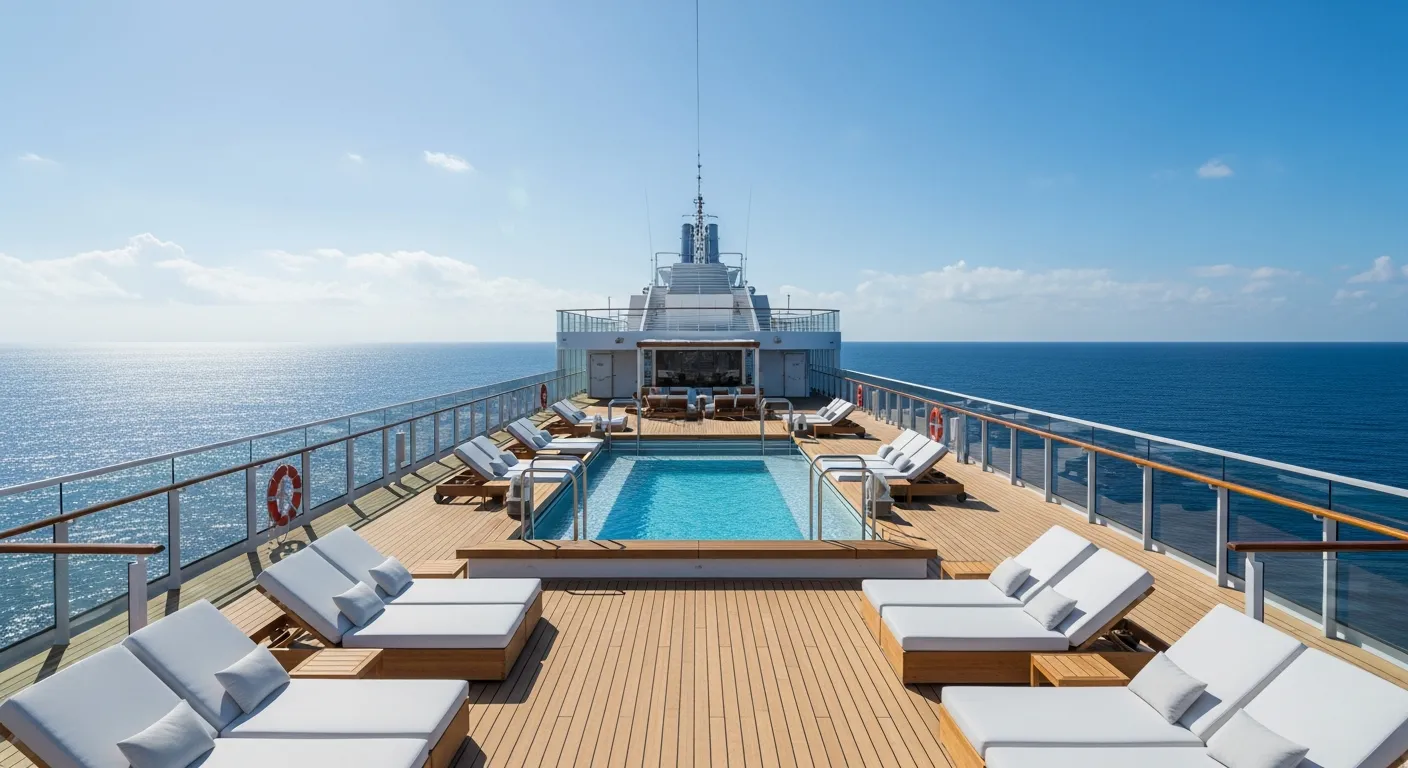
The global cruise industry is entering its most aggressive expansion phase in history. With 58 new ships on order representing over $40 billion in capital investment, cruise capacity is projected to grow at a 6.2% compound annual growth rate through 2030—outpacing every other segment of the global tourism industry. This analysis examines the complete ship orderbook, year-by-year capacity projections, LNG and green technology adoption, Caribbean-specific growth dynamics, pricing trajectories, and the regulatory forces shaping the next five years.
Need primary data?
HRG conducts custom research on cruise passenger behavior, port economics, and destination development across Caribbean. Get a scoped quote within 24 to 48 hours.
Cruise Industry Growth at a Glance (2025–2030)
58
New ships on order
$40B+
Total orderbook investment
42M
Projected passengers by 2030
6.2%
Capacity CAGR (2024–2030)
44%
New builds with LNG propulsion
+28%
Caribbean capacity growth by 2030
Executive Summary: A New Era of Cruise Expansion
The cruise industry has not only recovered from the COVID-19 pandemic but has entered an unprecedented growth cycle. According to CLIA's 2025 State of the Cruise Industry Report, global ocean cruise passengers reached 31.7 million in 2024, surpassing the pre-pandemic record of 29.7 million set in 2019 by 6.7%. This recovery has validated the industry's decision to maintain its massive shipbuilding pipeline even during the 2020–2021 shutdown, when zero revenue was generated for 15 consecutive months.
The current orderbook of 58 ships through 2030 represents the largest construction pipeline in maritime history. Unlike previous expansion cycles that focused purely on capacity, this generation of new builds emphasizes environmental compliance (LNG propulsion, shore power connectivity), operational efficiency (advanced hull designs, AI-driven route optimization), and revenue diversification (private island destinations, expedition capabilities). For the Caribbean cruise market specifically, these trends translate into larger ships, higher passenger volumes, and new destination development that will reshape regional tourism economies.
Complete Ship Orderbook: 2025–2030 New Deliveries
The global cruise ship orderbook is concentrated among six major shipbuilders: Fincantieri (Italy), Meyer Werft (Germany), Meyer Turku (Finland), Chantiers de l'Atlantique (France), MV Werften successor yards, and emerging Chinese shipyards. Lead times for new cruise ships range from 24–42 months, meaning the 2025–2027 orderbook is essentially locked while 2028–2030 deliveries remain partially subject to additional orders.
| Cruise Line | Ship Name | Delivery Year | GT | Capacity (Pax) | Propulsion |
|---|---|---|---|---|---|
| Royal Caribbean | Star of the Seas | 2025 | 250,800 | 5,610 | LNG |
| MSC Cruises | MSC World America | 2025 | 215,000 | 6,762 | LNG |
| Disney Cruise Line | Disney Adventure | 2025 | 208,000 | 6,000 | LNG |
| Carnival Cruise Line | Carnival Sun Princess | 2025 | 175,500 | 4,300 | LNG |
| Norwegian | Norwegian Aqua | 2025 | 156,300 | 3,550 | Dual-fuel |
| Celebrity Cruises | Celebrity Xcel | 2025 | 140,600 | 3,250 | LNG |
| MSC Cruises | MSC World Asia | 2026 | 215,000 | 6,762 | LNG |
| Royal Caribbean | Icon-class Ship 3 | 2026 | 250,800 | 5,610 | LNG |
| Virgin Voyages | Brilliant Lady | 2026 | 110,000 | 2,770 | Diesel-electric |
| Carnival Corp (AIDA) | AIDA Next-Gen | 2026 | 183,900 | 5,200 | LNG |
Source: CLIA Orderbook Database, DNV GL Ship Registry, cruise line investor presentations (2025). GT = Gross Tonnage. Pax = lower berth capacity.
Orderbook by Cruise Corporation
The distribution of the orderbook reveals strategic positioning among the major cruise groups. Royal Caribbean Group leads in total tonnage on order, reflecting its strategy of deploying the world's largest ships. MSC Cruises leads in total vessel count, pursuing aggressive global expansion from its Mediterranean base into Caribbean and Asian markets.
| Corporation | Ships on Order | Total New Berths | Est. Investment | % LNG |
|---|---|---|---|---|
| Royal Caribbean Group | 12 | 48,200 | $12.8B | 75% |
| MSC Cruises | 10 | 52,400 | $9.6B | 60% |
| Carnival Corporation | 9 | 38,600 | $8.2B | 56% |
| Norwegian Holdings | 8 | 28,400 | $5.4B | 38% |
| Disney Cruise Line | 4 | 16,800 | $2.4B | 50% |
| Other (Viking, Virgin, etc.) | 15 | 24,600 | $3.2B | 27% |
Source: CLIA Global Orderbook, Seatrade Cruise News, company 10-K filings (2024–2025).
Year-by-Year Capacity Projections: 2025–2030
Global cruise capacity is projected using a methodology that accounts for confirmed new-build deliveries, announced fleet retirements, and historical utilization rates. The base year (2024) reflects CLIA's verified 31.7 million ocean cruise passenger figure. Projections assume 95% average fleet utilization (consistent with 2023–2024 actuals), confirmed orderbook deliveries per Seatrade Cruise data, and an average of 3–4 ship retirements per year based on fleet age analysis from DNV GL registry data.
| Year | New Ships | Retirements | Net Fleet | Total Berths | Projected Passengers | YoY Growth |
|---|---|---|---|---|---|---|
| 2024 (Base) | 8 | 3 | 314 | 608,000 | 31.7M | — |
| 2025 | 10 | 3 | 321 | 643,500 | 33.5M | +5.7% |
| 2026 | 8 | 4 | 325 | 672,800 | 35.0M | +4.5% |
| 2027 | 12 | 3 | 334 | 714,200 | 37.2M | +6.3% |
| 2028 | 10 | 4 | 340 | 752,600 | 39.2M | +5.4% |
| 2029 | 10 | 4 | 346 | 788,400 | 41.1M | +4.8% |
| 2030 | 8 | 4 | 350 | 818,600 | 42.6M | +3.6% |
Source: Hope Research Group projections based on CLIA orderbook data, DNV GL fleet registry, and Seatrade Cruise ship tracking (2025). Methodology: 95% utilization rate, 52-week deployment cycle, confirmed orderbook plus estimated options exercised at 70% probability for 2028–2030.
Growth Rate Analysis
The 6.2% CAGR in passenger capacity between 2024 and 2030 significantly outpaces the pre-pandemic growth trajectory of 4.8% CAGR (2014–2019). Peak delivery years are 2025 and 2027, when 10 and 12 new ships respectively enter service. Growth rates are projected to moderate toward 2030 as the orderbook thins and shipyard capacity constraints limit further acceleration. According to Seatrade Cruise analysis, global shipyard capacity for cruise vessels is effectively capped at 14–16 deliveries per year across all yards.
Free Caribbean Market Assessment
Discover which research methodology best fits your Caribbean market entry strategy.
LNG and Green Technology Adoption
The cruise industry's transition to liquefied natural gas (LNG) propulsion represents the most significant technological shift in commercial maritime history. LNG-powered cruise ships produce up to 25% fewer CO2 emissions, virtually eliminate sulfur oxide (SOx) emissions (99% reduction), and reduce nitrogen oxide (NOx) emissions by 85% compared to heavy fuel oil (HFO). As of 2025, 26 of the 58 ships on order (44%) feature LNG propulsion, up from just 12% of orders placed in 2018.
Green Technology Investment Metrics
$18B+
Investment in LNG-powered new builds
26 ships
LNG vessels on order (44% of pipeline)
$12B
Fleet retrofitting for environmental compliance
22%
Share of fleet LNG-powered by 2030
Alternative Fuel Pathways
Beyond LNG, the industry is exploring multiple decarbonization pathways. Methanol-powered vessels are being trialed by smaller expedition lines. Hydrogen fuel cells are under development for port operations and auxiliary power. Battery-hybrid systems are operational on select coastal routes in Norway and are being evaluated for Caribbean repositioning. According to DNV GL's Maritime Forecast, the cruise sector will likely adopt a multi-fuel strategy through 2040, with LNG serving as the transition fuel while green methanol and ammonia infrastructure scales.
- LNG: 26 ships on order, proven technology, 25% CO2 reduction, dominant through 2035
- Methanol: 3 expedition vessels ordered, 65% CO2 reduction with green methanol, limited bunkering infrastructure
- Battery-hybrid: 8 vessels in operation (primarily coastal/expedition), supplements main propulsion for port maneuvering
- Shore power: 42% of new builds equipped for cold-ironing, mandated in EU ports by 2030
- Advanced waste treatment: All new builds include Advanced Wastewater Treatment Systems (AWTS), exceeding IMO discharge standards
Caribbean Capacity Growth: Regional Analysis
The Caribbean remains the world's largest cruise deployment region, accounting for 43% of global ship deployments during the October–April peak season. Caribbean cruise capacity is projected to grow 28% between 2024 and 2030, with total regional passenger visits increasing from 14.9 million to approximately 18.5 million annually. This growth is driven by larger ships replacing older, smaller vessels on existing itineraries, new private island destinations absorbing additional capacity, and expansion into underserved sub-regions including the Southern Caribbean and Central American coast.
| Sub-Region | 2024 Passengers | 2027 Projected | 2030 Projected | Growth (2024–2030) |
|---|---|---|---|---|
| Western Caribbean | 6.8M | 7.9M | 8.4M | +24% |
| Eastern Caribbean | 4.2M | 5.0M | 5.5M | +31% |
| Southern Caribbean | 1.8M | 2.3M | 2.6M | +44% |
| Bahamas & Private Islands | 2.1M | 2.4M | 2.0M | +19% |
| Total Caribbean | 14.9M | 17.6M | 18.5M | +28% |
Source: Hope Research Group projections based on CLIA deployment data, Florida-Caribbean Cruise Association (FCCA) reports, and port authority forecasts (2025). Methodology: CAGR extrapolation of 2019–2024 trend line adjusted for confirmed new-build Caribbean deployment announcements.
Private Island & Destination Development
A defining feature of the current expansion cycle is the rapid development of cruise line-owned private island destinations. These controlled environments allow cruise lines to capture shore-side spending that traditionally flowed to local economies, while managing the guest experience end-to-end. Major developments include Royal Caribbean's Perfect Day at CocoCay (Bahamas), which generated an estimated $250 million in on-island revenue in 2024, Carnival's Celebration Key (Grand Bahama) opening in 2025 with $300 million investment, MSC's Ocean Cay Marine Reserve (Bahamas) expansion to double current capacity, and Disney's Lighthouse Point (Eleuthera) opening in 2024 as the company's second Bahamian destination.
The private island trend has significant implications for traditional Caribbean port destinations. While overall passenger volumes are growing, an increasing share of itinerary days is allocated to cruise line-controlled destinations rather than sovereign ports. According to FCCA data, private island calls represented 18% of all Caribbean port days in 2024, up from 11% in 2019. By 2030, this share is projected to reach 24%, potentially diverting $800 million annually from traditional port economies.
Ticket Pricing Trends & Revenue Projections
Cruise ticket pricing has exhibited sustained upward pressure since the post-COVID recovery, driven by high demand, constrained supply during the fleet rebuild, and significant investment in onboard amenities. According to company 10-K filings and CLIA industry data, the average cruise ticket price (per passenger per day) increased from $195 in 2019 to $228 in 2024, a 16.9% increase over five years.
| Year | Avg. Per Diem (USD) | Caribbean Per Diem | Industry Revenue | Rev. per Available Berth Day |
|---|---|---|---|---|
| 2019 | $195 | $178 | $36.4B | $286 |
| 2024 | $228 | $205 | $45.6B | $342 |
| 2027 (P) | $252 | $224 | $56.2B | $378 |
| 2030 (P) | $275 | $242 | $68.8B | $412 |
Source: CLIA industry reports, Carnival/Royal Caribbean/Norwegian 10-K filings. (P) = Hope Research Group projections using 3.4% annual price escalation based on 2019–2024 CAGR, adjusted for environmental compliance cost pass-through.
Caribbean itineraries remain the most competitively priced segment globally at $180–$220 per diem for contemporary brands, compared to $280–$350 for Mediterranean and $400–$600 for expedition and luxury segments. This pricing advantage, combined with year-round deployment and proximity to the U.S. source market (75% of Caribbean cruise passengers are North American), underpins the region's continued dominance in global cruise deployment.
Environmental Regulations & Compliance Impact
The cruise industry faces an increasingly complex regulatory landscape that directly impacts fleet composition, operational costs, and growth trajectories. The International Maritime Organization (IMO), the European Union, and individual port states are implementing progressively stricter environmental requirements that will shape investment decisions through 2030 and beyond.
Key Environmental Regulations Affecting Cruise Growth
- IMO 2030 Targets:40% reduction in carbon intensity from 2008 levels; applies to all international vessels over 5,000 GT
- EU ETS (2024):Maritime shipping included in EU Emissions Trading System; 40% of emissions covered in 2024, rising to 100% by 2026
- CII Ratings:IMO Carbon Intensity Indicator requires annual improvement; vessels rated D or E for 3 consecutive years must submit corrective action plans
- Shore Power Mandates:EU ports must provide shore-side electricity by 2030; several Caribbean ports (San Juan, St. Thomas) implementing voluntary programs
- Ballast Water Convention:All vessels must install ballast water treatment systems by 2024; estimated $2–5M per ship retrofit cost
The combined cost of environmental compliance is estimated at $12 billion across the global cruise fleet through 2030, including both new-build premiums (LNG systems add approximately $50–80 million per vessel) and retrofit requirements for existing ships. This environmental investment burden is being partially passed through to consumers via 3–5% annual ticket price increases and dedicated environmental surcharges ($10–15 per passenger per day on some European itineraries).
New Destination Development & Route Innovation
Beyond traditional Caribbean and Mediterranean itineraries, the cruise industry is investing heavily in new destination development to support capacity growth without oversaturating established ports. The key growth corridors through 2030 include several emerging regions.
Arctic and expedition cruising is growing at 15% CAGR with ice-class vessels from Viking, Ponant, and Hurtigruten serving routes in Greenland, Svalbard, and the Northwest Passage. The Middle East and Red Sea region saw MSC and Royal Caribbean establish year-round deployments from Saudi Arabia's NEOM and Jeddah ports starting in 2024. Southeast Asia is expanding with Singapore, Vietnam, and Japan receiving new homeport investments from Royal Caribbean and Dream Cruises' successors. In the Caribbean specifically, Central American ports including Belize City, Puerto Limon (Costa Rica), and Cartagena (Colombia) are investing $400 million collectively in cruise terminal upgrades.
Risk Factors & Growth Constraints
While the growth outlook is robust, several risk factors could moderate capacity expansion or alter deployment patterns through 2030.
- Shipyard bottlenecks: Global cruise shipbuilding capacity is limited to 14–16 deliveries per year. Labor shortages and supply chain disruptions at European yards could delay deliveries by 6–12 months.
- Port infrastructure gaps: Many Caribbean ports lack berths capable of accommodating 200,000+ GT vessels. The estimated infrastructure investment gap is $2.5 billion regionally.
- Crew availability: The industry requires approximately 15,000 additional crew members per year to staff new ships. Southeast Asian labor markets (Philippines, Indonesia, India) that supply 70% of cruise crew face competing demand from land-based hospitality recovery.
- Geopolitical risk: Red Sea security concerns have already rerouted ships from the region. Caribbean hurricane season intensity and frequency trends pose increasing operational risk.
- Demand elasticity: Cruise demand is correlated with consumer confidence and disposable income. A recession scenario could reduce utilization rates from 95% to 85–88%, significantly impacting revenue yields.
- Environmental backlash: Growing anti-cruise sentiment in destinations like Venice, Barcelona, and Key West has led to capacity caps and berthing restrictions. Similar pressures could emerge in smaller Caribbean ports.
Implications for Caribbean Tourism Economies
The projected 28% increase in Caribbean cruise capacity by 2030 presents both opportunities and challenges for the region's 48 active cruise destinations. Caribbean market sizing analysis suggests that direct cruise-related spending could grow from $4.8 billion to $6.2 billion annually by 2030, but the distribution of this spending is shifting.
Larger ships mean fewer port calls per passenger (average itinerary length is declining from 7.2 to 6.8 days), concentrating volumes at fewer, larger ports. Private island development is capturing an increasing share of shore-side spending—Royal Caribbean's Perfect Day at CocoCay reportedly generates $180 per guest compared to $120 average at traditional ports. Smaller Eastern Caribbean ports face the highest risk of capacity bypass, as new mega-ships increasingly favor Western Caribbean itineraries with their lower fuel costs from Florida homeports.
To compete effectively, Caribbean destinations must invest in port infrastructure to accommodate larger vessels, develop differentiated shore experiences that complement rather than compete with private islands, and implement dynamic pricing for port fees that captures more value from high-volume days. Hope Research Group's consumer survey research and economic data analysis can help destinations and businesses quantify cruise passenger spending patterns and develop evidence-based strategies for maximizing economic benefit.
Methodology & Data Sources
This analysis uses confirmed orderbook data from CLIA's 2025 Global Cruise Ship Orderbook, verified against DNV GL's ship registry database and individual cruise line 10-K/20-F SEC filings. Capacity projections are derived using a bottom-up model that assigns each confirmed new build to its announced deployment region, applies historical utilization rates (52-week rolling average), and deducts projected retirements based on fleet age distribution analysis. Ships older than 30 years with no announced refurbishment plans are modeled as retirements. Revenue and pricing projections use a 3.4% annual escalation factor derived from the 2019–2024 industry CAGR, adjusted upward by 0.5% to account for environmental compliance cost pass-through. Caribbean-specific projections are cross-referenced with Florida-Caribbean Cruise Association (FCCA) deployment announcements and individual port authority capacity forecasts.
Frequently Asked Questions
How many new cruise ships are on order for 2026-2028?
The global cruise industry has approximately 40 newbuilds scheduled for delivery between 2026 and 2028, part of a broader orderbook of 58 ships through 2030. Royal Caribbean Group leads with 12 ships on order, followed by MSC Cruises with 10 and Carnival Corporation with 9, collectively adding over 100,000 berths to global fleet capacity.
Are cruise ships sailing at full capacity in 2026?
Major cruise lines reported occupancy rates exceeding 105% in 2025, with most 2026 sailings booked above 100% load factor. Caribbean itineraries lead with the highest occupancy. Global cruise passenger capacity is projected to reach approximately 42 million by 2030, up from 31.7 million in 2024.
How does cruise newbuild activity affect steel and aluminum demand?
Each new cruise ship requires significant quantities of steel and aluminum for hull, superstructure, and interior fit-out, with European shipyards (Fincantieri, Meyer Werft, Chantiers de l'Atlantique) accounting for over 90% of orders. Approximately 44% of new ships on the current orderbook use LNG propulsion, requiring additional specialized materials and port infrastructure investment estimated at over $12 billion globally.
What is the projected cruise berth capacity through 2028?
Global cruise berth capacity is projected to grow significantly through 2028 as 58 ships on order through 2030 deliver, representing a 28% Caribbean capacity expansion. The Caribbean region specifically is expected to handle 18.5 million passengers by 2030, driven by new mega-ship deployments by Royal Caribbean, Carnival, and MSC.
Caribbean Research
Need Caribbean cruise and port research?
HRG delivers passenger intercept surveys, port spend studies, and cruise industry intelligence across Caribbean home and turnaround ports. Custom proposals within 24 to 48 hours, depending on complexity.
Cruise Industry Growth & Caribbean Impact Report
Download our complete cruise capacity projections data pack with ship-by-ship orderbook details, port-level capacity forecasts, pricing scenarios, and strategic implications for Caribbean tourism stakeholders.
Related Articles
Caribbean Cruise Industry Analysis 2025
Complete market report: port rankings, market share, economic impact, and competitive dynamics.
Caribbean Tourism Market Trends 2026
34.2M+ arrivals, $46.3B receipts, $182/day visitor spend. CTO forecasts, hotel pipeline and sustainability data.
Cruise Market Share History 2016 to 2025
Year-by-year market share data for Carnival, Royal Caribbean, Norwegian, and MSC from 2016 to 2025.
Carnival's Economic Impact on the Caribbean
How the world's largest cruise company shapes Caribbean tourism economies and port development.
Caribbean Cruise Passenger Spending Analysis
Detailed breakdown of passenger and crew spending patterns across Caribbean destinations.
Mystery Shopping Caribbean
Evaluate cruise port retail, hotels and tourism services with covert shopper programs across 21 markets.
Trinidad & Tobago Market Research
Trinidad's Port of Spain is a growing cruise homeport. Consumer surveys, FMCG and qualitative research.
Market Research Jamaica
Jamaica's Ocho Rios and Falmouth are top Caribbean cruise ports. HRG covers all 14 parishes for fieldwork.
Dutch Caribbean Market Research
Aruba, Curacao and Sint Maarten receive millions of cruise passengers annually. Trilingual fieldwork across all 6 BES islands.
Market Segmentation for Cruise Markets
Identify high-value passenger and homeport resident segments to inform port retail, excursion, and hotel strategy across the Caribbean.